Laura Lizama, CEO of heecap: “The drive of CDTI Innovation has allowed us to bring respiratory electrostimulation to the ICU”
Removing a critical patient from mechanical ventilation is one of the most delicate moments of his stay in the ICU, a process that is hampered by the loss of strength of the respiratory muscles during admission. Heecap, a Barcelona startup created in 2021, has developed a non-invasive and personalized electrostimulation system for these patients, with the aim of increasing success in extubation and improving subsequent recovery. The project was supported by the CDTI Innovation through the NEOTEC program, a commitment that connects with the priority of the Center to expand the perimeter of innovative Spanish companies in an area, that of hospital medical devices, where early clinical validation is decisive to compete with international actors already consolidated.
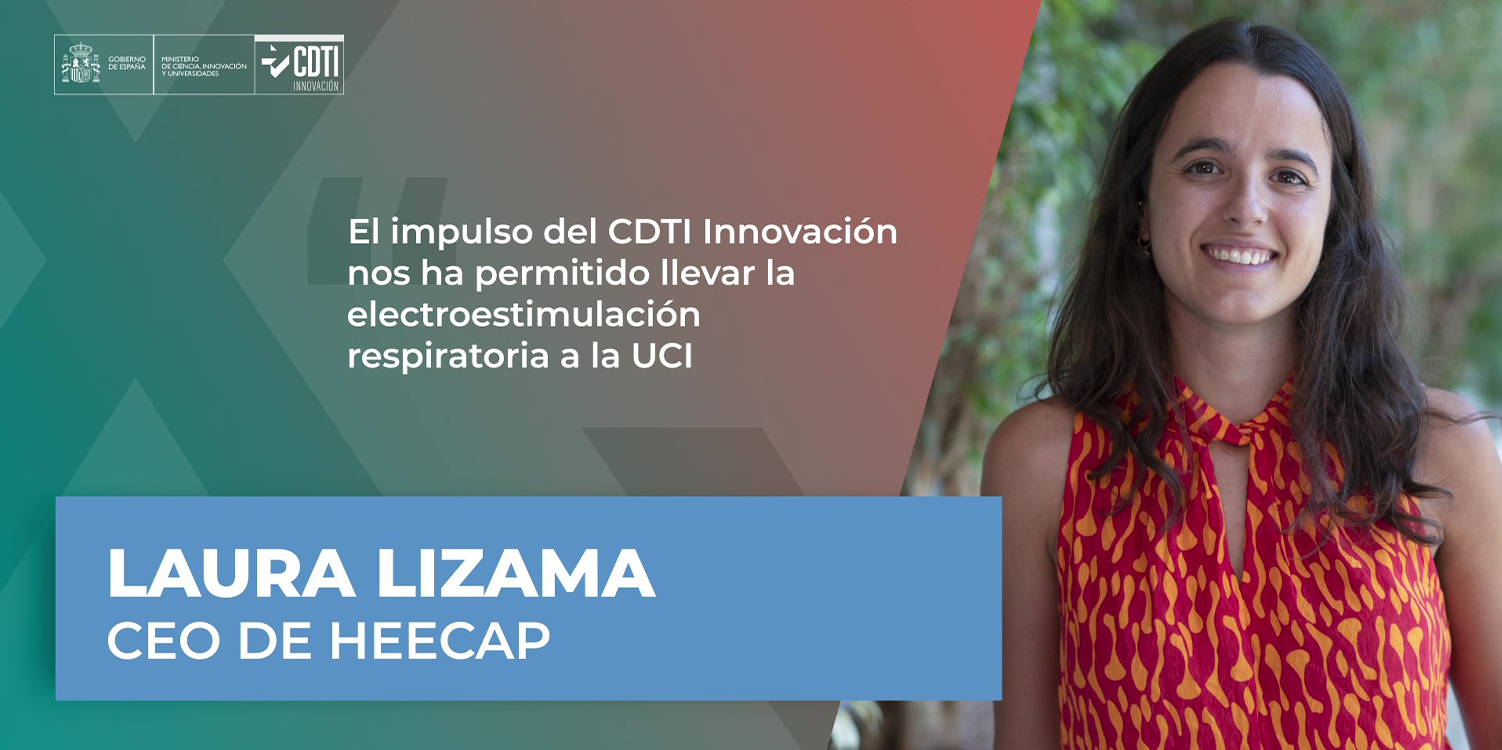
The heecap germ emerged during the passage of its co-founders, Laura Lizama and Sofía Ferreira, by d·HEALTH Barcelona, a health innovation program that allowed them to get to know the work in hospitals closely. From this experience they detected a need for assistance that still did not have a solution in the market. "What we saw happening in the ICU shocked us: when a critical patient requires invasive mechanical ventilation, his breathing muscles stop working. In just 24 hours, they suffer a drastic loss of strength," explains Laura Lizama, CEO of the company.
When a respirator is used, it takes on much of the work that is normally done by the breathing muscles. This lack of activity causes the muscles to progressively lose capacity, which can prolong the stay in the ICU and make subsequent recovery difficult. Observing this situation, the two engineers saw the need to intervene from the early stages of entry and sought an early and non-invasive alternative that would eventually lead to the creation of the company in 2021.
Exercising the muscles while the respirator works
With this challenge in mind, heecap developed a system based on the use of electrodes that are placed on the surface of the body, and generate small electrical impulses that cause the contraction of muscles in the abdominal and thoracic areas. “Our technology consists of a personalized non-invasive muscle electrostimulation system, specifically designed to exercise the respiratory musculature while the patient is under mechanical ventilation,” says the company’s CEO.
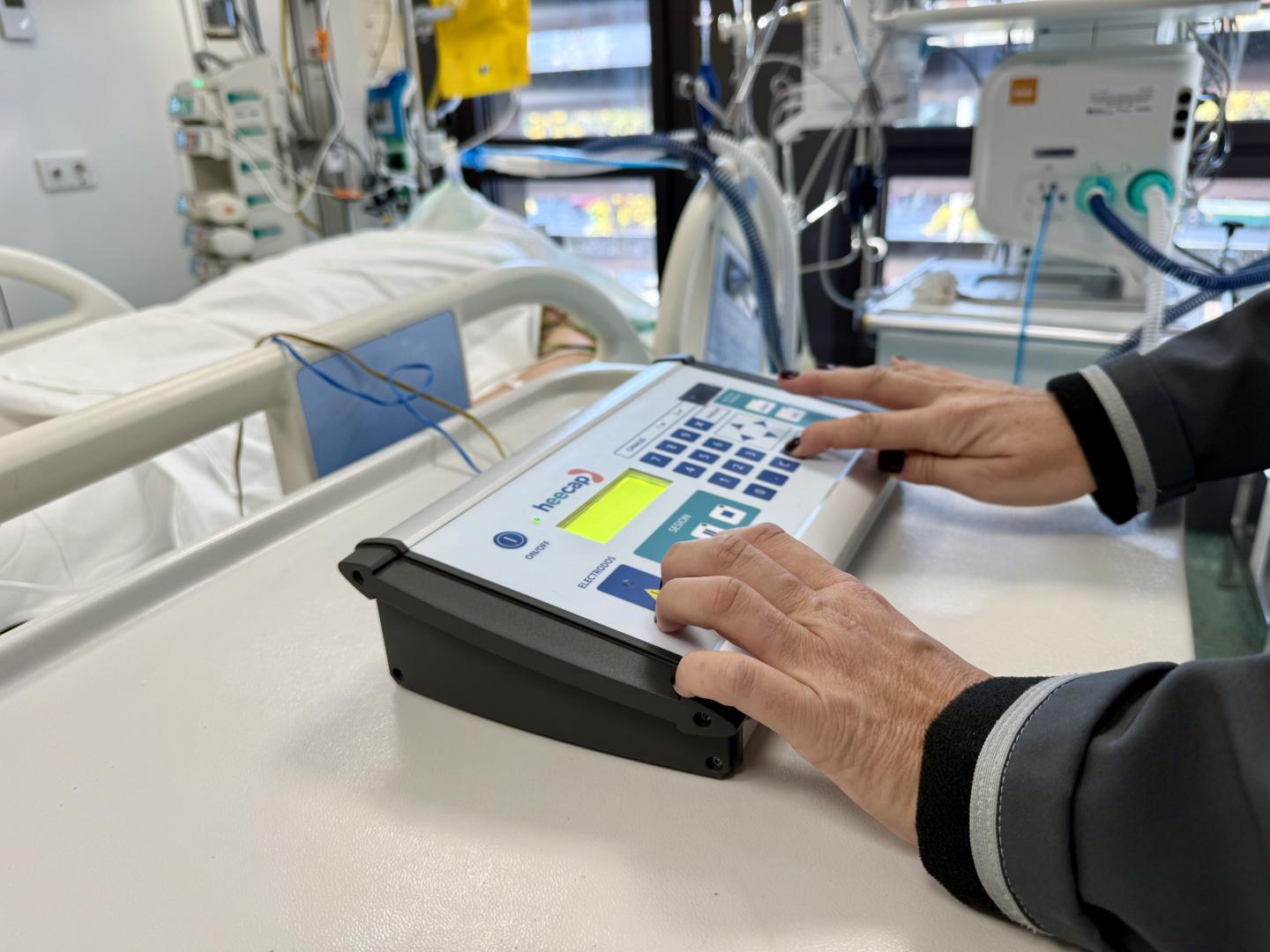 Prototype of heecap
The particularity is that these stimuli adapt to the respiratory rhythm and the operation of the ventilator. The system incorporates its own algorithm that identifies the appropriate moment to apply the stimulation and adjusts its intensity to the conditions of each case. This synchronization is essential in critical situations, when breathing can constantly change and depend on mechanical support.
In this way, heecap offers a complete muscle exercise, activating both the diaphragm during inspiration and the muscles of the abdominal wall during expiration. In addition, since these are surface electrodes, this solution does not require any type of surgery on the patient and its integration into the usual ICU environment is simple, which would allow the rehabilitation to be transferred to a much earlier phase, preventing muscle atrophy.
From prototype to clinical evidence
But for a medical technology to reach the hospital, it must first be demonstrated that it can be used safely in patients and that its operation responds to the real conditions of an ICU. This has been one of the main objectives of HEECAP I, the pilot study developed in hospitals such as the Vall d'Hebron University Hospital, the Parc Taulí Hospital and the Bellvitge Hospital.
This pilot has allowed us to verify that the system reaches a synchronization greater than 90% with the respiratory cycle of the patient, both during inspiration and during expiration, and has provided information on the response of the musculature to stimulation and on the biomarkers that can help measure its effects. “Thanks to this study, the viability and safety profile of the system in a real ICU environment has been confirmed, recording zero serious adverse events related to the device,” says Laura Lizama.
These results provide first evidence on the behavior of the system in real conditions and will serve as a basis for the next phase, in which heecap will have to evaluate in greater depth its contribution compared to the conventional approach and determine if preserving that muscle function translates into a more effective disconnection of the respiratory support.
A triple impact: patient, professionals and healthcare system
Reducing mechanical ventilation time can not only accelerate individual recovery, but also improve the performance of ICUs. An early and safe disconnection minimizes for the patient the risks and complications associated with a prolonged admission, while, for intensivists, having a tool from the first hours allows to act earlier and better preserve respiratory function. In addition, shortening these stays optimizes resources of the highest specialization, releases critical beds and relieves the pressure of care, with a positive impact on the health system as a whole.
Heecap ultimately proposes a paradigm shift by acting before muscle atrophy becomes an obstacle. “Intensive medicine evolves towards early functional preservation,” summarizes the company’s CEO. This vision aligns with a global trend in intensive care, where protecting the patient’s abilities from the first moment is as crucial as treating subsequent complications.
The impulse of the CDTI Innovation
For a medical technology company, jumping between a prototype and a device ready for clinical use requires costly and time-consuming processes, especially when the technology needs to be tested directly on patients.
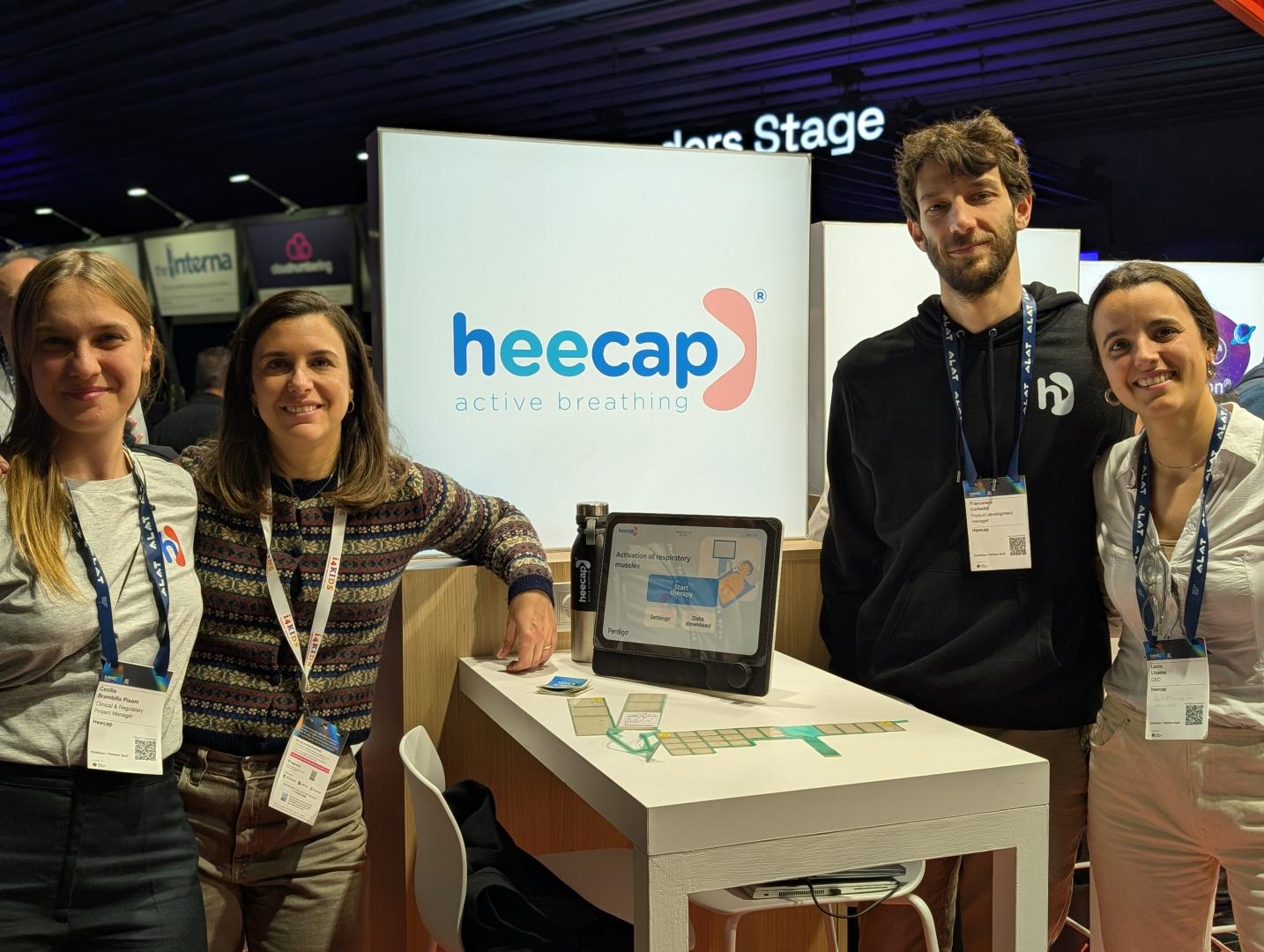
In this tour, heecap has been supported by the CDTI Innovation through the NEOTEC program, aimed at promoting new business projects based on technology and knowledge derived from research activity. This funding has allowed the Catalan startup to strengthen engineering teams and advance clinical development, but also to improve the company’s position to access other support channels at European level. “The support of CDTI Innovation through the NEOTEC program has been a very strategic accelerator,” says Lizama.
The heecap journey is also supported by collaboration with research centers and hospitals. The company emerged linked to the environment of Parc Taulí and Vall d'Hebron, institutions that have participated in the development and validation of the technology.
Challenges for the future
The next challenge is to convert the results obtained with the prototype into a medical product prepared for hospital implantation. The company is already working on the analysis of data from the pilot study and on the industrialization of the commercial device.
The challenge will be to demonstrate that the technology provides a real clinical benefit, determining whether keeping the respiratory function active from the first hours allows the ventilator to be removed earlier and favors the patient’s recovery.
The company also plans to establish alliances with European hospitals and launch new pilot projects that allow the device to be integrated into the usual practice of intensive care teams. “Our next strategic milestone is the pivotal clinical trial, a randomized multicenter study designed to demonstrate the system’s clinical effectiveness in preventing respiratory muscle atrophy. This study will allow us to complete the European regulatory requirements to obtain CE certification as a medical device by 2028," he concludes.
CDTI Innovation
The Center for Technological Development and Innovation, CDTI E.P.E. It is the innovation agency of the Ministry of Science, Innovation and Universities, whose objective is the promotion of technological innovation in the business environment. The mission of the CDTI is to ensure that the Spanish business fabric generates and transforms scientific and technical knowledge into globally competitive, sustainable and inclusive growth. In 2025, within the framework of the Strategic Plan 2024-2027, the CDTI provided 2,423 million euros of support to Spanish companies and startups.
More information:
Press Office
press@cdti.es
91-581.55.00
On the Internet
Website: www.cdti.es
On Linkedin: https://www.linkedin.com/company/29815
On X: https://x.com/CDTI_innovacion
On Youtube: https://www.youtube.com/user/CDTIoficial
This content is copyright © 2026 CDTI,EPE. The use and reproduction is allowed by citing the source and digital identity of CDTI (@CDTI_innovacion).