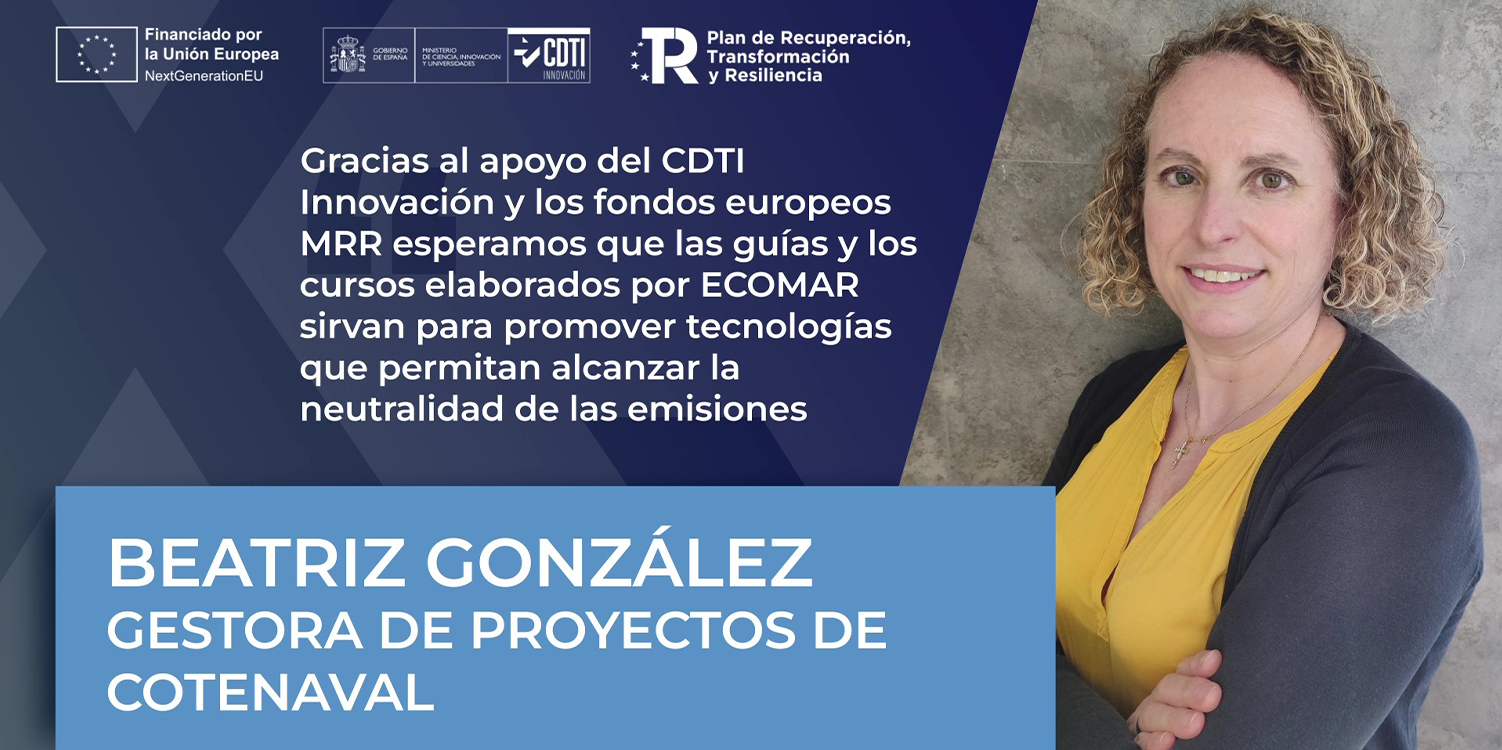
Beatriz González, COTENAVAL project manager: “Thanks to the support of CDTI Innovation and MRR funds, we hope that the guides and courses developed by ECOMAR will serve to promote technologies that achieve emissions neutrality”
The decarbonisation of maritime transport depends not only on developing alternative fuels, but also requires that shipowners, engineers, ports and crews have the necessary information to use them safely, efficiently and adapted to each type of ship. With this objective, ECOMAR was born, an innovation ecosystem coordinated by COTENAVAL that, together with GASNAM, CIDAUT Foundation and Naturgy, has developed technical guides and training material to facilitate the incorporation of new fuels into the maritime sector. The project is supported by the CDTI Innovation through the Innovation Ecosystems line and the European funds of the Recovery and Resilience Mechanism (MRR)
Since its creation in 2008, the Valencian company Consultoria Técnica Naval Valenciana, S.L. (COTENAVAL) has oriented its activity towards consultancy and naval engineering, always betting on innovation as one of its main assets and engines of competitiveness in the maritime sector. In its nearly two decades of existence, the company has focused its efforts on finding solutions that reduce the environmental impact of maritime transport.
In this line, the company has participated in recent years in some of the pioneering projects related to the incorporation of alternative fuels in Spain. Among them is the installation of the first natural gas engine to operate in port, aboard a Mediterranean ferry, an experience that subsequently led to the remotorization of part of the Baleària fleet by natural gas powered propulsion engines, now also compatible with bioLNG.
COTENAVAL’s involvement in these initiatives allowed it to detect at first hand a recurring need in many of these projects. The incorporation of new technologies also required greater knowledge on how to integrate them safely and efficiently into maritime operations. This gap between the availability of new solutions and the knowledge needed to apply them would mark the next step in the evolution of the company.
The challenge of knowledge in the field of fuel
In recent years, different alternatives have appeared to reduce emissions from maritime transport. BioLNG, methanol, hydrogen, ammonia or electricity are part of a technological scenario in the midst of transformation that will force the sector to coexist with different solutions during the coming decades. However, the availability of new fuels alone does not guarantee their implementation, since each one requires specific storage, supply, operation and safety systems, in addition to complying with increasingly demanding regulations.
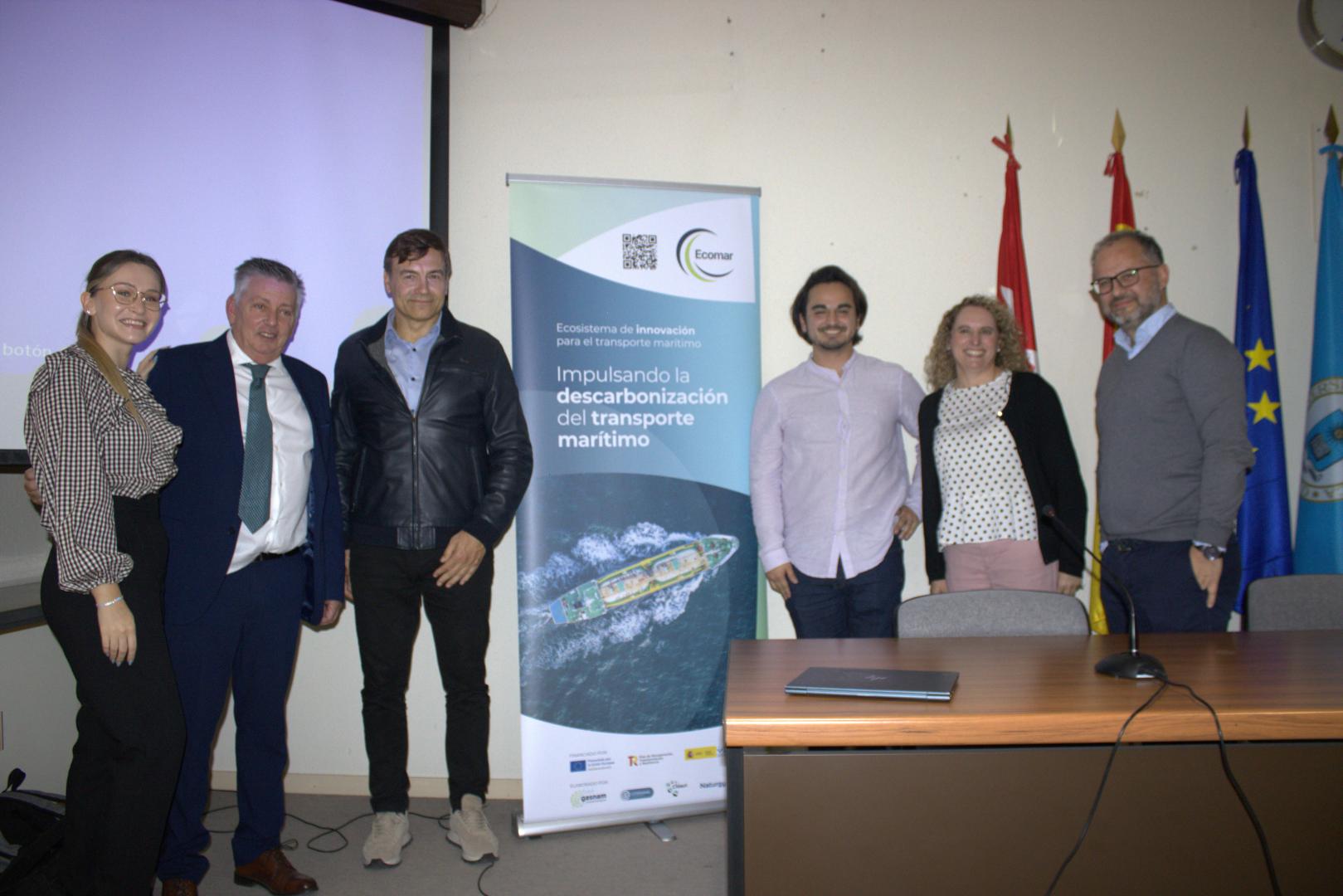 Members of the ECOMAR project consortium
As Beatriz González explains, this lack was the one that gave rise to ECOMAR: “It was found that one of the obstacles to the use of alternative fuels in the maritime sector was the lack of technical information related to existing technology, the necessary systems on board ships, fuel supply, operating procedures and staff training.”
To solve this problem, the project set out to develop a series of technical guides and specialized courses that would serve as a reference for all professionals involved in the energy transition of maritime transport.
An impact that fully connects with the Sustainable Development Goals, boosting industrial innovation (SDG 9), climate action (SDG 13) and cleaner maritime infrastructures.
Choosing the right fuel
The project is based on the idea that there is no single technological solution and no universal fuel valid for all ships. “The use of these fuels will depend on the type of boat, operational profile, availability of the same or safety characteristics, and the guides we have developed at ECOMAR allow us to select the fuel that best suits the previous conditions,” explains Beatriz González.
In this way, the project has developed technical documentation for six fuel families: bioLNG and e-LNG, bioLPG and e-LPG, biomethanol and e-methanol, renewable ammonia, renewable hydrogen and electricity. Rather than comparing fuels, these guides help to understand under what conditions each alternative is most suitable and what technical implications its incorporation on board has.
The ultimate goal is to provide industry professionals with a practical tool to facilitate decision-making at a time when environmental regulations and requirements are evolving rapidly.
The strength of an innovation ecosystem
The development of ECOMAR has required the gathering of very different knowledge under the same project, which is articulated under the formula of Innovation Ecosystem. Coordinated by COTENAVAL, the consortium is completed by the Iberian Association of Natural Gas, Hydrogen and Renewable Gas for Mobility (GASNAM), the CIDAUT Foundation and Naturgy, entities that provide complementary experience in naval engineering, technological research, sectoral integration and supply of alternative fuels.
According to the project manager, the CIDAUT technology center has contributed scientific knowledge about the properties of new fuels, while Naturgy has contributed its experience in bunkering operations. For its part, GASNAM has facilitated coordination between the different actors involved to ensure the coherence and alignment of the project activities.
“From COTENAVAL we have contributed technical knowledge in terms of naval regulations, the integration of systems in ships, the availability of propulsion systems and the operation of ships, as well as acting as coordinators of the consortium and liaison with the CDTI,” he adds.
This combination of capabilities has made it possible to develop a material designed to respond to the real needs of a sector that will have to coexist for years with different propulsion technologies.
The Drive for CDTI Innovation and MRR Funds
ECOMAR is developed as an Innovation Ecosystem, an initiative promoted by the CDTI Innovation aimed at promoting collaborative projects capable of accelerating the transformation of strategic sectors. In addition, the project is funded from European funds from the Recovery and Resilience Mechanism (MRR), an instrument funded by the European Union through NextGeneration EU to support investments that foster economic modernization and ecological transition.
“From a technical point of view, thanks to the support of CDTI Innovation, we have been able to develop a training material that will help professionals in the maritime sector to introduce new fuels, thereby promoting the use of carbon-neutral fuels that allow the decarbonization of maritime transport,” says Beatriz González.
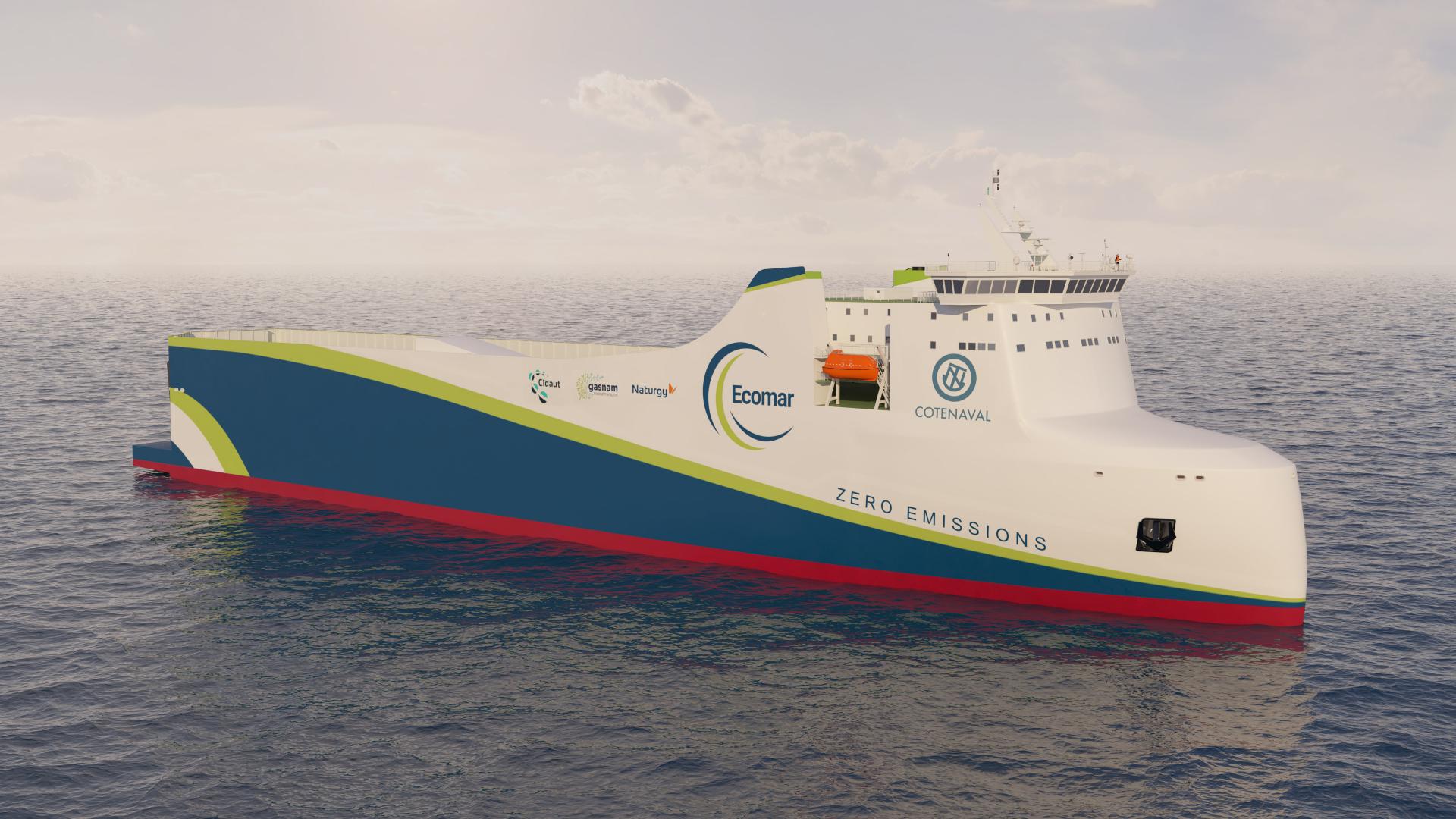 The ECOMAR project is led by COTENAVAL together with GASNAM, CIDAUT Foundation and Naturgy
The company also highlights the support received during the management of the project: “From an administrative point of view, we have been able to solve some problems that arose regarding the formation of the consortium, largely thanks to the support of the CDTI technician.”
A legacy for accelerating the energy transition
Beyond the preparation of guides and courses, the project manager hopes that ECOMAR will contribute to reducing one of the main obstacles that hinder the implementation of alternative fuels in maritime transport, the lack of shared knowledge. “We hope that both the guides and the courses developed by ECOMAR will serve to promote technologies that achieve emissions neutrality,” he explains.
By providing rigorous and accessible technical information to all stakeholders, this initiative aims to lay the groundwork for more informed decision-making and to speed up the adoption of low-carbon alternatives. “As a legacy we hope to have encouraged the entire maritime sector value chain to evolve towards more sustainable fuels,” he concludes.
CDTI Innovation
The Center for Technological Development and Innovation, CDTI E.P.E. It is the innovation agency of the Ministry of Science, Innovation and Universities, whose objective is the promotion of technological innovation in the business environment. The mission of the CDTI is to ensure that the Spanish business fabric generates and transforms scientific and technical knowledge into globally competitive, sustainable and inclusive growth.
More information:
Press Office
press@cdti.es
91-581.55.00
On the Internet
Website: www.cdti.es
On Linkedin: https://www.linkedin.com/company/29815
On X: https://x.com/CDTI_innovacion
On Youtube: https://www.youtube.com/user/CDTIoficial
This content is copyright © 2026 CDTI,EPE. The use and reproduction is allowed by citing the source and digital identity of CDTI (@CDTI_innovacion).