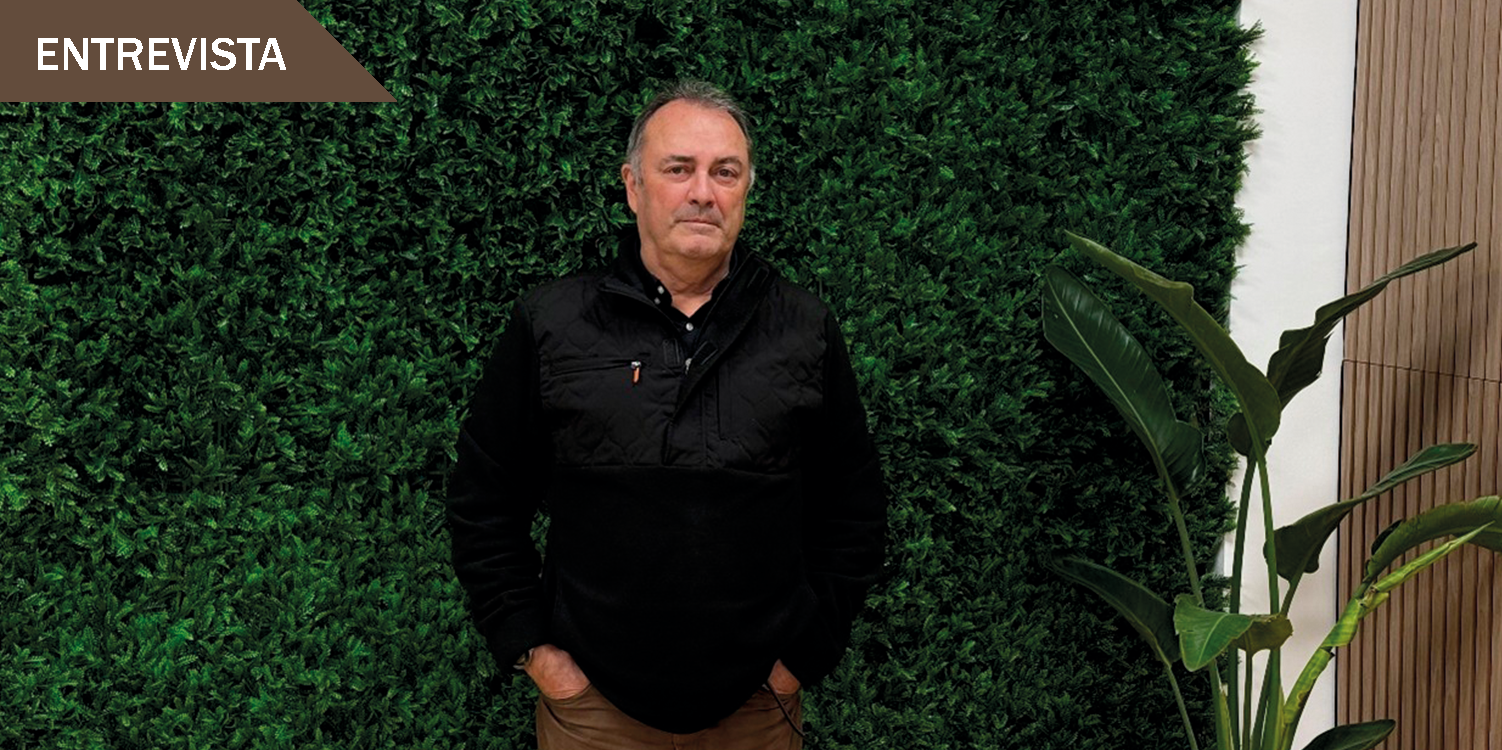
Teo Redondo, Director of Innovation at Aunoa: “Funding from CDTI Innovation and ERDF funds allows us to join international consortia and open markets with large-scale projects such as SafeRoute-6G”
Aunoa Software is committed to innovation in artificial intelligence applied to mobility connected with SafeRoute-6G, a project that seeks to improve road safety through 6G technology. The initiative, supported by the CDTI Innovation and European funds FEDER, places the Valencian company as the only Spanish partner in an international consortium of 26 organizations, reinforcing its technological and global projection
Aunoa Software was born in 2019 as a company that opted for an unusual approach in the conversational software environment: to fully develop its own technology, without resorting to external models and maintain a powerful R&D core as an axis of growth. Five years later, the Valencian company has consolidated itself in the artificial intelligence sector, especially in NLP, and is part of multinational technological consortiums in such strategic areas as network security, digital resilience and connected mobility. Among these projects, SafeRoute-6G stands out, an initiative of the Eureka Celtic-Next program in which Aunoa is the only Spanish partner and where it will contribute its experience in AI to improve the road safety of the infrastructures of the future.
Teo Redondo, the company’s Chief Innovation Officer, explains that “Aunoa has always been clear that our competitive strength depended on continued research, even before the market started looking at AI with the current intensity. Since 2019 we knew that we wanted to build our own models, especially for Spanish and co-official languages, because it was an obvious gap in the European technological ecosystem.” That early bet allowed the company to consolidate quickly. They found market even in 2020, “a year that commercially was dramatic for many companies in the sector”, and from there the customer structure grew in Spain and Latin America thanks to conversational solutions capable of operating in multiple languages and contexts.
Today Aunoa works with clients in sectors as diverse as logistics (GLS), the integral cycle of water and energy (Global Omnium), environmental management and recycling (Ecoembes), retail and electronic commerce (Druni), financial institutions (Caja Rural), telecommunications (Movistar Mexico) or public administrations, with municipalities such as Valencia, Oviedo or Cartagena. Its international portfolio already accounts for more than 30% of its turnover. Currently, the company exceeds one million euros per year in turnover, a figure that has been accompanied by its decision to continue generating its own technology.
The evolution continued strongly until 2025, when the company created a specific innovation department that today has four researchers —with plans to double in 2026— and intensified its participation in projects with a high technological impact. That growth has been possible thanks to a firm strategy: allocating between 10% and 18% of its annual turnover to R&D activities, an exceptional effort for a company of its size and reflecting its long-term vision. It is in this context that SafeRoute-6G is framed, probably one of the most ambitious scientific and operational challenges that the company has faced.
Anticipating the mobility of the future
“The overall goal of SafeRoute-6G is to improve road safety infrastructure and services through 6G technology,” Redondo summarises. The vision of the project starts from an inexorable reality: the appearance of connected, autonomous vehicles and increasingly dependent on real-time data. All of them need intelligent infrastructures capable of immediately interacting with sensors, cameras, radars, communications systems and urban management platforms.
“The automotive industry is moving towards autonomous vehicles of all types and sizes, and that requires a technological infrastructure — terrestrial and satellite — capable of responding in complicated weather conditions or high-density traffic scenarios,” he explains. At that point, the leap to 6G technologies makes sense: greater bandwidth, lower latency and the ability to integrate multimodal information from very diverse sources.
SafeRoute-6G will be developed between 2024 and 2027 with a total budget close to 8 million euros, of which Aunoa executes 285,000 euros. The consortium is made up of 26 organizations from countries such as Austria, Finland, Luxembourg, United Kingdom, Canada, South Korea, Turkey and Spain. “We are the only Spanish participant, and that role has an important symbolic and technical weight,” says Teo Redondo.
Technologies that are still prototype
The project will test 6G wireless communications technologies that, today, are still far from their commercial phase. Cooperative intelligent transport systems (C-ITS), virtual and augmented reality tools linked to digital twins, as well as methods of detection and prevention of cyberthreats will also be integrated.
“Aunoa will contribute with advanced AI algorithms and validate technologies in three pilots focused on cybersecurity techniques,” says the Director of Innovation. These pilots will allow you to assess how AI can anticipate potential incidents, identify risk patterns and provide automatic responses in real time.
The technical complexity is significant. “There is not a single challenge, but a combination of them, because the level of maturity of the technologies involved varies enormously,” Redondo acknowledges. Many current road safety systems rely on classic machine learning models that are effective, but insufficient. “They are reactive models, based on periodic monitoring, with no real predictive capacity and with difficulty in managing unstructured, visual or multimodal data.”
The revolution comes with multimodal models capable of simultaneously analyzing text, images, LiDAR data, radar signals or advanced sensor information. “An intelligent agent can integrate real-time weather conditions, traffic camera images, vehicle data and radar signals to get a complete picture of the situation, which is essential when the environment is complicated by snow, fog or heavy rain.”
A strategic international collaboration
SafeRoute-6G brings together companies and technology centres from eight countries, an organisational and scientific challenge. Redondo clarifies that, although coordination is complex, there is a solid previous experience among the participants: “Many of the premises of the project come from deficiencies identified in previous projects, which allowed us to structure a balanced and very complementary consortium.”
Within the project, Aunoa leads the work package dedicated to collecting information from the 12 test sites distributed in different countries. These real scenarios will allow us to validate the developments and integrate the applied technologies. “It’s a fundamental work package, because pilots and end-use cases depend on it,” explains Redondo.
Participation in international programs is common for the company and is part of its growth strategy. “Our team has extensive experience in innovation projects funded by CDTI Innovation and international programs. This makes dialogue and technical management much easier.”
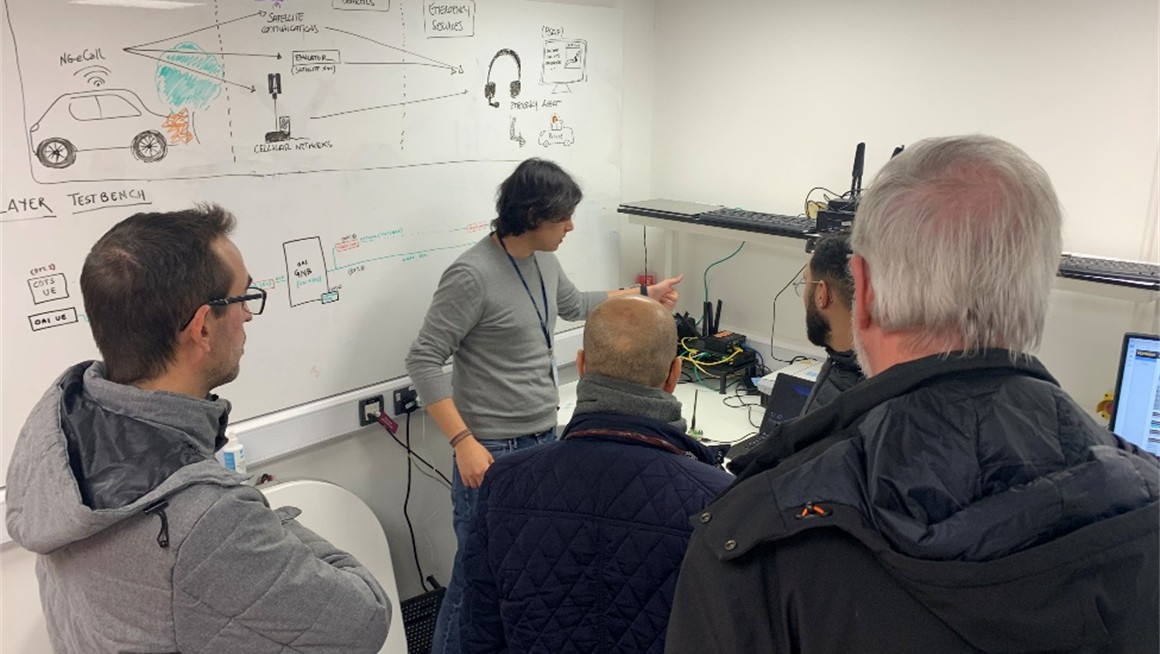
Follow-up meeting of the SafeRoute-6G project – Oxford, November 2025
Energy efficiency and sustainability
Although road safety is the main purpose of the project, SafeRoute-6G incorporates a strong energy sustainability component. Some of the pilots’ sensors include state-of-the-art motherboards and chips with very low consumption. “There are devices whose battery is designed to last more than 10 years, and part of the planned antennas work with ultra-low consumptions that allow them to be powered by small solar panels.”
In addition to reducing energy needs, the project contemplates the use of satellite communications, which decreases cabling materials and avoids overloads in terrestrial networks. “Sustainability is not an addition, it is an integrated condition from the design phase”, he stresses.
Research needs investment
Research initiatives of this scale require significant investment and a financial ecosystem that allows high technological risks to be taken. “CDTI Innovation is the funding agent for the Eureka Celtic-Next programme, in this case through European ERDF funds. For Aunoa Software, this help makes it easier to address areas of development that we had not been able to consider until now, and without that support we probably could not have gone into a project of this magnitude,” says Redondo.
The Director of Innovation adds that these grants are essential for intensely innovative companies: “Traditional funding is very difficult for such disruptive projects. European funding allows us to participate in international consortiums, open new markets and connect with partners such as Turkey or South Korea, with whom it would have been impossible to collaborate in any other way.”
In search of technological sovereignty
The SafeRoute-6G project is not an isolated case in Aunoa’s strategy. The company is part of other European and national projects that seek to advance multimodal AI, digital resilience or language models trained in its own infrastructure. Technological sovereignty is a central axis.
“We believe that Europe needs real technological independence, from language models to computing infrastructures. And our line of research goes in that direction: multimodal models, intelligent agents, neuro-symbolic AI, applied robotics and, of course, efficient retraining techniques that reduce energy consumption.”
That vision is also reflected in ZAHARA, SUSTAINET_guardian or IVACE projects, where Aunoa works on models that are more efficient, safer and less dependent on external platforms.
International projection and next steps
The company already exports 32% of its sales, especially in Latin America, and holds negotiations in Canada, Egypt and the United Arab Emirates. Redondo explains that the international projection has been strengthened precisely by its participation in projects such as SafeRoute-6G. “It opens doors for you, positions you in border technologies and connects you with very different ecosystems. For a Spanish AI company, that opportunity is extraordinary.”
Over the coming years, Aunoa will continue to grow with a model that combines business and applied science. “AI is moving very fast and we know we have to move just as fast,” Redondo concludes. “SafeRoute-6G is a key part of that strategy, because it forces us to work at the limit of what is possible today and prepares us for what will come tomorrow.”
CDTI Innovation
The Center for Technological Development and Innovation, CDTI E.P.E. It is the innovation agency of the Ministry of Science, Innovation and Universities, whose objective is the promotion of technological innovation in the business environment. The mission of the CDTI is to ensure that the Spanish business fabric generates and transforms scientific and technical knowledge into globally competitive, sustainable and inclusive growth. In 2024, within the framework of a new strategic plan, the CDTI provided more than 2.3 billion euros of support to Spanish companies and startups.
More information:
Press Office
press@cdti.es
91-581.55.00
On the Internet
Website: www.cdti.es
On Linkedin: https://www.linkedin.com/company/29815
On X: https://twitter.com/CDTI_innovacion
On Youtube: https://www.youtube.com/user/CDTIoficial
This content is copyright © 2025 CDTI,EPE. The use and reproduction is allowed by citing the source and digital identity of CDTI (@CDTI_innovacion).