César Penalva, Director of Penalva Food (Nordwik Ice Cream): “We explore a new range of ice cream for people with digestive pathologies with the support of CDTI Innovation and FEDER funds”
The company Penalva Food promotes —with the support of the CDTI Innovation and the cofinancing of the European FEDER funds— the development of an innovative range of ice creams adapted to low diets in FODMAP, a pioneering proposal that combines digestive health, food inclusion and sensory experience to respond to a growing market need
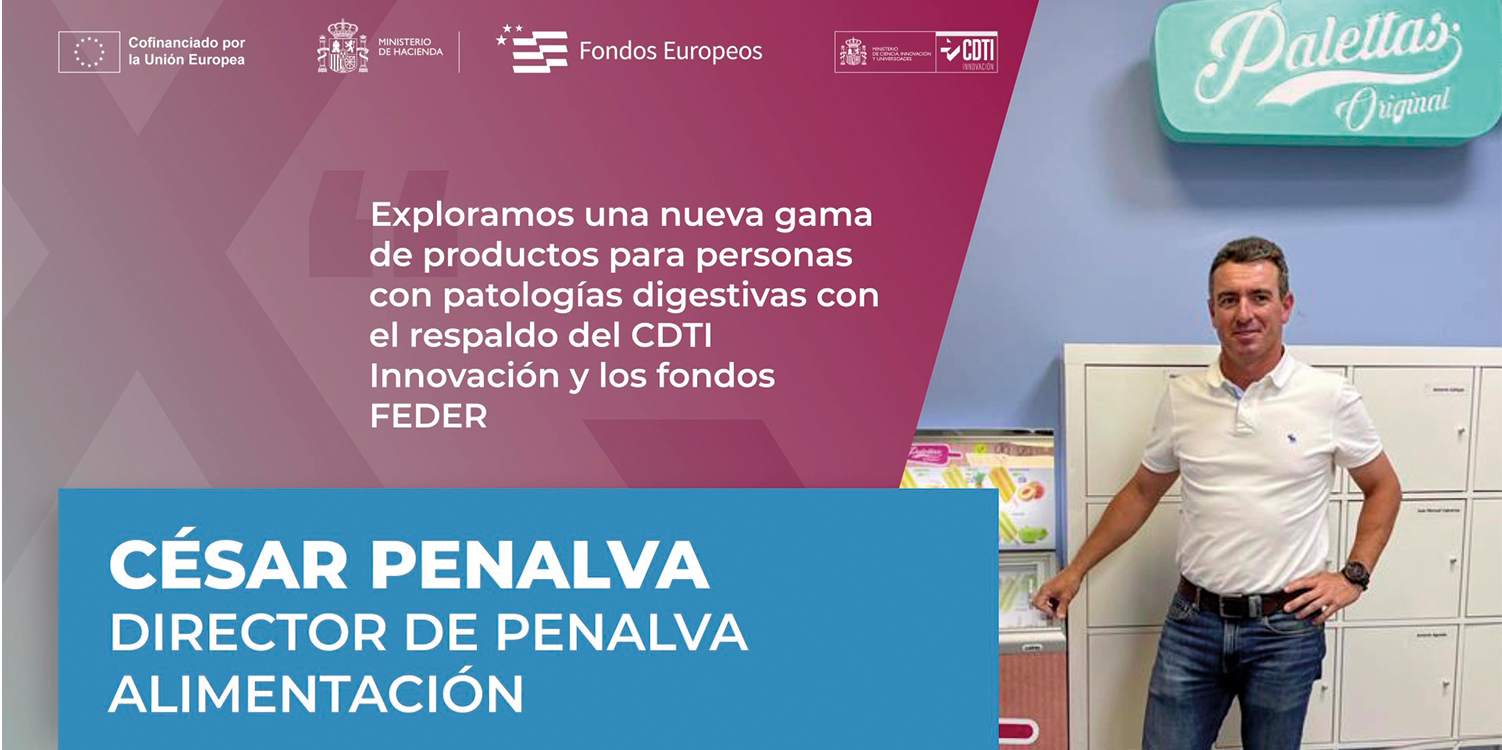
Penalva Alimentation is a family business with deep roots in the Valencian ice cream tradition. Its origin dates back to 1977, when the company was constituted to give continuity to a factory created a few years before and transfer that know-how to Granada. Since then, the firm has built a model based on the combination of experience and technological evolution.
As its CEO, César Penalva, explains, the company’s philosophy has always been clear: “Keep tradition as a starting point, but looking for innovation on our way to the future.” That vision translates into a constant commitment to integrate traditional processes with advanced tools, guaranteeing high quality products without renouncing sustainability.
With a staff of 122 employees and a specific R&D team made up of four people, the company develops and markets ice cream and frozen products under brands such as Nordwik, Palettas or La Ibense. Its presence is eminently national —97% of its sales— although it also exports to countries such as Germany, France, Portugal or the United Kingdom.
In this context of consolidation and sustained growth, innovation becomes a strategic lever. Not only to improve processes—such as automating traceability or optimizing the supply chain—but also to explore new market opportunities linked to emerging trends in food.
Innovation for an inclusive diet
In this line is framed the project of development of new ice creams suitable for low diets in FODMAP, an initiative that arises from the identification of a need not yet covered in the market.
As Penalva points out, “the idea was born from the absence of indulgent products, such as ice creams, adapted to low diets in FODMAP”. This type of diet, increasingly recommended for people with gastrointestinal disorders such as irritable bowel syndrome, involves significant restrictions that limit access to certain foods.
The company detected a clear opportunity: to offer an alternative that not only met the nutritional requirements, but also maintained the emotional component associated with the consumption of ice cream. “It’s about developing a product that allows you to maintain that experience without compromising your digestive health,” he explains.
The project, supported by the CDTI Innovation and the European ERDF funds, thus responds to the convergence of three factors: a growing clinical need, a trend towards personalized and inclusive food and the technological capacity of the company to address a challenge of high complexity. In the words of the CEO, they are convinced that this development “will mean a before and an after in the market”.
New niche in the food sector
The proposal is not a partial adaptation of existing products, but an integral reformulation that allows strict compliance with the criteria of a low FODMAP diet.
In this sense, the new range provides “a solution where currently there are no completely adapted products”, since the available alternatives are limited to specific attributes such as the absence of lactose or sugar. The innovation lies in combining multiple nutritional requirements—lactose free, polyols free, and low fructose—with a sensorially appealing product.
For the food sector, this advance opens a new niche of the market linked to digestive health and well-being. According to Penalva, this is an opportunity to position itself in “a category of high added value, aligned with trends in functionality, inclusion and healthy eating”.
Redesigning the ice cream from scratch
One of the most complex aspects of the project has been to ensure that the product maintains the organoleptic characteristics of a traditional ice cream despite the elimination of key ingredients.
Penalva explains it clearly: “It’s not about replacing one ingredient with another, but about replicating its technological functions.” In an ice cream, components such as sugar or lactose not only add sweetness, but also influence texture, freezing or stability.
The solution has gone through a complete redesign of the formulation, using combinations of alternative sugars, sweeteners, stabilizers, emulsifiers and fats. Added to this is a precise adjustment of the production processes, such as whipping, aeration or freezing, with the aim of controlling the size of the ice crystals.
“The result is a product that reproduces the sensory experience of a traditional ice cream in creaminess, flavor and texture, although its formulation is completely different,” he stresses.
However, the main challenge has been to simultaneously eliminate multiple components—lactose, sucrose, polyols, and high levels of fructose—without compromising product quality or stability. “Each one fulfills a specific function, so their replacement forces the entire matrix to be redesigned,” he adds.

Ice cream made by Penalva Food
Pleasure and digestive health
The project is not limited to avoiding problematic ingredients, but incorporates elements with potential benefits for intestinal health. Among them, the inclusion of probiotics and a careful selection of plant ingredients stands out.
According to Penalva, this combination seeks to “improve the intestinal microbiota, especially in people who follow low diets in FODMAP, where it can be reduced”. Probiotics can help balance the intestinal flora, reduce inflammation, and relieve digestive symptoms.
On the other hand, the diversity of fruits and vegetables favors a greater microbial richness, which is associated to a better intestinal health. In this way, the product not only avoids triggers, but incorporates an added functional value.
“We are aligned with the concept of healthy and preventive eating,” he says, placing the project in a growing trend towards products that combine pleasure and well-being.
Public support for R&D
The development of such solutions involves taking on high technical and economic risks, especially when it comes to exploring categories still emerging in the market.
In this context, the support of public funding, through the CDTI Innovation and the European ERDF funds, has been a key element. As Penalva points out, “we have had the possibility to study the elaboration of specific products for people with digestive problems without the pressure or need to succeed immediately”.
This margin has allowed us to deepen research, improve the quality of developments and strengthen the company’s image as an innovative actor. In addition, it has facilitated the exploration of new health-oriented product lines.
From a broader perspective, the CEO acknowledges that, although they still cannot quantify the economic impact, they do perceive a clear social benefit. “They are products aimed at people with digestive pathologies such as the irritable colon,” he points out, underlining the potential of this type of initiative to improve the quality of life of consumers.
Science, inclusion and added value
Unlike other releases, this range does not compete directly with conventional ice creams. Its positioning is based on offering a specific solution for consumers with dietary restrictions.
“It is based on trends such as inclusive eating, digestive health and free products,” explains Penalva. This value proposition, based on science and well-being, allows access to new market segments and opens up differentiated marketing channels.
The company is currently working on defining the launch strategy, with the aim of consolidating a solid proposal that combines scientific rigour and sensory experience.
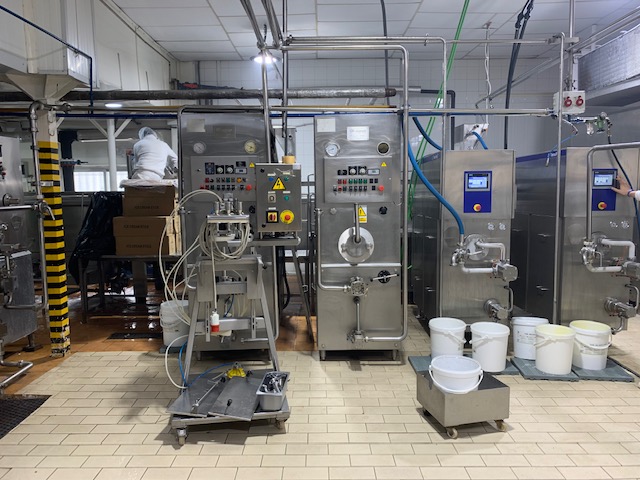
Facilities of Penalva Food
Towards a new ice cream paradigm
In the medium term, Penalva Food aims to turn this line into a reference within the segment of functional and inclusive ice creams. The aim is to expand the range of products and strengthen their presence in the market.
According to its CEO, this new category “will be a strategic part of the company’s catalogue”, helping to diversify the offer and attract new consumer profiles.
Beyond its internal impact, the project aims to influence the evolution of the sector. “We want to position ourselves as an innovative player that drives healthier, more personalized and more accessible solutions,” he says.
In this sense, the initiative could lay the foundations for the development of future lines adapted to other nutritional needs, consolidating a model of innovation focused on people.
CDTI Innovation
The Center for Technological Development and Innovation, CDTI E.P.E. It is the innovation agency of the Ministry of Science, Innovation and Universities, whose objective is the promotion of technological innovation in the business environment. The mission of the CDTI is to ensure that the Spanish business fabric generates and transforms scientific and technical knowledge into globally competitive, sustainable and inclusive growth. In 2025, within the framework of the Strategic Plan 2024-2027, the CDTI provided more than 2 billion euros of support to Spanish companies and startups.
More information:
Press Office
press@cdti.es
91-581.55.00
On the Internet
Website: www.cdti.es
On Linkedin: https://www.linkedin.com/company/29815
On X: https://twitter.com/CDTI_innovacion
On Youtube: https://www.youtube.com/user/CDTIoficial
This content is copyright © 2026 CDTI,EPE. The use and reproduction is allowed by citing the source and digital identity of CDTI (@CDTI_innovacion).