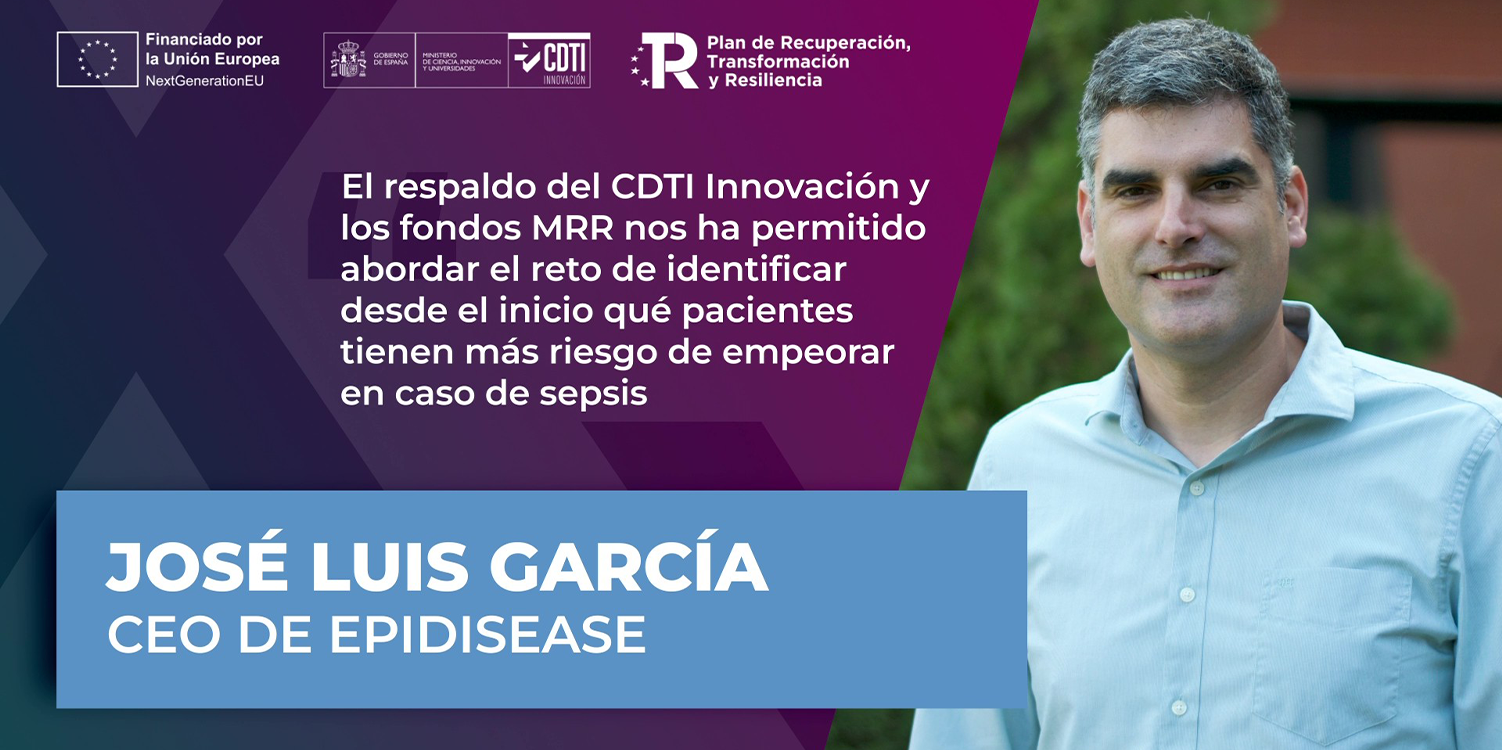
José Luis García, CEO of EpiDisease: “The support of CDTI Innovation and MRR funds has allowed us to address the challenge of identifying from the outset which patients are most at risk of getting worse in case of sepsis”
Sepsis is a medical emergency in which every hour of delay in identifying it counts. EpiDisease proposes HistShock IVD, an in vitro diagnostic kit based on mass spectrometry that measures circulating histones in plasma samples, early markers of infection. HistShock is able to differentiate sepsis from other non-infectious hyperinflammatory processes, with potential in addition to identifying patients at increased risk of developing serious coagulation disorders and determining which supportive therapies they may need. The project is supported by the CDTI Innovation through the Seal of Excellence, financed with European MRR funds, a commitment that connects with the Center's priority of promoting a disruptive innovation capable of providing diagnostic precision in one of the main causes of hospital mortality in the world
The sepsis can change in severity in a matter of hours. A patient who arrives at the hospital with signs compatible with an infection can quickly deteriorate and develop complications that affect several organs. The problem is that, in the early stages, it is not always easy to know who will develop worse and may require a quick admission to the Intensive Care Unit, so having early information about their risk can be decisive in guiding medical care and anticipating complications.
This need led EpiDisease to apply to the clinical field a line of work that the team had already developed for years in the field of biomedicine. The company was born in 2014 as a spin-off of the University of Valencia, INCLIVA and the CIBER of the Carlos III Health Institute, with the intention of transferring the advances obtained in the laboratory to solutions that could have a direct application in health care. "We had been dedicated to biomedical research for years and we saw a situation that was constantly repeated: we discovered interesting things in the laboratory, but very few became useful tools for patients," recalls José Luis García, CEO of the company.
Epigenetics became the starting point of that search. This field studies the changes that regulate the functioning of genes without modifying the DNA sequence and allows us to observe certain alterations associated with certain diseases. The team began to study the behavior of histones and their presence in the bloodstream, especially in serious processes such as sepsis. This line of research led to the development of HistShock, an in vitro diagnostic test designed to detect the disease and provide information about its severity.
A new way to anticipate
Today, the diagnosis of sepsis combines clinical signs, titration scales, microbiological cultures and different analytical parameters, but none of these tests alone allows us to quickly find out which patients are most at risk of developing into a more serious condition. HistShock aims to provide additional information from molecules directly related to the body's response to infection.
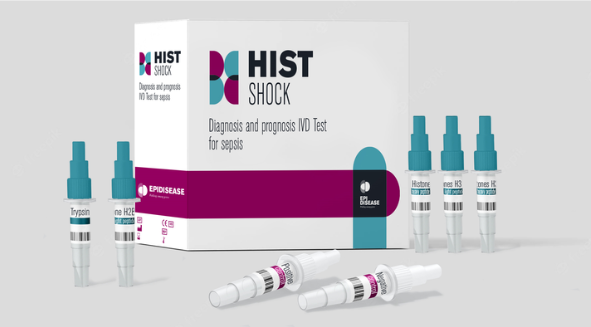
HistShock Diagnostic Kit
Specifically, the test analyzes histones H2B and H3 and activated protein C in a plasma sample, using a technique called mass spectrometry. Histones are usually found inside cells, where they help to organize DNA, but during sepsis they can be released in large quantities into the bloodstream. “We look at how these histones are directly involved in the innate immune response to infection, but when released into the blood in very high amounts they contribute to the cellular and organic damage characteristic of sepsis,” says the company’s CEO.
The test thus seeks to provide a double information: on the one hand, to help differentiate the sepsis from other similar inflammatory processes and, on the other, to identify from the early stages the patients with the highest risk of deterioration.
Anticipating the deterioration
In a disease that can change in severity within a few hours, detecting the risk of unfavorable evolution can be as important as confirming its presence. A patient who initially appears stable can quickly develop septic shock or complications that require intensive support.
If this information were available from the outset, the medical team could increase the surveillance of certain patients, assess their admission to the ICU earlier, or anticipate resources such as mechanical ventilation or renal replacement therapy. “For us, the prognostic part is especially important. When a doctor treats a critical patient, he or she not only needs to know if he or she has sepsis. He needs to know what can happen in the next few hours,” explains the CEO.
The company also studies whether successive measurements can provide information on the response to treatment and whether circulating histones can help identify those who might benefit from therapies directed against these molecules. These lines of research still need to be backed up with sufficient evidence to determine what utility they may have in the application of new therapies currently under development.
From the laboratory to the hospital
Turning a biomedical discovery into a test that can be used routinely requires much more than proving that a biomarker works under controlled conditions. Samples can have different characteristics and be processed in different circumstances depending on the center, so EpiDisease has had to standardize the entire process to ensure consistent and reproducible results. “Discovering something interesting is just the beginning. The really hard thing is to get it to work every day, with real patients and in different hospitals,” says the CEO.
The development has already entered a phase of evaluation of the clinical functionality of the test, with a multicenter clinical performance study in which 480 patients from several hospitals have participated. The objective is to analyze the ability of HistShock to differentiate sepsis from other non-infectious hyperinflammatory processes and to analyze its relationship with the evolution of the disease.
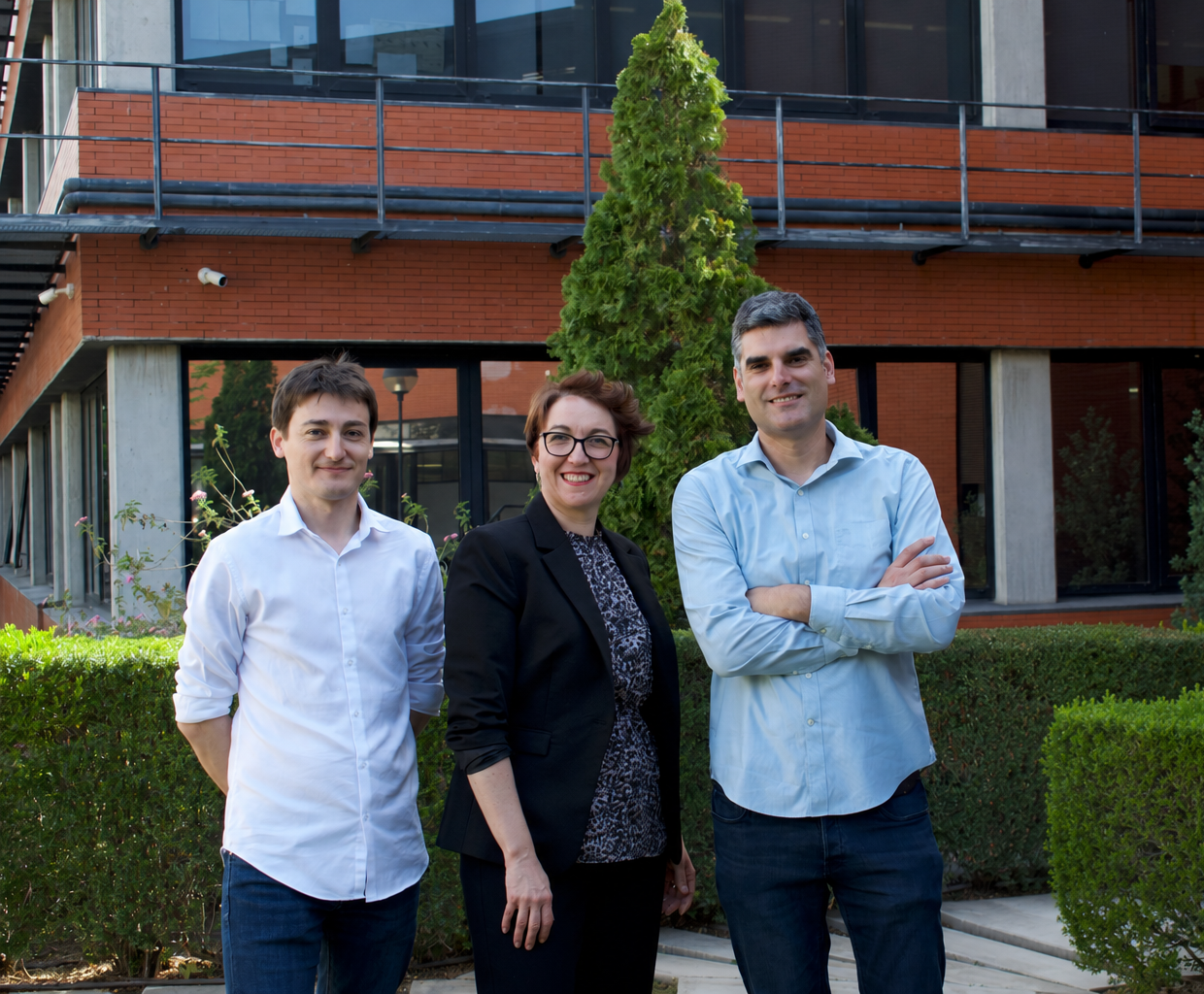 Members of the EpiDisease team
The company is now working on consolidating the analytical method and closing the validation needed to move towards the market. The next steps include completing the performance assessment and preparing the technical dossier according to the European In Vitro Diagnostic Regulation, before tackling industrialisation, scaling and CE-IVD marking.
The impulse of the CDTI Innovation
This project has been supported by the CDTI Innovation through the Seal of Excellence, financed with European funds from the Recovery, Transformation and Resilience Plan (MRR), which has allowed us to tackle a larger action. “For a small business like EpiDisease, this support has been critical. The funding, of approximately 1.9 million euros, has allowed us to recruit 480 patients and work with several hospitals, in addition to addressing in parallel the analytical validation and regulatory preparation of the health product,” explains José Luis García.
For the Valencian company, this support has also meant an external validation of the project and has facilitated collaboration with reference hospitals in a research of high scientific, technical and regulatory complexity.
From sepsis to precision medicine
As the development of HistShock progresses, EpiDisease also explores new application possibilities that could extend its usefulness beyond the identification and evolution of sepsis. The company is working on a new route related to precision medicine through its collaboration with Matisse Pharmaceuticals, from the Netherlands, in the eHISTOCURE project, funded by Eurostars.
The initiative studies the use of HistShock as an accompanying diagnosis within the clinical development of isupartob sodium, a research treatment by Matisse Pharmaceuticals. The measurement of circulating histones could help identify those most likely to respond to this therapy and thus move towards a model in which the selection of treatment is adapted to the characteristics of each person.
For now, the priority remains to demonstrate with evidence what this technology contributes in clinical practice and to complete the necessary requirements for its arrival on the market. Then there will come industrialization and its incorporation into the hospital environment. “It is a relevant possibility, but it must be demonstrated during validation,” he concludes.
CDTI Innovation
The Center for Technological Development and Innovation, CDTI E.P.E. It is the innovation agency of the Ministry of Science, Innovation and Universities, whose objective is the promotion of technological innovation in the business environment. The mission of the CDTI is to ensure that the Spanish business fabric generates and transforms scientific and technical knowledge into globally competitive, sustainable and inclusive growth.
More information:
Press Office
press@cdti.es
91-581.55.00
On the Internet
Website: www.cdti.es
On Linkedin: https://www.linkedin.com/company/29815
On X: https://x.com/CDTI_innovacion
On Youtube: https://www.youtube.com/user/CDTIoficial
This content is copyright © 2026 CDTI,EPE. The use and reproduction is allowed by citing the source and digital identity of CDTI (@CDTI_innovacion).