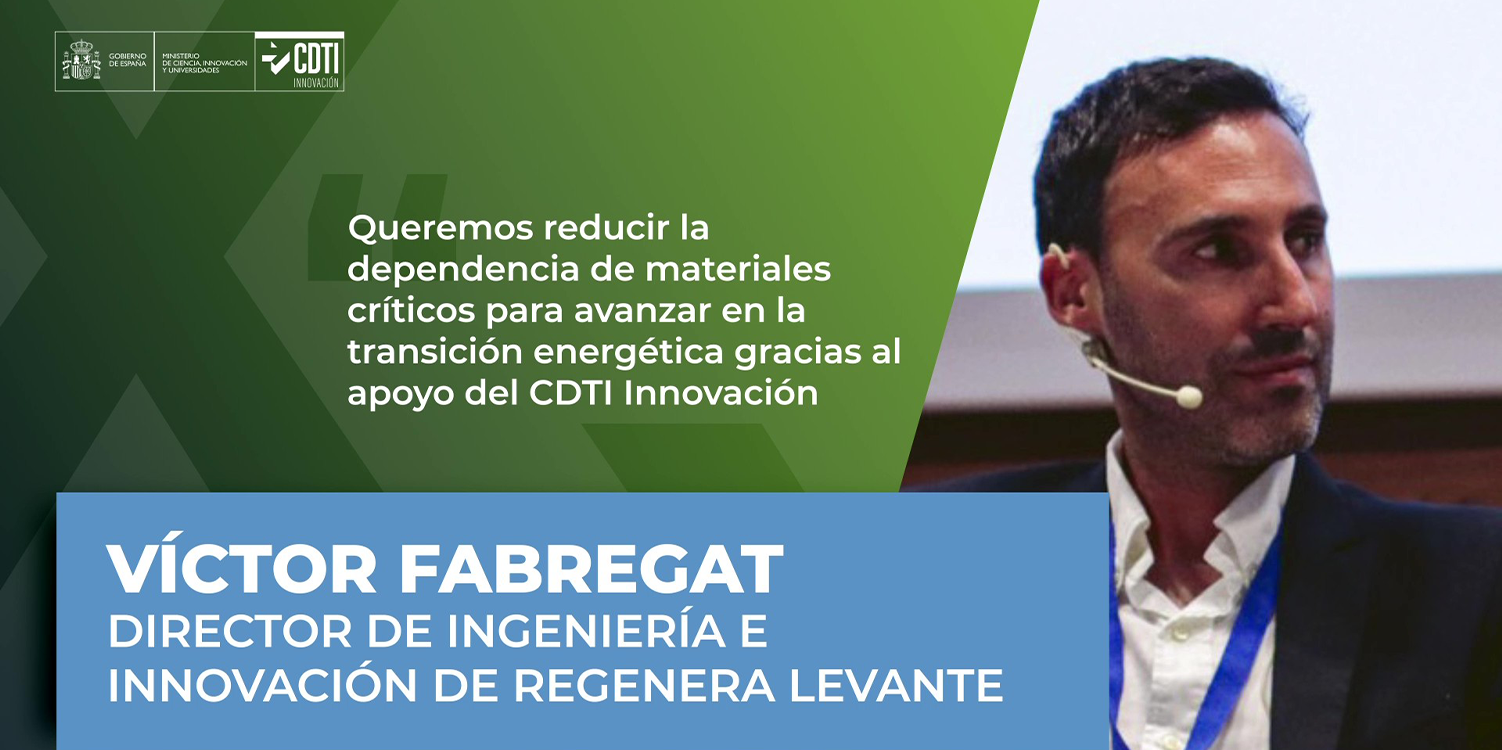
Víctor Fabregat, Director of Engineering and Innovation at Regenera Levante: “We want to reduce dependence on critical materials to advance the energy transition thanks to the support of CDTI Innovation”
Electrical storage and the production of green hydrogen today depend, to a large extent, on critical metals and platinoids (PGM), the availability and cost of which condition the speed of the energy transition. The MEGAVATIO project, led by Regenera Levante, investigates alternative, abundant and easily recyclable materials that maintain technical performance and reduce environmental impact throughout their life cycle. Coordinated by Regenera Levante, the consortium is composed of six companies and four scientific and technological research centers. The project is supported by CDTI Innovation through the Misiones program, in line with the Center’s priority to strengthen Spain’s strategic autonomy and reduce the vulnerability associated with supply chains of critical materials concentrated in a few countries.
The Murcian company Regenera Levante was born in 2007 with an activity focused on energy efficiency, renewable energies and sustainability. Since then, it has progressively extended its lines of work to areas such as energy storage, green hydrogen, the circular economy and the recovery of resources, with an increasing commitment to R+D+I.
That journey led the company to focus on reliance on critical raw materials and the need to look for more accessible and recoverable alternatives. "Our experience has allowed us to see that the energy transition poses a certain paradox: we need to massively deploy technologies such as batteries and electrolysers to reduce our dependence on fossil fuels, but many of these technologies depend in turn on critical raw materials whose production is very concentrated geographically," explains Víctor Fabregat, director of Engineering and Innovation at Regenera Levante.
To respond to this need, MEGAVATIO was born, a project that researches new materials and processes to replace the most difficult to obtain, as well as ways to reuse those currently used, with the aim of moving towards more sustainable and resilient energy solutions.
Three ways to transform materials
Formed by a consortium that brings together 10 members under the coordination of Regenera Levante, the MEGAVATIO project addresses three lines of work. The first focuses on the precision dies used to cut the electrodes of the batteries. These tools require materials with high hardness and strength, hence the research explores the use of advanced ceramics to replace tungsten carbide and cobalt.
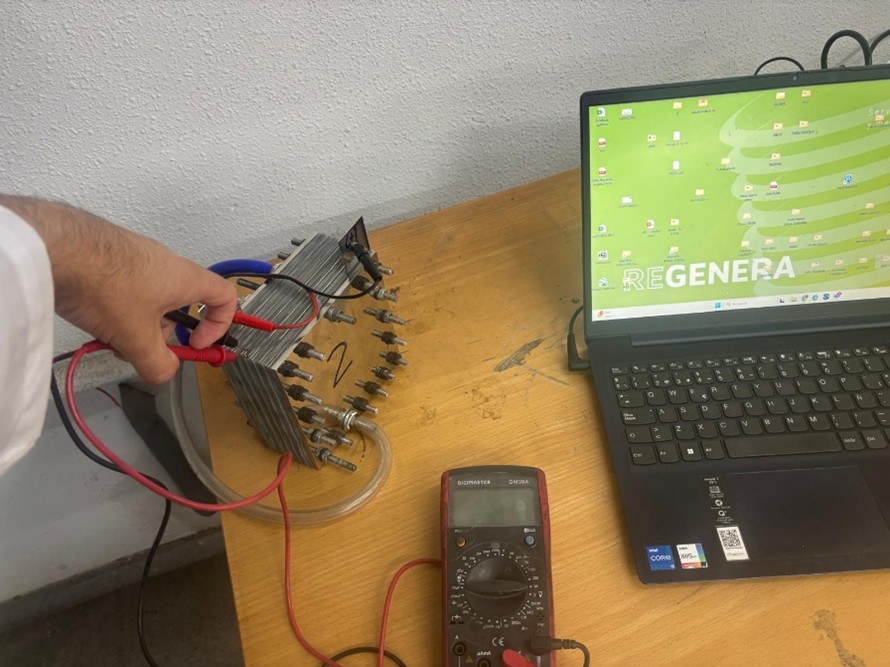
MEGAVATIO researches alternative materials for energy storage technologies
Another line is aimed at aluminum-air batteries, an alternative to the current lithium-ion batteries. The research proposes incorporating recycled aluminum into the anode, the electrode where the oxidation reaction occurs, and searching for materials based on more abundant elements for the cathode, thus reducing the need for platinum group metals.
The third challenge lies in PEM electrolysers, equipment that uses electricity to produce hydrogen from water. Here the work focuses both on finding alternatives to titanium in certain components and on reducing the amount of iridium and platinum needed in the electrodes. When complete replacement is not feasible, MEGAVATIO plans to recover these metals from waste and equipment out of use to return them to the process.
The overall objective is to reduce by at least 80% the dependence on critical materials in the technologies addressed, maintaining the technical performance and avoiding transferring the negative impact to another phase of the process. “The interesting thing about MEGAVATIO is that it addresses the problem from three complementary strategies: replacing what can be replaced, minimizing what is still essential and recovering the materials to reuse them whenever possible,” summarizes the director.
The challenge is for the alternative to work
However, replacing a critical material is not simply about finding a more abundant one. The materials currently used meet very specific requirements, from the corrosion resistance of titanium in PEM electrolysers to the hardness of tungsten carbide in the dies or the stability of iridium in the electrodes.
Therefore, each alternative must respond to different conditions. In ceramics, the challenge is to combine hardness, strength and ease of machining, while in aluminum-air batteries, it seeks to take advantage of recycled aluminum and develop catalysts without precious metals. In the case of PEM electrolysers, the aim is to reduce the use of iridium and platinum without losing performance.
The next step will be to verify that these materials can work in real conditions, so MEGAVATIO must take them from their initial development to fabricable components and, finally, validate their behavior in the technologies for which they have been designed. "The alternative has to offer sufficient efficiency, stability, durability and safety and, in addition, it must be able to be manufactured on an industrial scale and at a competitive cost," he says.
A consortium that covers the entire chain
To face this ambitious project, Regenera Levante heads a consortium made up of 6 companies and 4 scientific and technological research centers that provide different capabilities. Thus, the Murcian company assumes the coordination of the project and works on the recovery of iridium and platinum and its reuse in new electrodes, in addition to participating in the integration, validation and environmental evaluation of the components.
For its part, Nanoker develops advanced ceramics for dies and new materials and coatings for electrolysers, while Lazpiur is responsible for bringing these solutions to the manufacture of precision punches and dies. Zelestium leads the aluminum-air batteries and Acería de Álava works on alternatives to titanium for bipolar plates and on coatings that reduce the use of platinum. For its part, Jorcar addresses the recovery of titanium and ruthenium and its use in new porous transport layers.
The business work is completed with the participation of the Tekniker centers, Institute of Catalysis and Petroleochemistry of the CSIC (ICP-CSIC), Center for Research in Nanomaterials and Nanotechnology (CINN-CSIC) and Madrid Institute of Advanced Studies (IMDEA), which provide specific capabilities in materials, electrochemistry, characterization, coatings and validation.
“This allows something fundamental: that the project does not remain only in material research, but that we can go through the entire chain from the formulation and characterization to the manufacture of the component and its subsequent validation in a battery or an electrolyser,” says the director.
A new autonomy for the energy transition
The expansion of energy storage and renewable hydrogen will require large amounts of equipment and, with it, the raw materials needed to manufacture them. If these materials come mostly from outside Europe and their supply chains are concentrated in few markets, the deployment of these technologies can generate new vulnerabilities. MEGAVATIO aims to reduce this exposure and strengthen European industrial capacity.
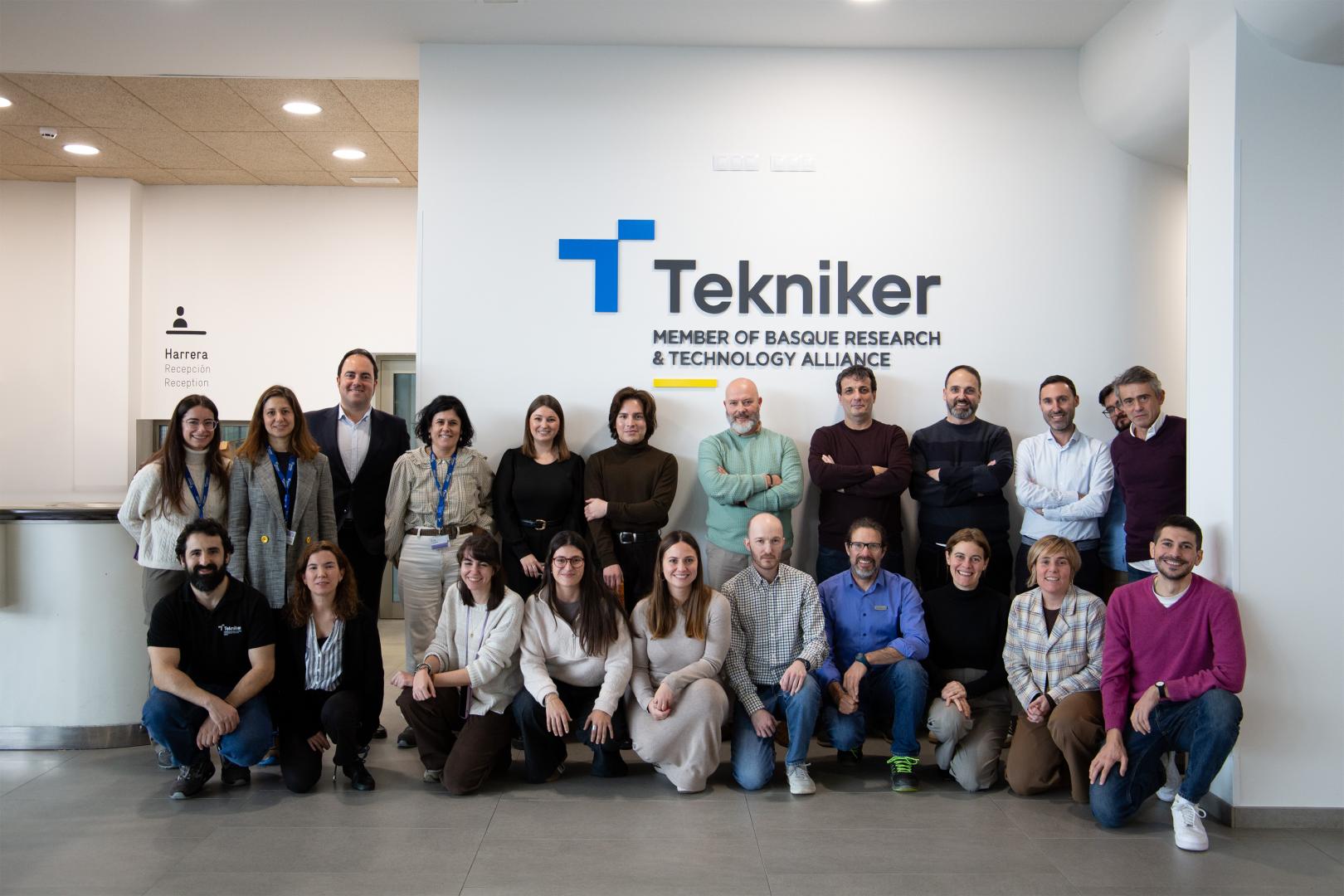 Regenera Levante heads a consortium made up of 6 companies and 4 centers
The search for alternatives also takes into account their environmental impact and safety throughout the life cycle. To evaluate it, the project applies Life Cycle Analysis methodologies and the European approach Safe and Sustainable by Design. This approach also connects with SDG 7, on affordable and clean energy, and SDG 12, which focuses on responsible production and consumption.
The aim is to develop components capable of working with more abundant or recycled materials and, at the same time, to strengthen the industrial capacities necessary to build more resilient supply chains in Spain and Europe. "The potential impact is very important because we are acting on a problem that goes far beyond the cost of a battery or electrolyser," he says.
The promotion of CDTI Innovation through the Missions programme
The project has a budget close to five million euros and a duration of three years, a necessary framework to carry out research that starts in some cases from still low levels of technological maturity. The CDTI Science and Innovation Missions support line facilitates this journey by bringing together business and scientific capabilities around a strategic challenge and allowing development to move forward in a coordinated manner through the different stages of technological maturation.
For the Murcian company, the project also represents the opportunity to lead an industrial consortium specialized in hydrogen, recovery of critical raw materials and circular economy. MEGAVATIO obtained the second best rating of its call, a result that reflects both the technological dimension of the proposal and the capacity of the partners gathered. “The call for Misiones allows us to take precisely that risk, mobilize complementary business and scientific capabilities and orient research towards strategic challenges for Spain and Europe,” says Víctor Fabregat.
The Road to Industrial Application
MEGAVATIO began in January 2026 and will last until the end of 2028. The project is now in an initial phase, focused on defining the materials and advancing the different alternatives of substitution, reduction and recovery. Later will come the manufacture of components and their validation in the new dies, the aluminum-air batteries and a PEM monocell to evaluate the behavior of the new materials in the production of hydrogen.
The aim is to check which solutions can overcome laboratory tests and come closer to industrial applications. The results will allow us to determine which can progress towards the next stages of development and in which areas have the greatest potential for implementation.
"We don't think there will be a single technology that solves all the challenges of storage or hydrogen. The important thing will be to have different solutions adapted to each application and, above all, that when these technologies are deployed massively, they do so with criteria of sustainability, circularity and strategic autonomy from their own design," he concludes.
CDTI Innovation
The Center for Technological Development and Innovation, CDTI E.P.E. It is the innovation agency of the Ministry of Science, Innovation and Universities, whose objective is the promotion of technological innovation in the business environment. The mission of the CDTI is to ensure that the Spanish business fabric generates and transforms scientific and technical knowledge into globally competitive, sustainable and inclusive growth. In 2025, within the framework of the Strategic Plan 2024-2027, the CDTI provided 2,423 million euros of support to Spanish companies and startups.
More information:
Press Office
press@cdti.es
91-581.55.00
On the Internet
Website: www.cdti.es
On Linkedin: https://www.linkedin.com/company/29815
On X: https://x.com/CDTI_innovacion
On Youtube: https://www.youtube.com/user/CDTIoficial
This content is copyright © 2026 CDTI,EPE. The use and reproduction is allowed by citing the source and digital identity of CDTI (@CDTI_innovacion).