Roger Grau, CEO of Ditec Comunicaciones: "The CDTI Innovation and the European ERDF funds help sustain projects whose return, in the field of health, goes far beyond the economic"
Turning the operating theatre into an intelligent digital environment is not a one-day task. Ditec Comunicaciones has been building this path for more than 15 years and ORISTIC is its most ambitious response to date. A project that advances thanks to the support of the CDTI Innovation and the cofinancing of the European ERDF funds, which allow us to sustain the long breath required by innovation in the health field
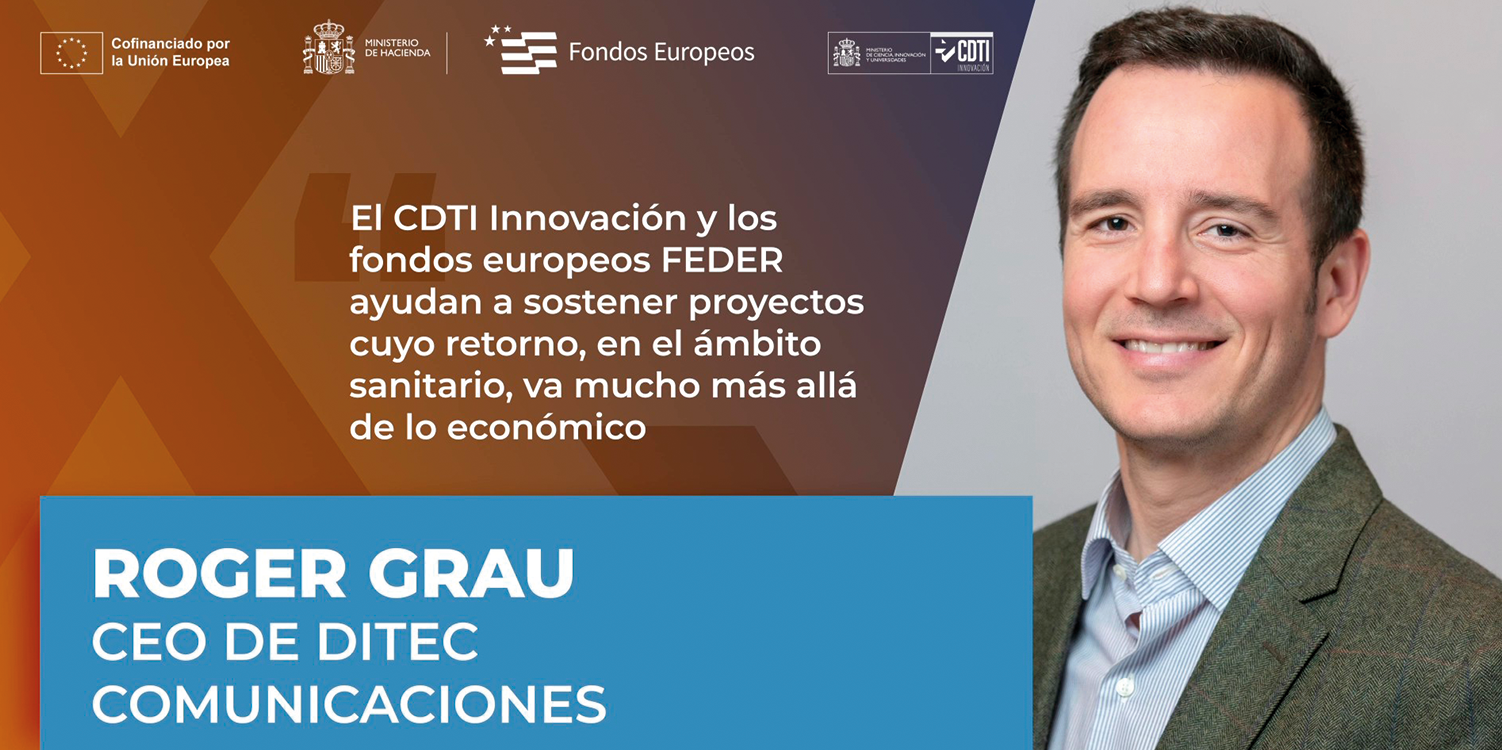
Few environments concentrate as much technology and, at the same time, as much resistance to change as the operating room. Ditec Communications has been working for nearly three decades on precisely that tension: that of introducing advanced audiovisual solutions into the most demanding clinical spaces without disrupting workflows that ultimately save lives. This Barcelona company, founded in 1996, is now facing its most ambitious project: ORISTIC, a comprehensive platform for state-of-the-art digital operating rooms with which its CEO, Roger Grau, aspires to make a definitive leap in healthcare digitalisation.
The company has a family-based shareholder structure, articulated through the parent company Empire Soluciones, which groups the first and second generation of the Grau family. That model, in Grau’s words, goes beyond family heritage: "It is a long-term strategic vision and a strong commitment to technological innovation." A philosophy that is reflected in a portfolio of clients that includes large hospital groups to multinationals in the health sector such as Grifols, Philips Healthcare, Siemens Healthcare, Medtronic or Abbott Laboratories, as well as references from the business world such as Amazon, Fundació La Caixa or Boston Consulting Group.
Ditec’s activity is organized into three major divisions. The first, Soluciones, is concerned with the engineering, design and implementation of audiovisual and technological projects. The second, Services, manages the rental of equipment and technical support. And the third, Medical, transfers all these capabilities to the healthcare environment, developing specific solutions for hospitals and healthcare centers. It is precisely in the latter that the bulk of the company’s innovative activity is concentrated today.
A history of accumulated innovation
ORISTIC does not arise from nothing. It is the result of an R&D trajectory that began more than fifteen years ago and that has been building, layer by layer, a knowledge that is difficult to replicate. The company developed its first platform for conventional digital operating theatres between 2009 and 2011, within the framework of a CDTI project, and since then it has not ceased to evolve: a broadband signal distribution platform between 2013 and 2015, the ORISTIC I and ORISTIC PRO projects, also focused on conventional digital operating theatres, between 2018 and 2020, and now ORISTIC HYBRID, the definitive leap towards next-generation digital hybrid operating theatres.
Ditec’s R&D department, made up of four professionals, two full-time and two part-time, channels an investment that is usually between 2% and 3% of the annual turnover. It is not a spectacular figure on paper, but it is a spectacular one in qualitative terms: every euro of that budget is invested in projects of high technical complexity and long journey, in a sector where the validation of solutions and their progressive adoption by hospital centers requires patience and sustained investment.
What the operating theatres were asking for
Why ORISTIC now? Roger Grau’s answer is straightforward: "Innovation is not an option, but an obligation to continue offering useful and competitive tools to the healthcare sector." And he’s right that the clinical environment has changed substantially in recent years. Modern hospitals demand the integration of multiple software applications within the surgical environment, the incorporation of tools based on artificial intelligence, the management of contents in very high resolution —4K, 8K, 3D technology, virtual and augmented reality— and the integration of robotic systems, without forgetting a serious reinforcement in the field of hospital cybersecurity and the new infrastructures of connectivity and mobile communications.
Faced with this scenario of accumulated demands, ORISTIC proposes a comprehensive response. The platform stands out for offering an intuitive environment for healthcare professionals while incorporating advanced capabilities for the management and distribution of high-quality audiovisual signals. But its real differential element, Grau stresses, is its ability to facilitate medical training: the efficient transmission of complex surgical contents allows the sharing of procedures in real time for teaching and training purposes, something that until now was technically problematic in high-resolution environments.
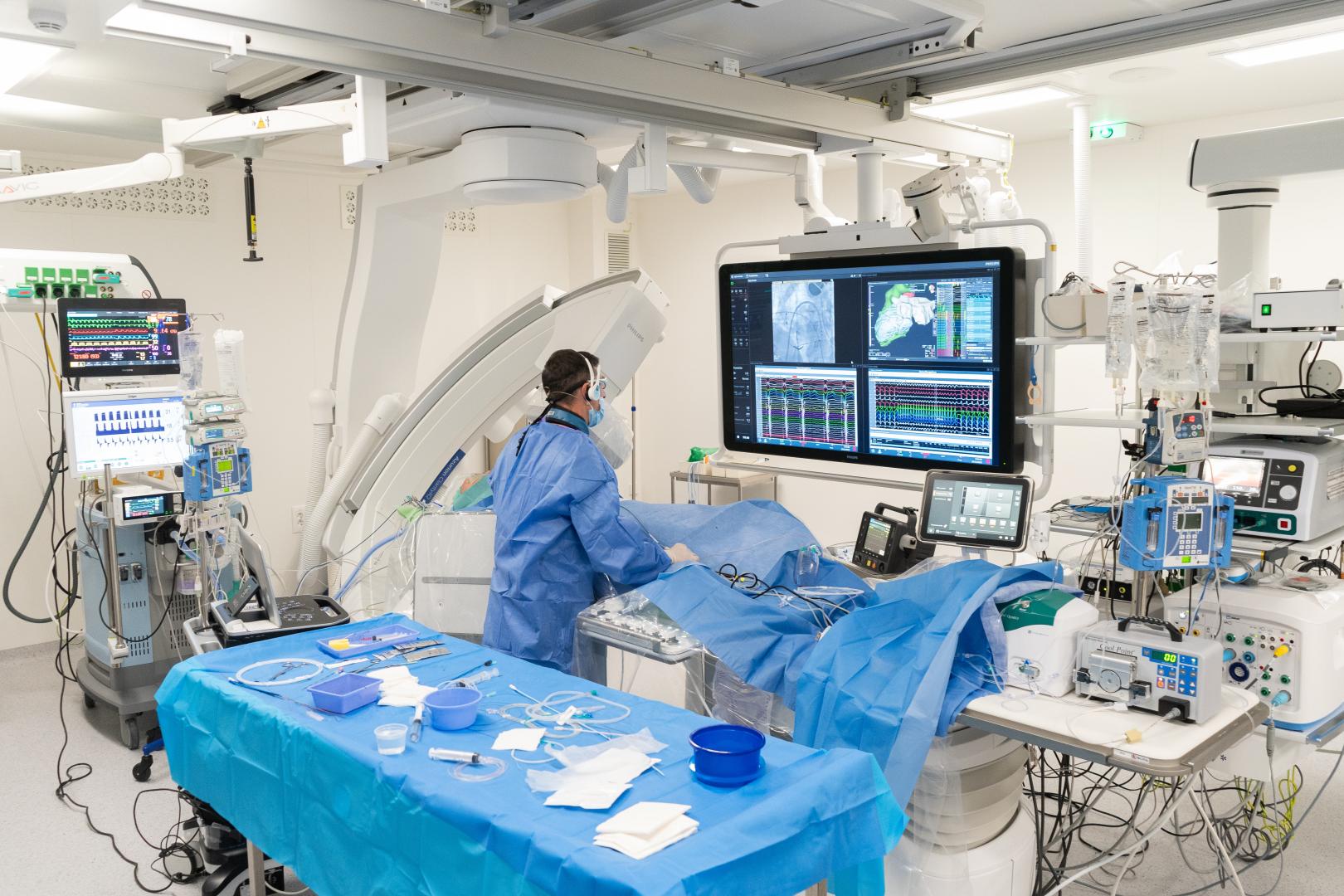
Intelligent operating room developed by Ditec
The technical challenge of 3D
Not everything has been simple. When asked about the project’s biggest challenges, Grau points to one in particular: ensuring the transport and display of 3D signals within hospital environments and their reproduction in training rooms without loss of quality. Added to this is the challenge of transmitting content in 4K —and in the future, 8K— maintaining a minimum latency. In critical medical applications, those milliseconds matter. A surgeon working with real-time imaging cannot afford a degraded signal or an imperceptible delay for the common but determinant eye in a precision intervention.
The Ditec team works actively to overcome these obstacles without compromising quality, aware that in the operating room there is no margin for technical mediocrity.
Technology at the service of people
ORISTIC has been conceived from the feet to the head thinking about the people who work and are cared for in the operating room. For surgeons, the platform provides an advanced multimedia environment that integrates all relevant information sources into a single interface, with real-time image display at maximum quality, customizable interfaces, and videoconferencing capabilities that enhance collaboration with other specialists during the intervention.
For nursing staff, ease of use is the core value: an intuitive interface that reduces learning times, solutions designed to facilitate cleaning and disinfection of control equipment and a design adaptable to the ergonomic needs and specific equipment of each operating room.
And for the patient, even if the technology is not visible from the stretcher, the impact is real. "The main advantage for the patient is greater safety during the surgical procedure," explains Grau. "By providing better technological tools to healthcare professionals, more efficient decision-making and more accurate execution of interventions are encouraged." Ultimately, all that technological development has an end recipient who is not the hospital or the surgeon, but who lies at that table every day.
Long-term regulation and financing
The deployment of a solution such as ORISTIC in hospital environments involves navigating regulatory waters that do not stop moving. The European MDR (Medical Device Regulation) regulation is imposing new safety and quality standards for healthcare equipment and software, so Ditec is actively working to ensure that ORISTIC meets all the requirements necessary for its implementation in hospitals. It is not a minor procedure: the health regulation does not wait for those who arrive late.
As for the financing of the project, in the words of Roger Grau himself, "the support of CDTI Innovation and the European ERDF funds has been fundamental to address a project of this nature, since it allows long-term financing for technological initiatives whose return requires several years of maturation". In the healthcare sector, where development, validation and adoption cycles are particularly slow, that time perspective is all. "In many technological projects, it can take between six and ten years to recover the investment made," says Grau, who adds that "public financing contributes to reducing risks, accelerating the development of new solutions and strengthening the competitiveness of the Spanish business fabric." And beyond the economic impact, the CEO of Ditec points out that in sectors such as healthcare, profits transcend business: they translate into better tools for medical professionals and, ultimately, an improvement in the care and safety of patients.
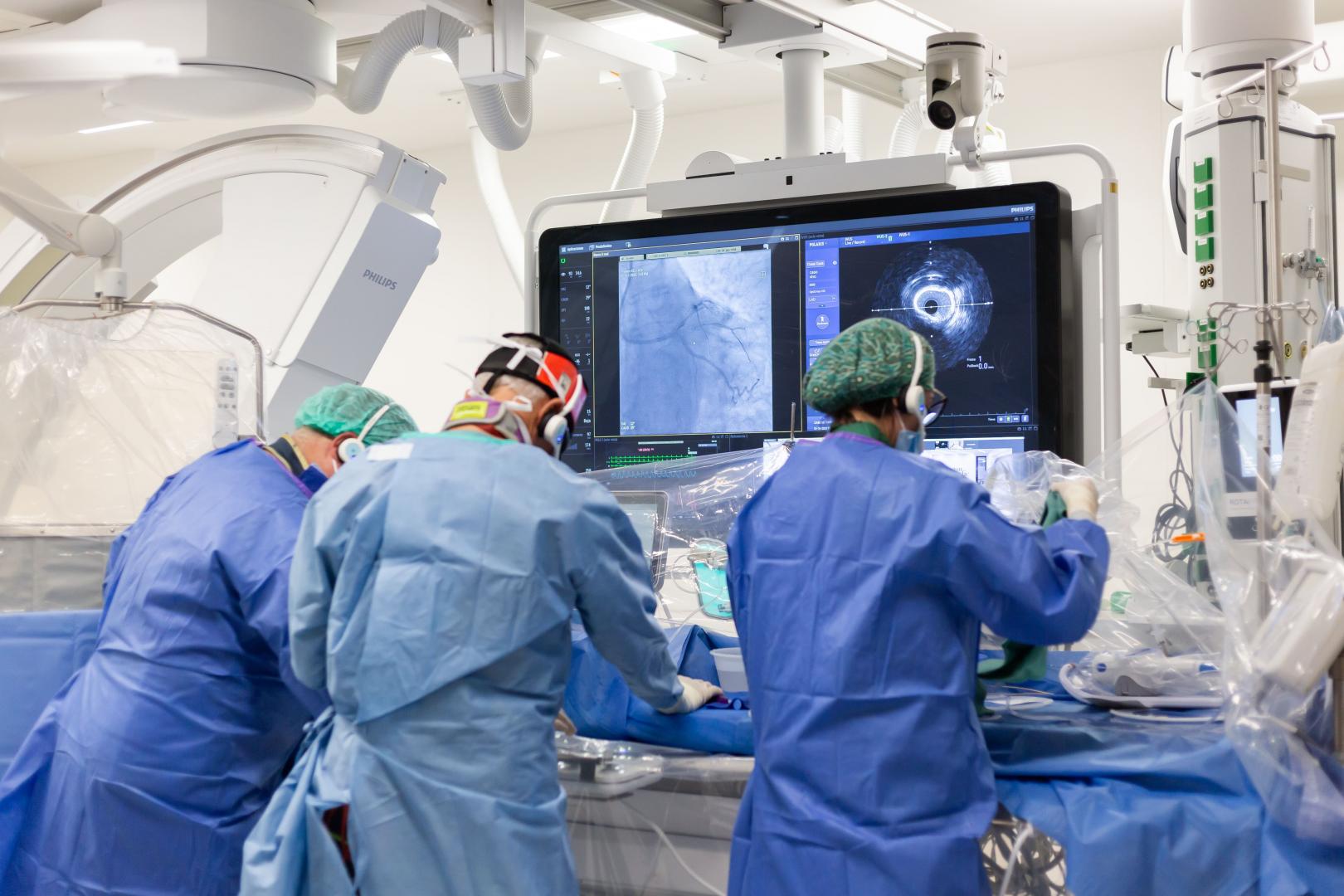
Personnel in the intelligent operating room developed by Ditec
The Horizon: Advancing Internationalization
The roadmap of Ditec Comunicaciones for the coming years is to continue developing the technological capabilities of ORISTIC, advance its internationalization process and consolidate itself as a reference solution in the field of digital operating theatres. An ambition that naturally connects with some of the Sustainable Development Goals of the 2030 Agenda: with SDG 3 (Health and Welfare), by contributing to improving the safety and precision of surgical interventions; with SDG 9 (Industry, Innovation and Infrastructure), by promoting advanced technological solutions for critical health environments; and with SDG 17 (Alliances to achieve the objectives), insofar as the project is built on collaboration between private enterprise and European public funding aimed at the common good.
Artificial intelligence will have, in Grau’s words, “an increasingly relevant role in all sectors, including healthcare,” and Ditec does not plan to be late for that appointment. Today, the company bills 90% of its revenue in the domestic market, with presence in Portugal and Mexico as the main export markets, but its ambition goes beyond that. The digital operating room that Ditec has been learning to build for three decades already has shape, name and technology. It only needs to be extended. And everything points to the fact that it could only be a matter of time.
CDTI Innovation
The Center for Technological Development and Innovation, CDTI E.P.E. It is the innovation agency of the Ministry of Science, Innovation and Universities, whose objective is the promotion of technological innovation in the business environment. The mission of the CDTI is to ensure that the Spanish business fabric generates and transforms scientific and technical knowledge into globally competitive, sustainable and inclusive growth. In 2025, within the framework of the Strategic Plan 2024-2027, the CDTI provided 2,423 million euros of support to Spanish companies and startups.
More information:
Press Office
press@cdti.es
91-581.55.00
On the Internet
Website: www.cdti.es
On Linkedin: https://www.linkedin.com/company/29815
On X: https://twitter.com/CDTI_innovacion
On Youtube: https://www.youtube.com/user/CDTIoficial
This content is copyright © 2026 CDTI,EPE. The use and reproduction is allowed by citing the source and digital identity of CDTI (@CDTI_innovacion).