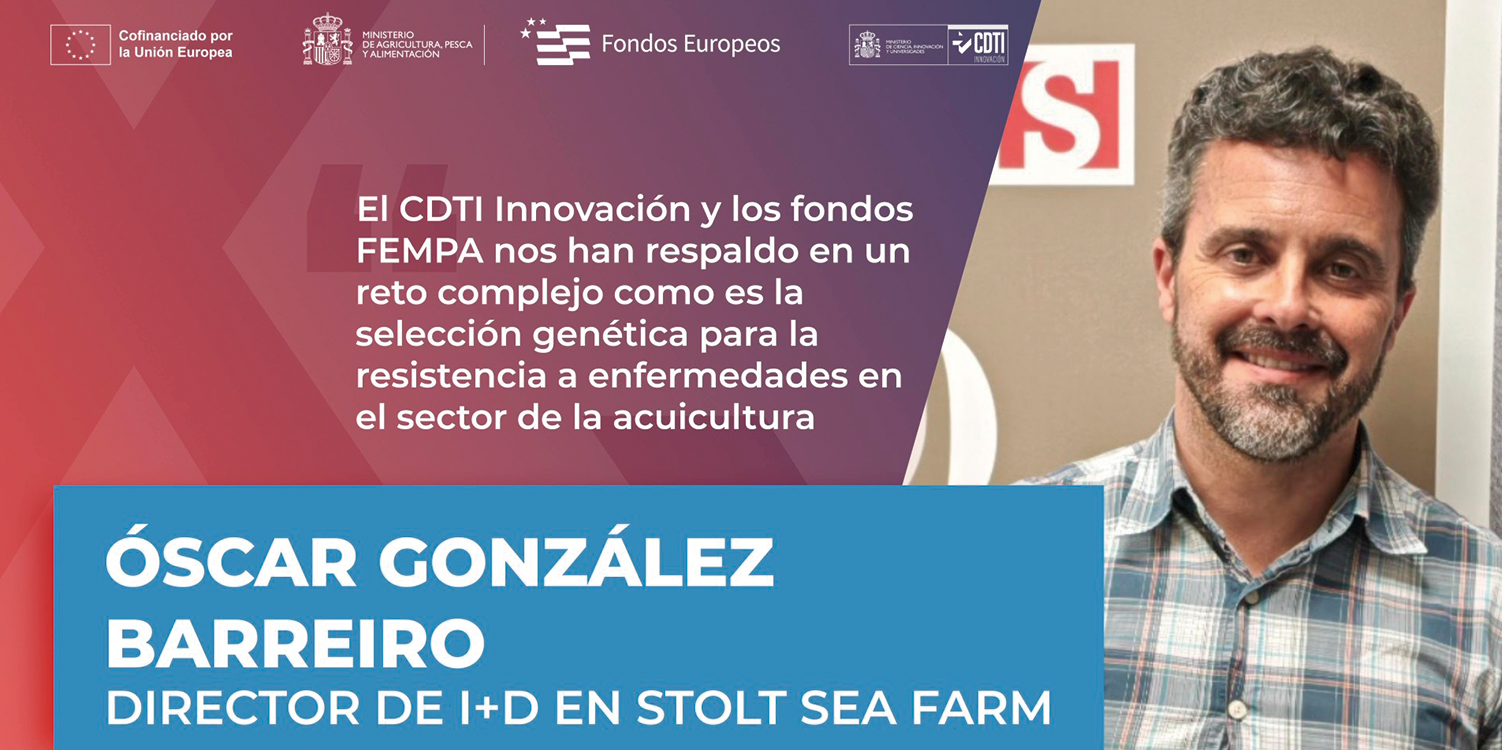
Óscar González Barreiro, R&D Director at Stolt Sea Farm: “The CDTI Innovation and FEMPA funds have supported us in a complex challenge such as genetic selection for disease resistance in the aquaculture sector”
The Philstop project of Stolt Sea Farm, co-financed by CDTI Innovation and the European funds FEMPA, applies genomic selection to obtain rodaballo reproducers resistant to the Philasterides dicentrarchi parasite. A bet that reduces dependence on treatments and paves the way for healthier, more efficient and sustainable aquaculture
Stolt Sea Farm, which belongs to the Norwegian logistics group Stolt-Nielsen Limited, has been betting for years on sustainable aquaculture focused on high-value species, mainly turbot and sole. With Galicia as the main hub of its productive, technological and R&D activity, the company has launched one of its most ambitious projects of recent times: Philstop, a research dedicated to the development of a genomic selection program of turbot players resistant to the Philasterides dicentrarchi parasite. Al frente de esta iniciativa está Óscar González Barreiro, director de I+D de la empresa.
The project is supported by the CDTI Innovation and the European funds FEMPA, a financing that, according to González Barreiro, "has been key to promote the development of the project, allowing to address a complex technological challenge such as genetic selection of resistance to diseases in turbot". And not only from the economic point of view: "This type of funding has facilitated collaboration between companies and reference research centers, as well as reducing the risk associated with long-term R&D projects and a high scientific component."
A parasite that affects the income statement
Philstop’s starting point is a long-standing problem in the industry: parasitic diseases of the turbot, and in particular those caused by Philasterides dicentrarchi, can cause significant production losses and force farms to rely on recurrent treatments to maintain batch health. This dependence has a cost, both economic and environmental, and limits the room for manoeuvre of any crop model that aspires to be sustainable in the long term. "There is a clear need to evolve towards more resilient production systems, which reduce dependence on treatments and prioritize prevention," summarizes González Barreiro. Genetic improvement aimed at resistance against diseases is considered, in this context, as one of the few ways capable of attacking the problem from the root and not just managing its consequences.
From vaccine to gene
Stolt Sea Farm does not start from scratch. Prior to Philstop, the company had already developed VACUPLAN and VACUPLAN+2, two projects focused on prevention and control strategies based on vaccination and batch management. Philstop represents a change of focus: instead of acting on the pathogen or on the growing conditions, it works directly on the genetic basis of the breeders. "The main innovative element of the project is the application of advanced genomic selection technologies to identify and select turbot breeders with greater natural resistance to the parasite," explains the R&D director, who defines the leap from previous initiatives as "a qualitative leap by integrating high-precision genetic tools," a solution he considers "more structural, with long-term impact on the health and productivity of populations."
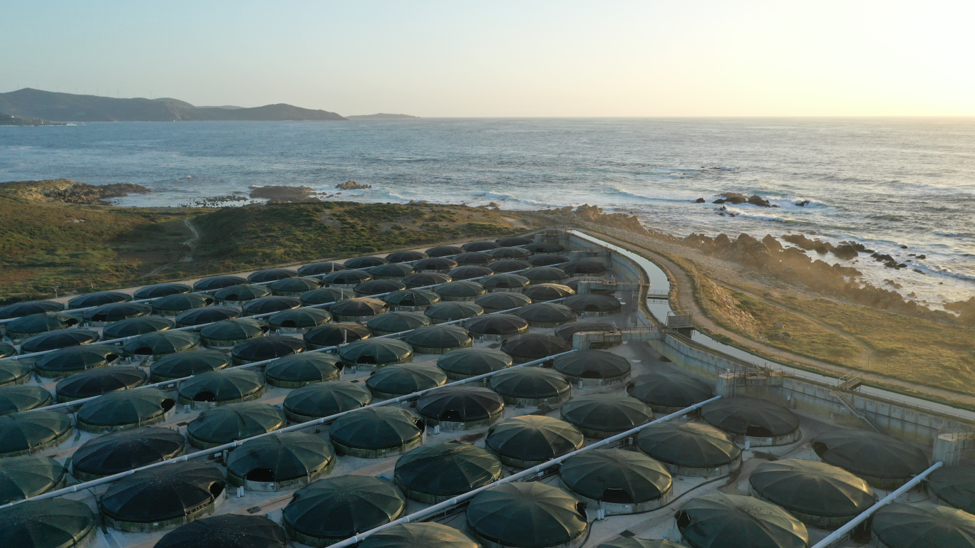
Turbot farm of Stolt Sea Farm in Cabo Vilán-Camariñas (A Coruña, Galicia)
Four partners for the same goal
To put this idea into practice, Stolt Sea Farm has woven a multidisciplinary collaboration involving the University of Santiago de Compostela (USC), GENEAQUA, Benchmark Genetics Norway and CETGA.The company leads and coordinates the whole, "ensuring the practical application of the results in its production systems", while each partner contributes a different part of the process: the USC places the emphasis on scientific research and genetic analysis, GENEAQUA provides applied genomic tools, Benchmark Genetics Norway adds its experience in genetic improvement programs and CETGA is in charge of technological and infrastructure support. "Coordination is carried out through joint planning and continuous monitoring, ensuring the integration of results," says González Barreiro.
Big data and genetic precision
Identifying genetic markers associated with resistance to a particular pathogen is not a trivial task. It requires large volumes of data, controlled experimentation in real cultivation conditions and very advanced analytical capacity, and that has been, precisely, one of the main stumbling blocks of the project to date. "To address this, a comprehensive approach has been adopted that combines experimental assays, next-generation sequencing tools and advanced statistical models," says the director of R&D. The combination of disciplines has been decisive for moving forward: “Partner-to-partner collaboration has been key to meeting this challenge, uniting complementary capabilities in genetics, healthcare and production.”
Less mortality, more competitiveness
If the results accompany, the impact on the activity of Stolt Sea Farm can be considerable. Obtaining genetic lines more resistant to the parasite would reduce the impact of this pathology and optimize production yields, providing stability that today depends largely on health factors difficult to control. "The results of the project have the potential to significantly improve productivity by reducing mortalities and optimizing production yields," says González Barreiro. But the effect does not remain only in the exploitation account: "positions Stolt Sea Farm as a benchmark in aquaculture innovation, strengthening its leadership in high value species", as well as allowing "anticipation of future market demands in terms of sustainability and animal welfare".
The value of sustainability
Philstop’s environmental dimension is based on anticipation. Having genetically more robust breeding populations favors, by definition, more balanced and resilient production systems. “The project has a direct impact on sustainability by strengthening the basic health of the populations,” explains the director of R&D, which translates into less dependence on external interventions and a reduction in the impact associated with aquaculture activity.
This approach aligns with several of the 2030 Agenda’s Sustainable Development Goals, in particular SDG 14 (underwater living) and SDG 12 (responsible production and consumption), by optimizing resource use and enhancing the well-being of cultivated species. It also connects with SDG 3, insofar as more balanced production contributes to providing safer and higher quality food to the consumer.
This approach, focused on prevention through genetics and integral management, is also the basis of the concept of high aquaculture that the company has called NEPTURA. Under the motto “Care makes taste”, the brand reflects a model in which the care of the environment, organisms and processes is directly projected in the excellence of the final product. “Sustainability is not just an environmental objective, but a central element of value,” summarizes González Barreiro.
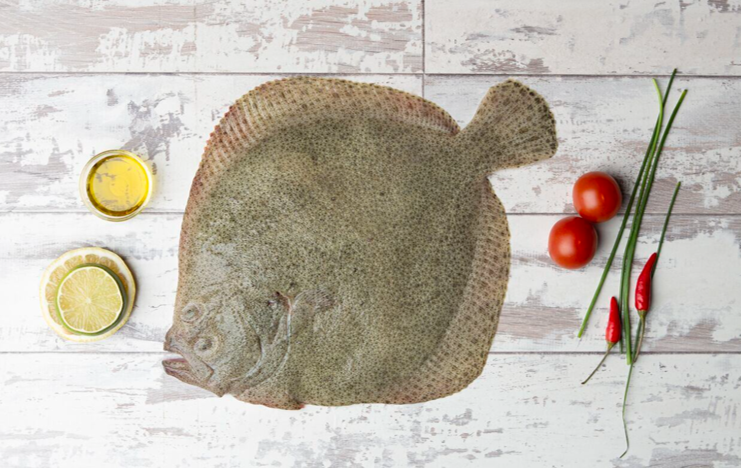
Rodaballo-NEPTURA
Innovation with a social vocation
Para el director de I+D, el alcance de Philstop va más allá de los muros de la empresa. "At the economic and social level, this type of financing contributes to dynamizing the innovation ecosystem in Spain, promoting the transfer of technology, the creation of qualified employment and the development of sustainable solutions," he explains, before underlining that "ultimately, the benefits are transferred to society through more efficient, safe and environmentally friendly production."
With Philstop moving towards its first results, Stolt Sea Farm hopes that genomic selection will become a regular tool in its strategy of continuous improvement, complementing the path opened by VACUPLAN and VACUPLAN+2 and reinforcing its role as a benchmark in innovation within the aquaculture of high-value species. "Projects like Philstop are a clear example of how this vision materializes in concrete innovation that drives the development of the sector at a global level," concludes González Barreiro.
CDTI Innovation
The Center for Technological Development and Innovation, CDTI E.P.E. It is the innovation agency of the Ministry of Science, Innovation and Universities, whose objective is the promotion of technological innovation in the business environment. The mission of the CDTI is to ensure that the Spanish business fabric generates and transforms scientific and technical knowledge into globally competitive, sustainable and inclusive growth. In 2025, within the framework of the Strategic Plan 2024-2027, the CDTI provided 2,423 million euros of support to Spanish companies and startups.
More information:
Press Office
press@cdti.es
91-581.55.00
On the Internet
Website: www.cdti.es
On Linkedin: https://www.linkedin.com/company/29815
On X: https://twitter.com/CDTI_innovacion
On Youtube: https://www.youtube.com/user/CDTIoficial
This content is copyright © 2026 CDTI,EPE. The use and reproduction is allowed by citing the source and digital identity of CDTI (@CDTI_innovacion).