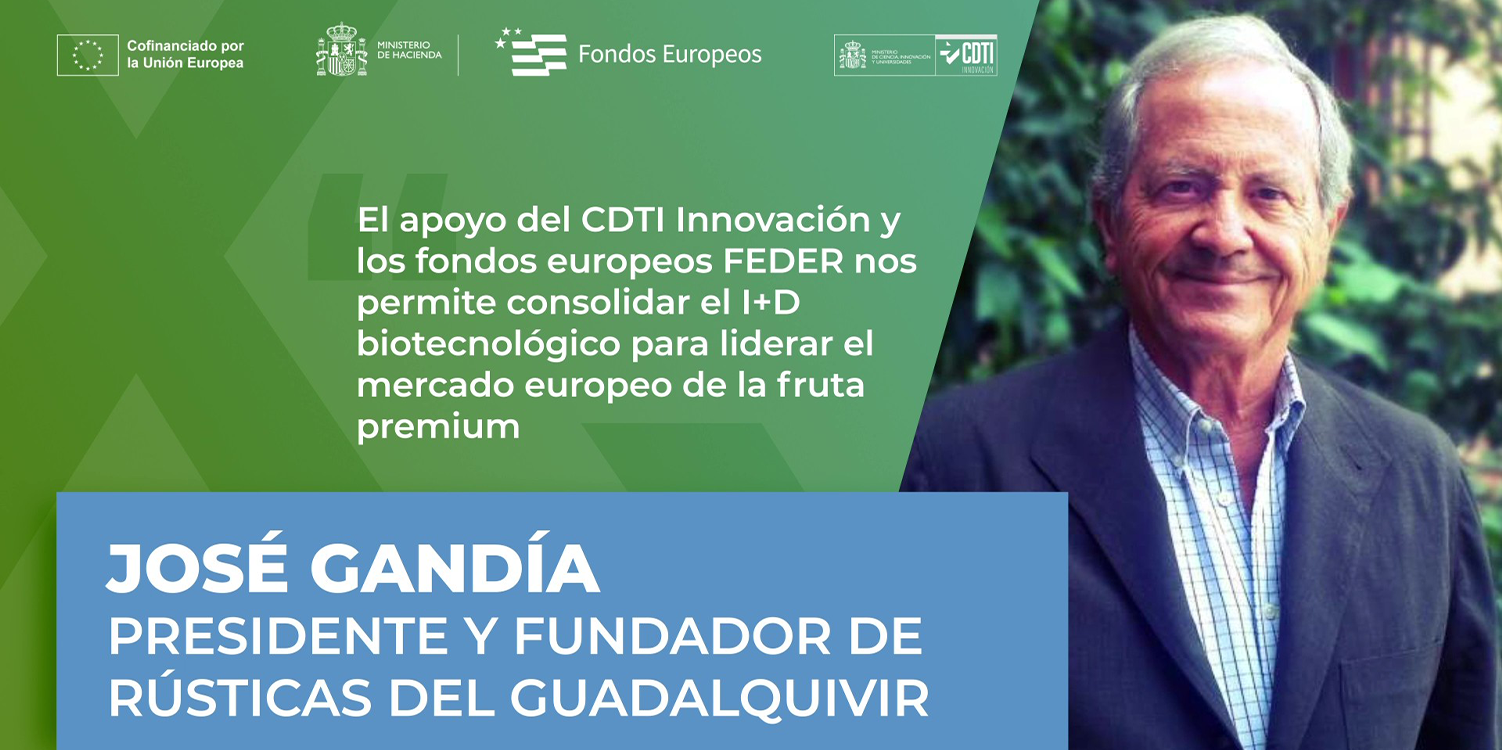
José Gandía, president and founder of Rústica del Guadalquivir: "The support of the CDTI Innovation and the European ERDF funds allows us to consolidate biotechnological R&D to lead the European premium fruit market"
Developing new varieties of fruit capable of combining flavor, nutritional value and adaptation to climate change is one of the great challenges of the agri-food sector. To respond to this challenge, Rústicos del Guadalquivir leads the REDFRUIT project, an initiative supported by the CDTI Innovation and co-financed by the European ERDF funds that incorporates biotechnological tools to accelerate the development of new varieties of peach, raspberry and blueberry adapted to the conditions of the southern peninsula.
More than fifty years ago, developing stone fruit with the potential to compete in international markets was a challenge in southern Spain. The varieties available hardly adapted to the climatic conditions of Seville, which limited both production and export possibilities. In this context, Rústica del Guadalquivir was born, which began evaluating materials from international breeders before taking a decisive step: developing its own genetic improvement program.
Over the years, the company has evolved into an integrated operator that controls the entire process, from varietal procurement and nursery production to cultivation, packaging and international marketing. "Our unique growing and market conditions motivated us to invest in such a long-term project," recalls José Gandía, president and founder of Rústica del Guadalquivir.
This strategy has allowed the company to develop its own varieties with high added value and consolidate its presence in the main European markets. An example is the Royal Blu Aroma cranberry range, recognized for three consecutive years with the distinctive Taste of the Year. "We have achieved international recognition with many supermarkets, but also obtaining three years in a row the Sabor del Año badge," he says.
REDFRUIT: accelerating genetic improvement through biotechnology
After decades of developing its own varieties, the company has taken a new step in its innovation strategy with the REDFRUIT project. The initiative responds to the growing demand for healthier, sustainable foods by developing new varieties that combine better taste, greater nutritional value and adaptation to new climatic conditions.
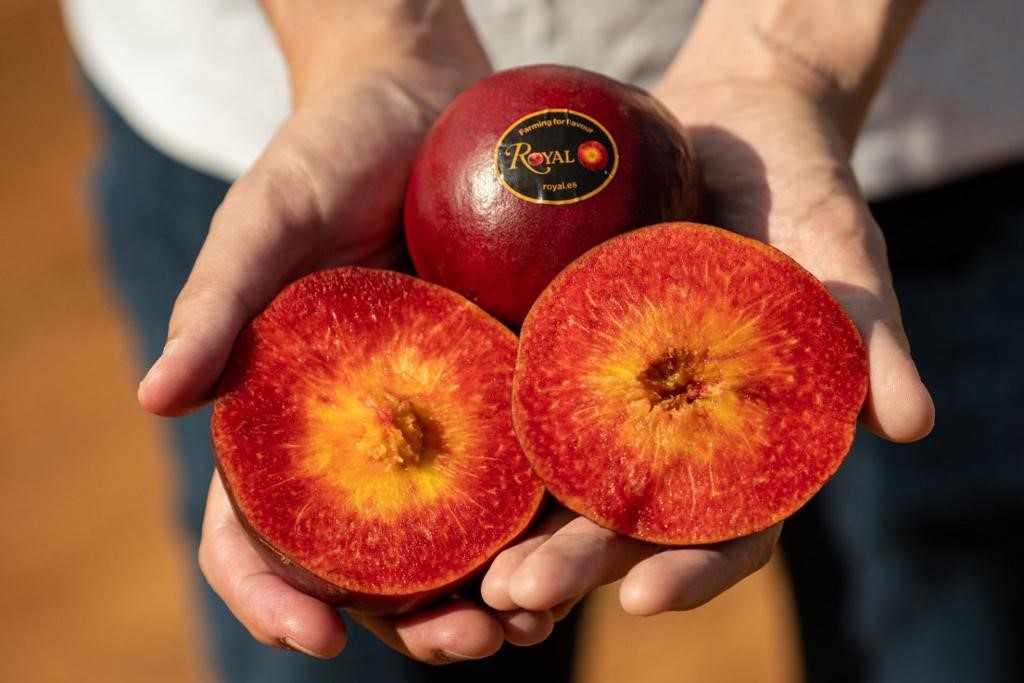 REDFRUIT promotes the development of new varieties such as this peach of red pulp
To achieve this, the company has incorporated biotechnological tools that allow us to know with much greater precision the genetic potential of each plant before it even completes its development. "The REDFRUIT project uses molecular markers that quantify the variability of our genetic material, a crucial condition for achieving real innovation," explains the president of the firm.
Compared to traditional methods, based solely on the observation of the visible characteristics of the plant, these markers allow to identify from very early stages those individuals who possess the genes of interest. This facilitates the selection of the best parent plants and accelerates the development of new varieties, reducing time and uncertainty. In this way, researchers can work on attributes increasingly valued by the market, such as red pulp peaches, more intensely colored raspberries, blueberries with earlier blooms or more balanced flavor profiles.
Genetic improvement at the service of the consumer
At the same time, REDFRUIT incorporates the analysis of bioactive compounds present in the fruit to select those varieties with greater content of polyphenols, anthocyanins, carotenoids or vitamin C, thus reinforcing their healthy properties. "The challenge is to identify the richest varieties of these beneficial compounds so that we can develop specifically healthy commercial lines," he adds.
For José Gandía, this bet responds to a clear evolution of consumer preferences: "The market does not always demand innovation; it also looks for standard products at very competitive prices. But we have always sought added value, segmented categories and created new trends.” All this with a clear objective: “Satisfy and surprise the end consumer,” he concludes.
Innovation, intellectual property and competitiveness
Developing a new fruit variety requires years of research and a very high investment. Therefore, protecting this knowledge is essential to guarantee the return on investment in innovation and maintain a competitive position in a global market.
In this regard, the president of the company emphasizes that "protecting our intellectual property is fundamental to defend the competitive advantage. It is what allows us to propose exclusivity, control the volumes placed on the market and adapt supply and demand."
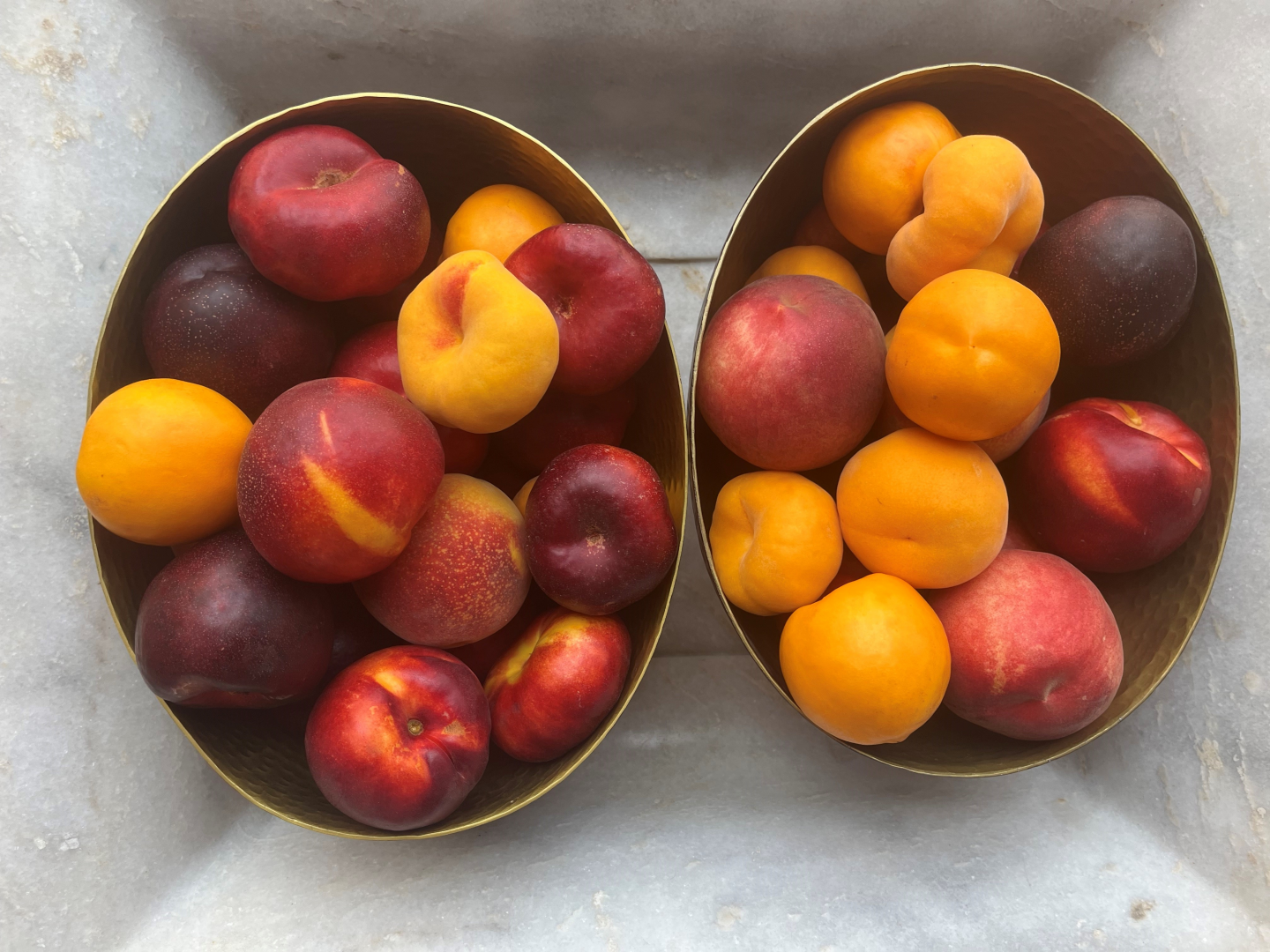
New varieties selected for their flavor, quality and adaptation to climate change
In this area, molecular markers also play a key role. In addition to facilitating the development of new varieties, they allow the unequivocal identification of each plant material and protect the rights of obtaining from unauthorized reproductions. “Variety piracy is decreasing because breeders are very active and molecular markers offer rapid identification recognized by the courts,” he says.
The support of the CDTI Innovation and FEDER funds
Plant genetic improvement programs require sustained investments and development deadlines that, in woody species, can last for more than two decades. In this context, the support of the CDTI Innovation and the European ERDF funds has allowed the company to maintain a continuous R&D strategy and strengthen its collaboration with national and international scientific centers. "Without these projects and the support of the CDTI it would have been much more difficult to maintain stable collaborations for decades with centers such as IRTA or American universities," acknowledges the president of the Andalusian company.
The company has been developing projects for more than twenty years with the support of the CDTI, which has been decisive in consolidating its research program and transferring scientific advances to the productive sector. “Our relationship with the CDTI now adds more than twenty years of supported projects, which gives us the necessary stability to investigate in the long term,” he adds.
Innovating to respond to the challenges of the future
Climate change, the evolution of consumption habits and the growing international competition force the fruit sector to continually renew its varieties. For Rústica del Guadalquivir, the challenge is to combine excellent taste quality with greater resistance to high temperatures, water stress and other extreme weather conditions.
The company believes that innovation will continue to be the main tool to respond to these challenges and maintain leadership in an increasingly demanding market, developing varieties capable of providing value to both the producer and the consumer. "No variety we cultivated twenty years ago would be commercial today; we have no choice but to continue researching to be efficient," concludes José Gandía.
CDTI Innovation
The Center for Technological Development and Innovation, CDTI E.P.E. It is the innovation agency of the Ministry of Science, Innovation and Universities, whose objective is the promotion of technological innovation in the business environment. The mission of the CDTI is to ensure that the Spanish business fabric generates and transforms scientific and technical knowledge into globally competitive, sustainable and inclusive growth. In 2025, within the framework of the Strategic Plan 2024-2027, the CDTI provided 2,423 million euros of support to Spanish companies and startups.
More information:
Press Office
press@cdti.es
91-581.55.00
On the Internet
Website: www.cdti.es
On Linkedin: https://www.linkedin.com/company/29815
On X: https://twitter.com/CDTI_innovacion
On Youtube: https://www.youtube.com/user/CDTIoficial
This content is copyright © 2026 CDTI,EPE. The use and reproduction is allowed by citing the source and digital identity of CDTI (@CDTI_innovacion).