Juan R. J. Sonllev,CEO of Axertia: “The role of CDTI Innovation and FEDER funds allows technological SMEs to transform knowledge into real innovation”
The latest project of the company Axertia —the development of a multipurpose humanoid robot for construction, supported by the CDTI Innovation and co-financed with European FEDER funds— symbolizes the technological ambition and ethical commitment of a company that wants to place Spanish engineering at the forefront of industry 4.0. We spoke with its founder and CEO, Juan R. J. Sonllev,on innovation, strategic collaborations and the transforming role of R&D in the productive fabric
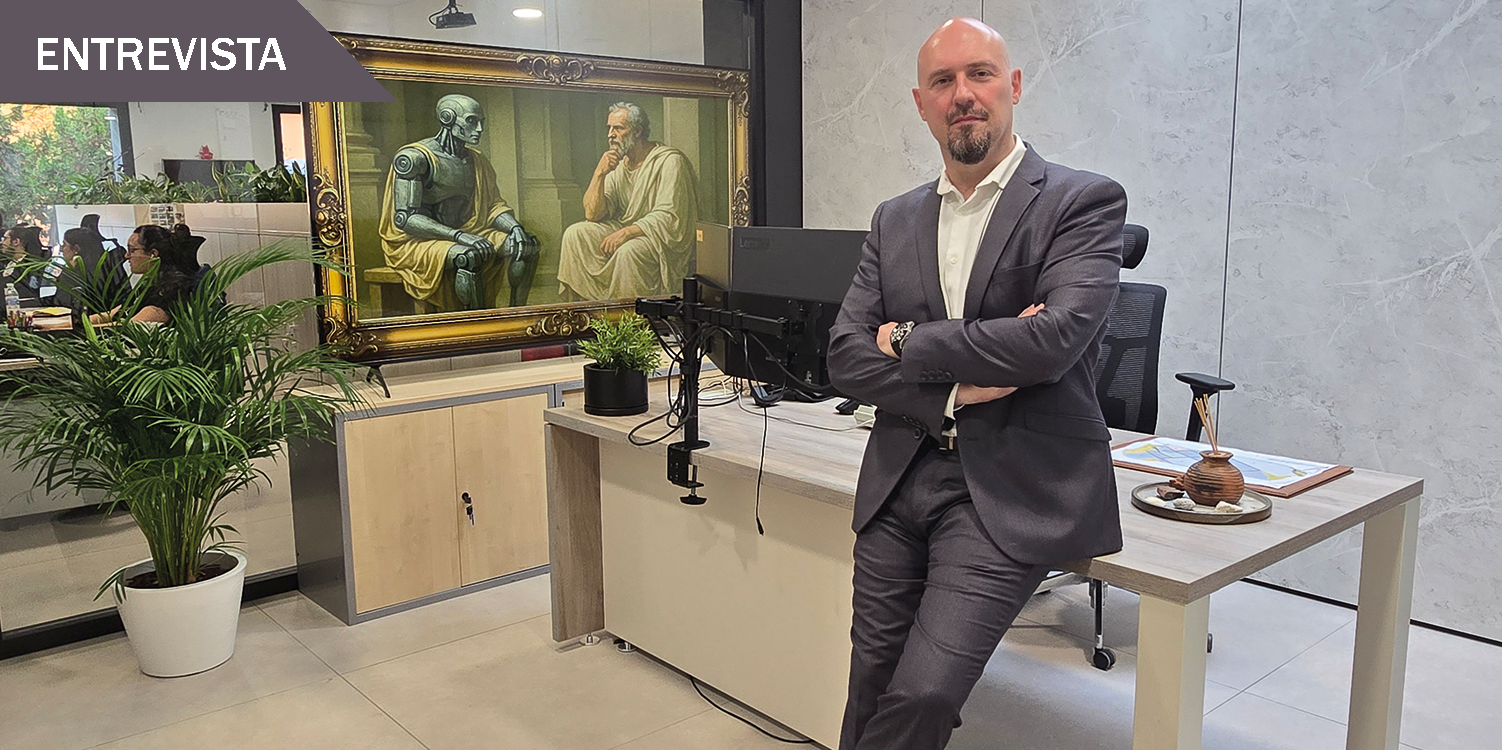
The origin of Axertia, located in Segovia (Castilla y León), goes back to a personal trajectory marked by technological curiosity and entrepreneurial drive. Its founder and CEO, Juan R. J. Sonllevé began programming at the age of 13 on an Amstrad CPC464 computer, without imagining that this hobby would result, decades later, in a company in artificial intelligence, automation and applied robotics.
“I do not come from a family of entrepreneurs but I was always clear that I wanted to create my own solutions and have the freedom to innovate without limits,” he recalls. After managing for years the computer department of a company in the animal feed sector, he decided to take the step and start his own company, together with his partners Juan Luis Ferri and Daniel M.M. With a clear objective: to develop useful, scalable and transformative technology.
Today, with a team of 29 professionals, almost half dedicated to the area of R&D, Axertia has consolidated itself as a reference in the development of solutions based on AI, advanced automation systems and intelligent data analysis. Its flagship product, Acta Digital, is a technological suite that allows the automatic recording, management and intelligent analysis of plenary and government sessions in municipalities and deputies, combined audiovisual capture, document management and advanced semantic processing.
In addition to its document management solutions, Axertia develops business intelligence and industrial automation tools adapted to medium-sized companies, with the aim of optimizing decision making and improving productivity. This technological orientation has driven the company’s expansion into new markets in Europe and North Africa, and has placed it at the epicentre of a transformation process that combines Spanish creative engineering with Asian technological precision.
“Our growth is based on constant research. We traditionally allocate 25% of our turnover to R&D&I, but in 2025 we have taken another step: almost half of our resources have been geared towards the development of a multipurpose humanoid robot for construction,” explains Soncarry. This ambitious project, supported by the CDTI Innovation and co-financed with European ERDF funds through the Cervera program, marks a before and an after in the history of the company.
A humanoid robot at the service of construction
The project based on the design and manufacture of a multipurpose humanoid robot for construction aims to develop a robotic system capable of performing high-value-added tasks in a sector facing a serious shortage of skilled labor. “In Spain alone, there are more than half a million workers specialized in construction. Our robot can help fill that gap and, at the same time, preserve traditional crafts and techniques that today run the risk of disappearing,” he explains.
Axertia’s robot relies on NVIDIA’s technological ecosystem, which trains its behavior in simulated environments using reinforcement learning techniques. This approach reduces start-up costs and speeds up the system’s learning process. In addition, the company is developing its own cognitive bus, inspired by the functional structure of the human brain, which will allow the robot to make autonomous decisions adjusted to values and contexts defined by the programmer.
“We want our robots to be useful, obedient and ethically controllable. Their behavior must respond to a balance between productivity and safety, always maintaining measurable and verifiable limits,” says Sonllevé. This cognitive architecture is one of the main differentiators of the project, which aims to establish a new paradigm in the automation of the construction sector.
Efficiency, safety and sustainability
The benefits of the humanoid robot developed by Axertia are multiple. From the operational point of view, it will allow you to take on dangerous, repetitive or highly demanding physical tasks, freeing human operators for supervision, design or technical control functions. In addition, robots will be able to coordinate from the cloud in equipment or digital pawns with specific work orders, guaranteeing immediate productivity in works and projects.
Another key aspect is its ability to evaluate the quality of the work done, both by other robots and by human employees, and to detect occupational risks in a preventive way through artificial vision and environmental sensors. “We are convinced that this technology will transform the way works are conceived. It’s not about replacing people, it’s about creating safer, more efficient and more sustainable environments,” he adds.
The collaboration with the EureCAT technology centre and the University of Valladolid strengthens the technical strength of the project. EureCAT develops the artificial vision system and the work order interpretation module, while the university works on the validation and reliability of the sensory system. “This synergy between a technology center and a public university is essential to ensure scientific rigor and real transfer of knowledge to the sector,” emphasizes the CEO.
Robotization with human purpose
One of the most debated issues around automation is its impact on employment. For Sonllev,the key is in the focus: “A robot does not replace a worker, but assists him. For every operating robot, engineers, analysts, support technicians and human operators are needed to teach, maintain and monitor their behavior.” From this perspective, robotization becomes a tool to create skilled employment and increase the competitiveness of companies.
In addition, Axertia underlines the role of technology in social and labor inclusion. “Robotics can facilitate the incorporation of women and people with disabilities into the construction sector, reducing physical demands and shifting the focus towards the supervision, control and technological management of processes,” says Sonllevé. This approach aligns with the values of equality, accessibility and diversity that the company promotes from its inception.
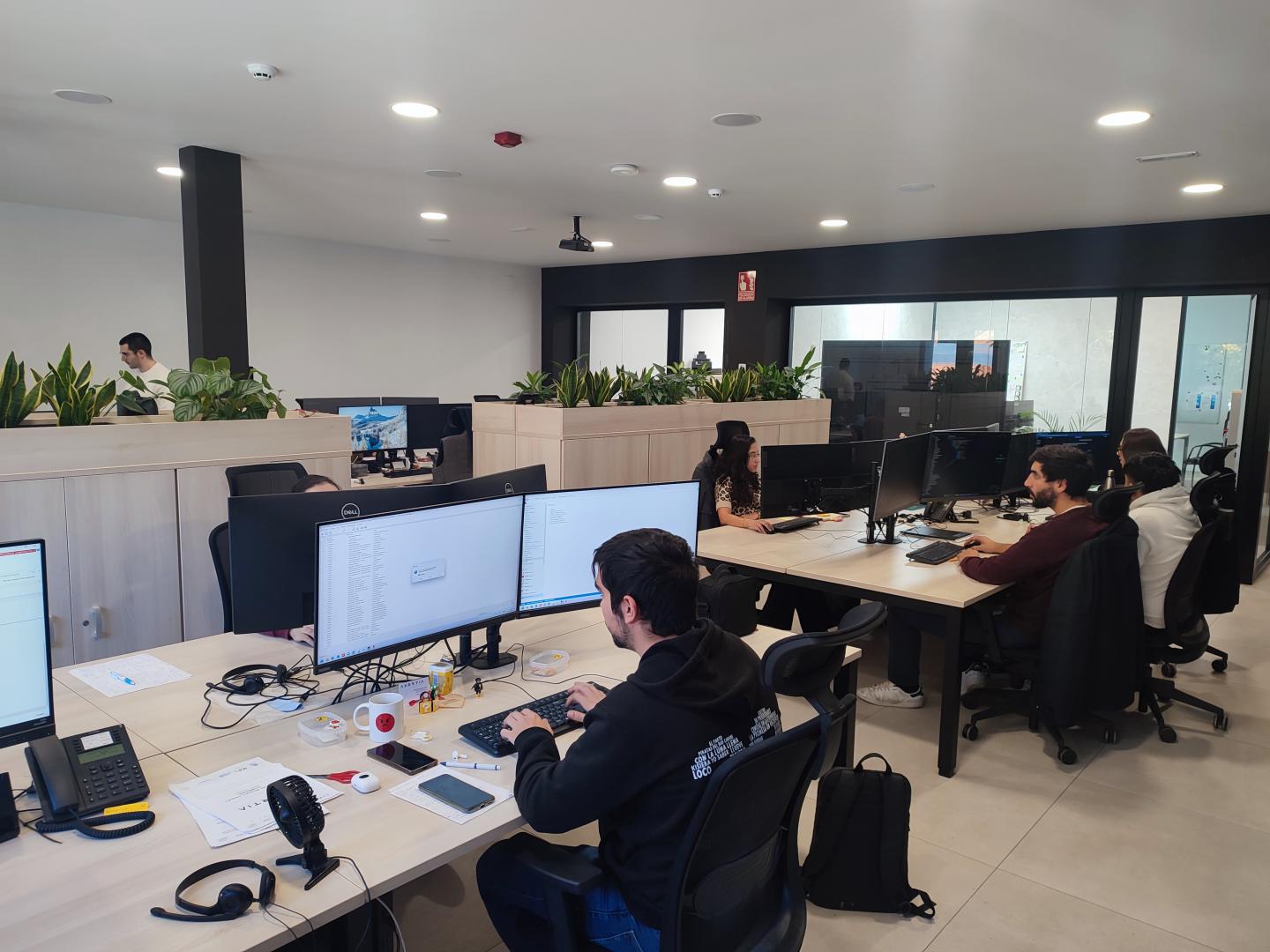
Offices of Axertia
Ethics and technology: building the moral compass of AI
Beyond the technical challenges, the project addresses an enormous challenge: the development of ethical and cognitive frameworks for autonomous decision-making. “The robots of the future will need moral compass. How we make machines ethical will determine the society we want to build,” he says.
To this end, Axertia collaborates with philosophers, theologians and neuroscience experts, with the aim of translating human principles into modular and transparent AI models. “We don’t want black boxes, but comprehensible and verifiable systems. Europe must have its own voice in this area and not delegate the ethics of its machines to other cultures,” he stresses.
This interdisciplinary approach constitutes one of the most innovative pillars of the project, which combines advanced engineering, philosophical reflection and social responsibility. “Our goal is for robots to be able to make autonomous decisions without losing sight of the human dimension of technology,” explains Sonllevé.
International collaboration and mutual learning
Axertia’s relationship with South Korea has been decisive in the evolution of its technological model. “We share with this country a very similar vision of work and business: demand, clarity and compliance. They bring excellence in robotics and automation; us, creativity and applied engineering,” he says.
This collaboration has allowed the company to improve the planning of R&D projects, optimize its internal processes and strengthen its network of strategic alliances. “The balance between Korean precision and Spanish creativity has given us a unique competitive advantage. We want to continue to strengthen ties with Asia and attract investment to Europe”, adds the director.
The value of public support for innovation
The impetus received through the CDTI Innovation and FEDER funds has been key to making this high-technology risk project possible. “Without this support, it would not have been possible. It allowed us to build our own R&D team, acquire advanced simulation tools and achieve in a year what would otherwise have taken several exercises,” says Sonllevé.
Thanks to this financing, Axertia has multiplied its productivity, accelerated development and aroused the interest of national and international investors, especially in Asia. “These kinds of public programs are essential to reduce the gap between the idea and the market. They allow technological SMEs to transform knowledge into real innovation,” he adds.
The CEO also highlights the structural value that this type of support has for the Spanish ecosystem: “While in other countries R&D&I is a natural part of the investment culture, in Spain it is still difficult to find private funding for projects whose return is measured in knowledge or intellectual property. That is why the role of the CDTI and European funds is so important: they help to build a solid and sustainable technological fabric.”
Technological ambition for the future
Axertia’s horizon is both ambitious and realistic. In the medium term, the company expects several hundred internally developed humanoid robots to be operational in real environments, demonstrating their effectiveness and profitability. “We want to show that this type of solution can revitalize the housing market, both in new construction and in rehabilitation, and contribute to the sustainability of the sector,” says Soncarry.
The ultimate goal is to consolidate itself as a leading European company in robotics applied to construction, with a stable presence in Asia and Europe, and a business model based on responsible innovation. “We do not seek to be a unicorn, but a solid company, built with tenacity, effort and passion. We believe in technology as an engine of progress and in innovation as the best way to generate qualified employment and social value”, he concludes.
CDTI Innovation
The Center for Technological Development and Innovation, CDTI E.P.E. It is a public company dependent on the Ministry of Science, Innovation and Universities, whose objective is the promotion of technological innovation in the business environment. The mission of the CDTI is to ensure that the Spanish business fabric generates and transforms scientific and technical knowledge into globally competitive, sustainable and inclusive growth. In 2024, within the framework of a new strategic plan, the CDTI provided more than 2.3 billion euros of support to Spanish companies and startups.
More information:
Press Office
press@cdti.es
91-581.55.00
On the Internet
Website: www.cdti.es
On Linkedin: https://www.linkedin.com/company/29815
On X: https://twitter.com/CDTI_innovacion
On Youtube: https://www.youtube.com/user/CDTIoficial
This content is copyright © 2025 CDTI,EPE. The use and reproduction is allowed by citing the source and digital identity of CDTI (@CDTI_innovacion).