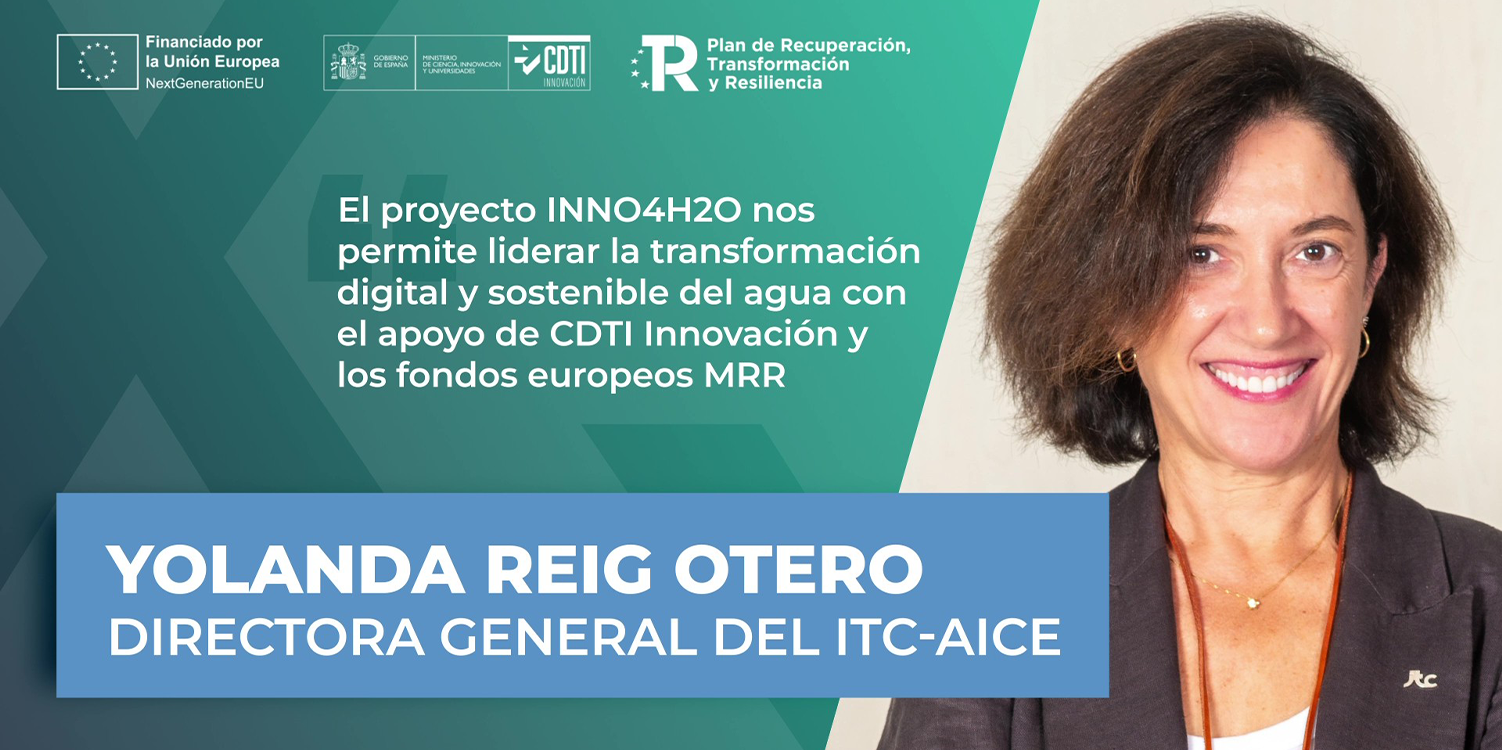
Yolanda Reig Otero, General Director of ITC-AICE: “The INNO4H2O project allows us to lead the digital and sustainable transformation of water with the support of CDTI Innovation and the European funds MRR”
Led by the Ceramic Technology Institute (ITC-AICE) and funded by the CDTI Innovation and the European funds of the Recovery and Resilience Mechanism (MRR), the INNO4H2O project develops an advanced technological platform based on artificial intelligence, digital twins and circular economy to improve the water management of the industrial sector. The initiative provides manufacturing plants with efficient digitization and water reuse solutions to strengthen their resilience in the face of climate change
Smart and sustainable water management has become one of the great challenges for the European manufacturing industry. In a context of increasing water stress and increasingly extreme climate phenomena, optimizing the use of this resource is no longer just a matter of efficiency, but an essential condition to guarantee the competitiveness and viability of many companies.
In this context, the Ceramic Technology Institute (ITC-AICE) coordinates the INNO4H2O project, an initiative supported by the CDTI Innovation Ecosystems line and funded by the European MRR funds, which seeks to transform the integral cycle of industrial water through digitalization and the circular economy. The consortium brings together the Technological Institute of Galicia (ITG), the Technological Institute of Castilla y León (ITCL), the specialized companies ADASA Sistemas and Tinamica, the water management companies Sociedad de Fomento Agrícola Castellonense (FACSA) and Empresa Joint Valenciana de Aguas (EMIVASA), and the entity Scope Producciones, responsible for the marketing and dissemination of the results.
The goal of this alliance is to unify capabilities to develop solutions that bring autonomy and sustainability to the manufacturing industry. The ideal scenario to validate these cutting-edge technologies is the Spanish ceramic cluster itself, concentrated in more than 90% in the province of Castellón. There, the historic collaboration between the Universitat Jaume I (UJI) and the ITC-AICE allows scientific advances to be transferred directly from laboratories to production plants.
Trajectory and challenge of water resilience
The origin of the ITC-AICE dates back to 1969, when Professor Agustín Escardino promoted a research group that would lay the foundations of the Ceramic Industries Research Association (AICE), created in 1984. Since then, the centre has evolved into a reference in applied research and technology transfer, combining the development of R&D projects with specialized training and direct support to companies. “At our institute we have worked for more than 50 years to improve and optimize all processes and products in the ceramics industry and also in other sectors that have similar processes or problems thanks to the knowledge obtained,” explains Yolanda Reig Otero, General Director of the ITC-AICE.
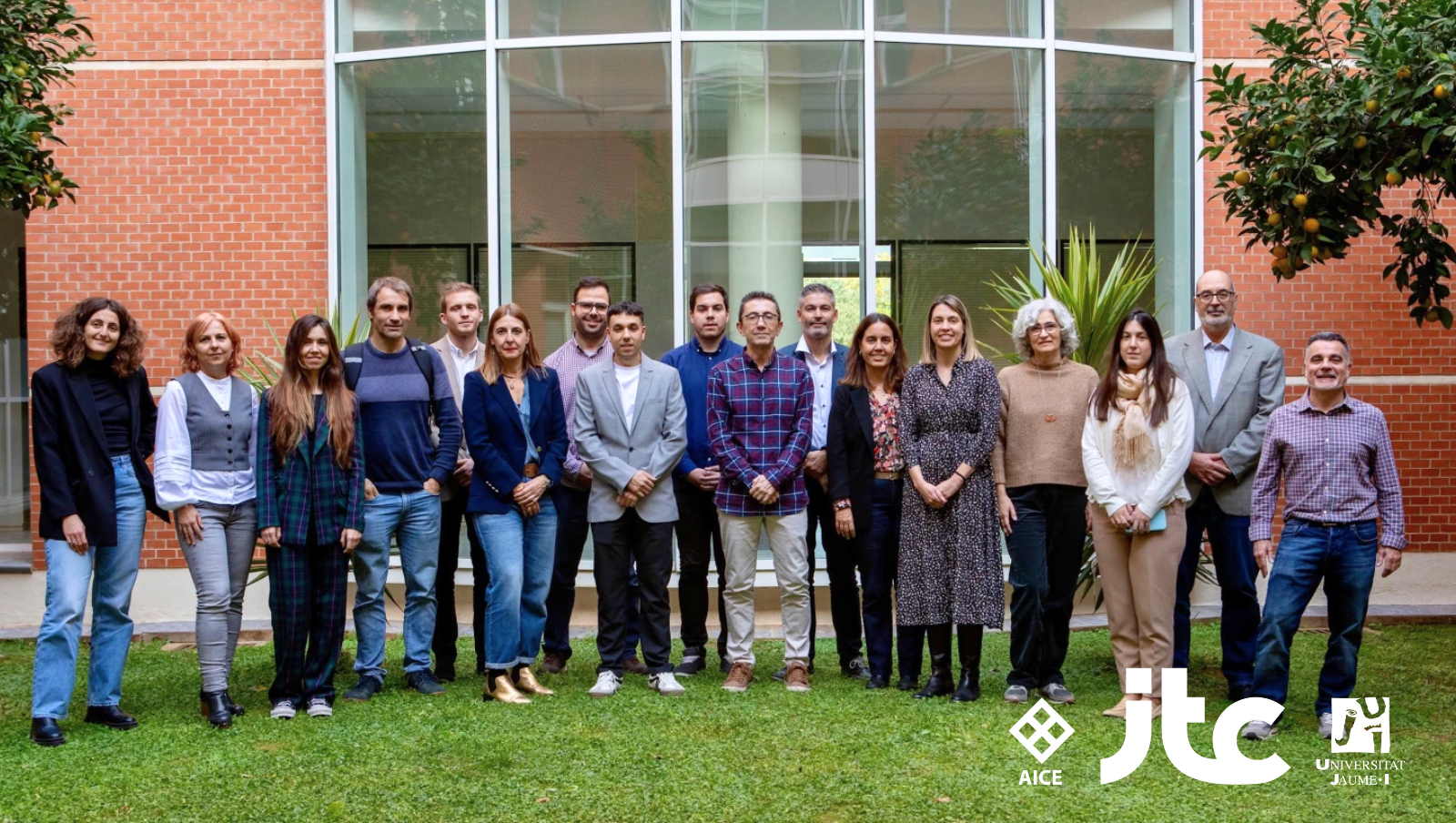 Members of the INNO4H20 project consortium
The ceramic sector, like much of the manufacturing industry, relies on a constant supply of water to maintain its activity. Based on this premise, ITC’s Sustainability Area has been researching for years how to reduce consumption and encourage the use of alternative sources, such as regenerated water from treatment plants (WWTP). “The aim is to help our sector achieve its water resilience and contribute to good regional water management in the face of water scarcity that we are increasingly noticing, especially in certain geographical areas during periods of extreme drought,” explains Yolanda Reig.
Three lines of work for an intelligent system
All this experience has been transferred to the INNO4H2O project, which is structured around three main areas of work: circular economy, smart water systems and the optimization of water-energy consumption. Each division combines physical tools with algorithms designed to transform the operational functioning of infrastructures based on the capabilities of the Cervera Network of Excellence.
As a result of this cooperation, the consortium has structured a network of 10 specialized laboratories and a catalogue of 27 advanced services for immediate application. "In the smart water axis we have developed, in artificial intelligence and machine learning, predictive algorithms that transform massive data into optimal and automated operational decisions, drastically reducing the consumption of raw materials," explains the directive. This architecture is complemented by digital twins from treatment plants and advanced sensoric connected to Internet of Things (IoT) networks.
Thanks to this deployment, the project achieves that the water facilities can automatically adapt to changes in the flow or quality of the water. In parallel, the available resource is increased through filtering systems to reuse the water at the moment, sludge is exploited and high-value by-products such as green hydrogen are generated. In addition, as this whole process consumes a lot of electricity, energy simulation software and algorithms are used that concentrate the work in the hours where the light is cheaper or cleaner.
A catalogue of solutions for the industry
The extensive catalogue of services developed by INNO4H2O is the result of the coordinated work of a consortium in which each entity provides highly specialized capabilities. “Each member of the INNO4H2O consortium, led by our Technology Center, plays a very specialized role in this value chain,” says Yolanda Reig. As a coordinating entity, the ITC acts as the backbone of the project: "We are the main driving force behind it, also providing our leadership in management experience in the water sector and the development of advanced digital and technological solutions to achieve more sustainable water management," he adds.
Thanks to this collaboration, companies have a catalogue of services applicable both in the laboratory and in the plant. Its capabilities include the development of custom-made ceramic membranes, the design of water treatment and reuse systems, the diagnosis of faults in pipes and tanks, advice to incorporate alternative water sources, support in circular economy and eco-labelling, as well as solutions to valorise waste and transform sewage and water treatment sludge into new materials or environmental applications.
This entire sustainability and circular engineering strategy puts the project in line with the 2030 Agenda. By reducing water consumption through reuse and filtering, it contributes to SDG 6 (Clean Water and Sanitation); boosting waste recovery, SDG 12 (Responsible Production and Consumption); and strengthening the industry’s resilience to water scarcity, SDG 13 (Climate Action).
The key support of CDTI Innovation and MRR funds
For Yolanda Reig, the support of the CDTI Innovation and the European funds MRR has been the “definitive impulse” to turn an idea of collaboration into an innovation platform capable of validating new water technologies in real conditions. Thanks to this support, the consortium has been able to lay the foundations of a shared infrastructure with a vocation for continuity, beyond the duration of the project itself. "We have always considered that it was a shame that there is no Cervera Network of Excellence focused on water and we saw the opportunity within the Ecosystems program of the CDTI Innovation to work on establishing the bases with the objective of having a potential Spanish LivingLab," he says.
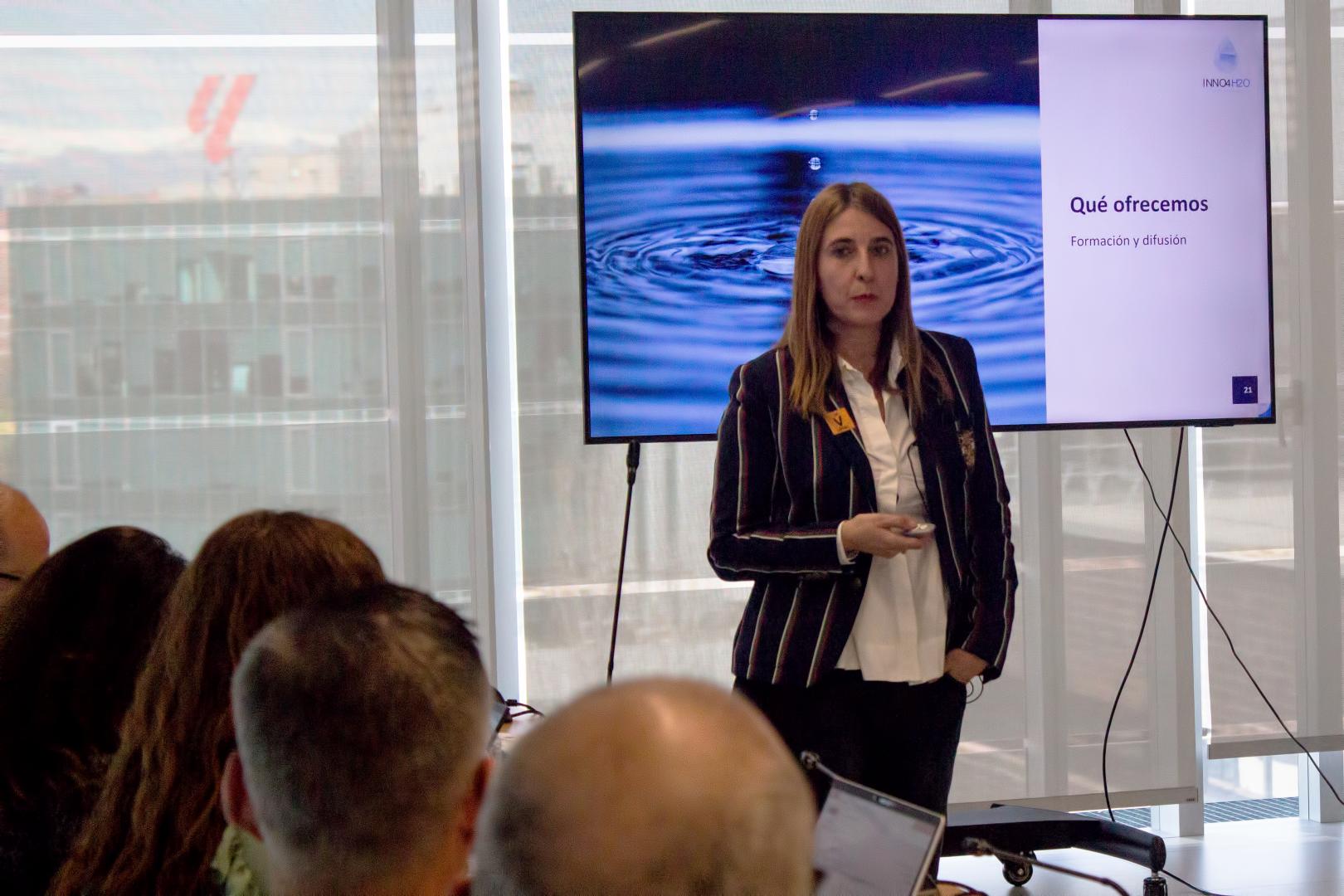 Alicia Andreu, coordinator of INNO4H2O, presenting the project
The Director-General underlines that this support has also been decisive in accelerating the transfer of high-risk technologies to the productive fabric and consolidating a model of stable collaboration among all actors in the sector. "Without the support of CDTI Innovation, having a national water innovation ecosystem would not have been possible. The contribution of all agents, productive sectors, companies, technology centers, universities and, of course, public administration is necessary", he highlights.
Strategic challenges for the future of the sector
Although the ceramics industry has been working under a zero-discharge model for years, the big challenge remains to reduce its dependence on groundwater and prepare for a scenario marked by increasingly frequent droughts. For the ITC, the future is to accelerate the implementation of solutions that make more efficient use of the resource, promote the reuse of water and strengthen the resilience of industrial plants against climate change.
"In the coming years, we hope that manufacturing plants will adopt process technologies that eliminate or minimize water consumption, and make maximum use of quality recycled water, as well as recover all the products of value present in this resource or derived from the treatment methods," concludes Yolanda Reig.
CDTI Innovation
The Center for Technological Development and Innovation, CDTI E.P.E. It is the innovation agency of the Ministry of Science, Innovation and Universities, whose objective is the promotion of technological innovation in the business environment. The mission of the CDTI is to ensure that the Spanish business fabric generates and transforms scientific and technical knowledge into globally competitive, sustainable and inclusive growth.
More information:
Press Office
press@cdti.es
91-581.55.00
On the Internet
Website: www.cdti.es
On Linkedin: https://www.linkedin.com/company/29815
On X: https://x.com/CDTI_innovacion
On Youtube: https://www.youtube.com/user/CDTIoficial
This content is copyright © 2026 CDTI,EPE. The use and reproduction is allowed by citing the source and digital identity of CDTI (@CDTI_innovacion).