Antonio Rivera, CEO of Hydrolyca: “The support of CDTI Innovation is key to turning disruptive scientific technology into a real industrial green hydrogen solution”
Produce green hydrogen using heat instead of electricity. Under this premise operates Hydrolyca Energy Systems SL, a spin-off that emerged in 2023 from the Polytechnic University of Madrid (UPM) that seeks to revolutionize the energy transition with its HEAT2HIVE project. Backed by CDTI Innovation’s NEOTEC program, the company has patented a thermochemical system that promises to dramatically lower production costs, opening the door to massive decarbonization of heavy industry and heavy tonnage transportation.
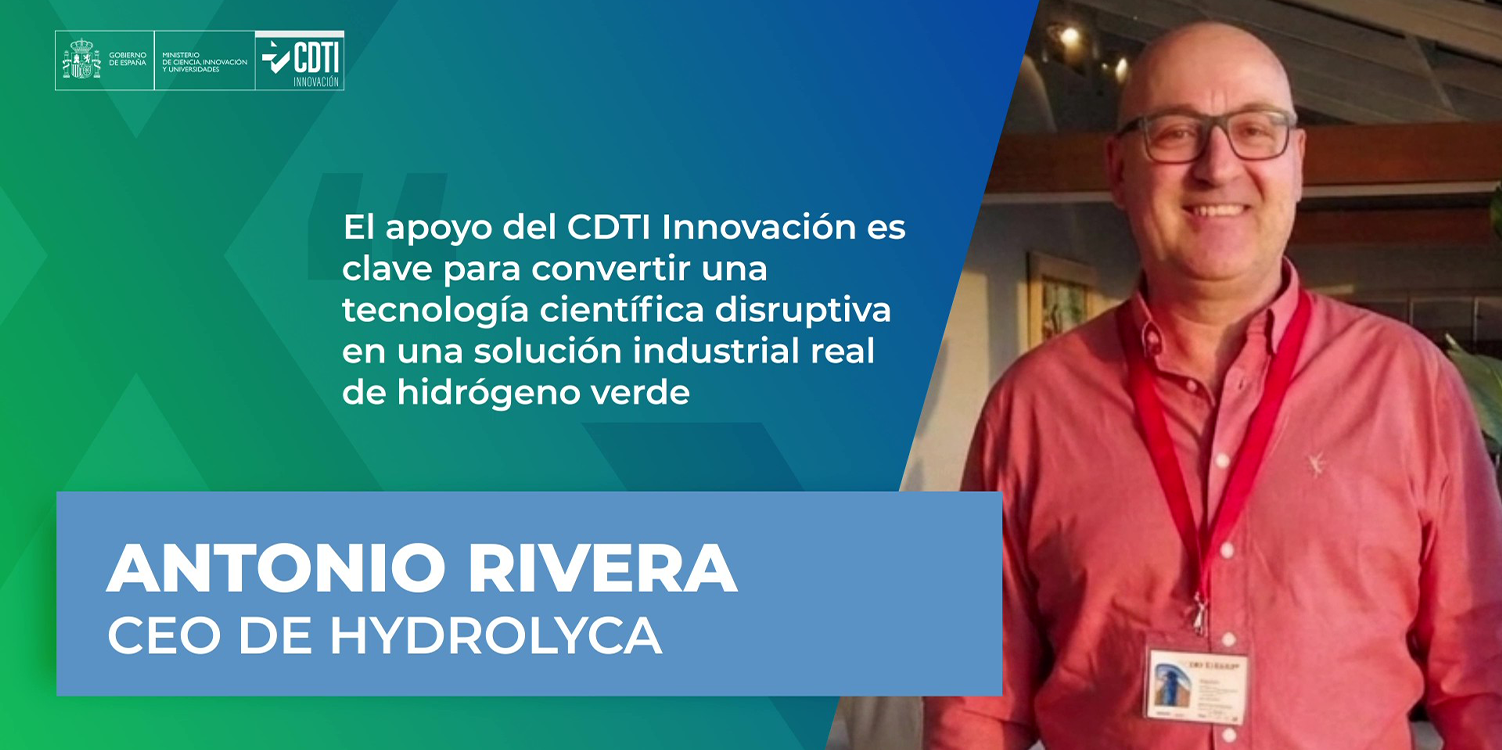
The Madrid company was born in 2023 driven by three patents developed by its founders and the support of a first round of private investment. "Hydrolyca was born with the purpose of bringing the results of basic scientific research to market and transforming them into a technological solution with real impact," explains Antonio Rivera, CEO of the firm.
The transition from the laboratory to the market meant a change of mentality for a team created in the research field. Turning a technology into a commercial product required maintaining scientific rigour, but also incorporating new capabilities linked to entrepreneurship, business management and the relationship with the industry.
“The research experience has been especially valuable in tackling complex problems, developing innovative technologies and maintaining a long-term vision. At the same time, the contact with the entrepreneurial ecosystem has allowed us to complement these capabilities with key business competencies, which has allowed us to connect scientific excellence with the needs of the market," he highlights.
HEAT2HIVE: producing green hydrogen through heat
The HEAT2HIVE project was born with a very clear goal within the energy transition: "The objective is to develop and demonstrate a technology capable of producing green hydrogen from water, using heat as primary energy," Antonio Rivera contextualizes.
Unlike conventional electrolysis processes, Hydrolyca’s proposal dispenses with electricity as the main source of energy and uses heat, a renewable resource that can be stored much more economically and efficiently.
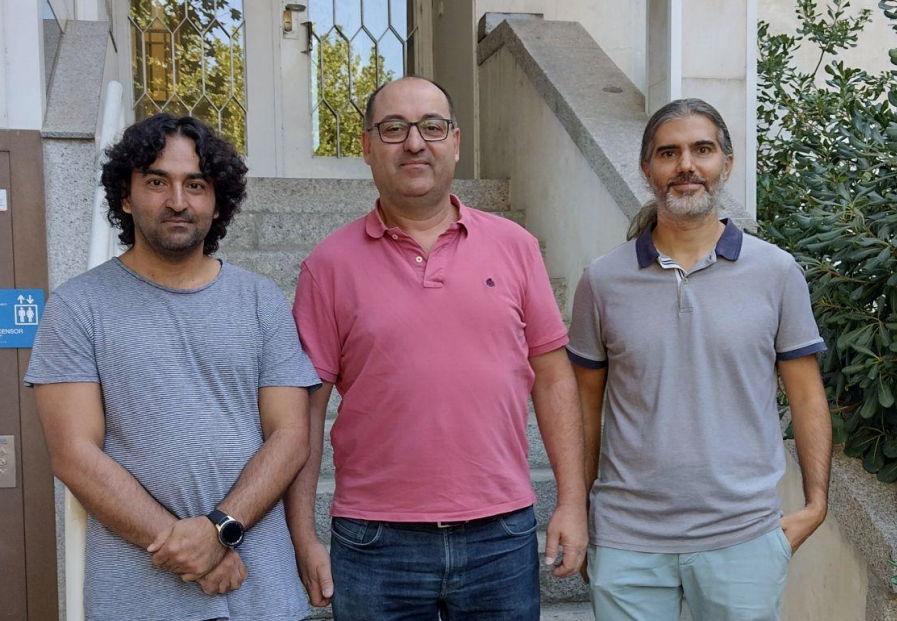
The Hydrolyca Team
To achieve this, the company has developed a proprietary thermochemical process based on a compound that acts as an intermediate during the reaction. “We use an active material that, when heated, reduces and releases oxygen. Subsequently, that same material is regenerated by reacting with water, which allows the molecule to break down and release hydrogen. In this way, the system can operate cyclically and continuously,” explains the CEO.
The main advance lies in the efficiency of the process: "The key to our method is that the cycles are isothermal, that is, they occur at the same temperature, so there is no loss of efficiency by heating and cooling the reactor," he adds.
Economic viability and technical challenges of industrial scaling
The main advantage of this technology is that it decouples the production of hydrogen from the volatility of the price of electricity, one of the factors that most currently conditions its competitiveness. If the system proves its viability on an industrial scale, Hydrolyca aims to place the cost of producing green hydrogen at a fork of between 1 and 2 euros per kilogram, a threshold considered key to competing with fossil fuels in industrial sectors. "The economic analyses we have performed for our technology indicate that, under industrial scaling conditions and with the use of concentrated solar energy with high-temperature storage, it is possible to approach that range of costs."
Achieving that goal now involves validating the technology in real operating conditions and demonstrating its reliability, safety and economic viability on a large scale. That is precisely the goal of the HEAT2HIVE project, which focuses much of its efforts on accelerating the leap from the laboratory to industrial application.
One of the main challenges is to work with thermochemical processes at high temperatures, which requires materials capable of maintaining their performance for long periods of operation. To this end, the team works on the design of reactors with specific geometries and scalable heating systems that guarantee the durability and efficiency of the process.
Another key challenge has been the precise control of water and hydrogen flows, an aspect that the company claims to have successfully resolved. "In the laboratory, we have already validated methodologies that allow these flows to be controlled accurately and efficiently, and that are directly extrapolable to larger capacity reactors," says Rivera.
decarbonising heavy industry and heavy tonnage transport
Hydrolyca’s proposal directly targets sectors where traditional electrification is unfeasible, such as steel production, cement or the chemical industry. In these environments, green hydrogen can replace fossil hydrogen or natural gas without the need to structurally modify existing industrial processes, which would allow a more progressive transition and at a more stable and competitive price.
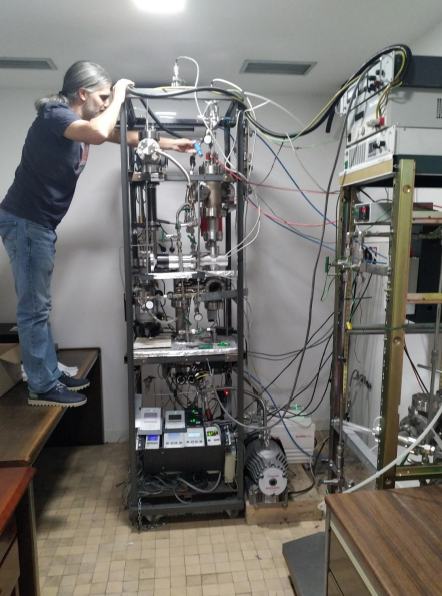
Experimental tests bring the thermochemical process closer to industrial scaling
In large tonnage transport, such as marine or long-distance trucks, this vector offers high energy density and reduced refuelling times. In addition, the model favors a distributed deployment. "This allows us to start by replacing fossil hydrogen already used in today's industry and subsequently expand its use to new sectors," argues the CEO.
The impulse of NEOTEC and the global horizon
As with many science-based technologies, the development of a system like HEAT2HIVE requires long validation periods before it reaches industrial maturity. In that journey, the support of the NEOTEC program of CDTI Innovation has been “a key support” for the company, says Antonio Rivera.
"Thanks to this support, we can focus on the validation, optimization and scaling of our technology, thus accelerating its evolution from the laboratory environment to a solution with industrial application potential," he adds.
By its very nature, the project is closely aligned with the UN Sustainable Development Goals (SDGs), directly impacting on access to Affordable and Clean Energy (SDG 7), the promotion of Industry, Innovation and Infrastructure (SDG 9) and the development of clean technologies essential for Climate Action (SDG 13).
Milestones for the future and energy sovereignty
The next challenge for Hydrolyca is to demonstrate that its technology can work reliably and competitively outside the lab. The company will focus its next efforts on validating the system in real environments, advancing its industrial scaling and progressively reducing production costs to facilitate the implementation of green hydrogen in those sectors where it is more difficult to advance in decarbonization.
With this roadmap, the company hopes to complete the technological validation process and bring its first commercial solutions to the market. "We aspire to play a relevant role in the transformation of the energy sector, contributing to the consolidation of green hydrogen as a key decarbonization vector," says Antonio Rivera.
Hydrolyca also aspires to promote a green hydrogen industry with a Spanish seal. "Our objective is also to contribute to the industrialization of the country and strengthen its energy autonomy, taking advantage of its potential in renewable energies and positioning it as a reference in the hydrogen economy," he concludes.
CDTI Innovation
The Center for Technological Development and Innovation, CDTI E.P.E. It is the innovation agency of the Ministry of Science, Innovation and Universities, whose objective is the promotion of technological innovation in the business environment. The mission of the CDTI is to ensure that the Spanish business fabric generates and transforms scientific and technical knowledge into globally competitive, sustainable and inclusive growth. In 2025, within the framework of the Strategic Plan 2024-2027, the CDTI provided 2,423 million euros of support to Spanish companies and startups.
More information:
Press Office
press@cdti.es
91-581.55.00
On the Internet
Website: www.cdti.es
On Linkedin: https://www.linkedin.com/company/29815
On X: https://x.com/CDTI_innovacion
On Youtube: https://www.youtube.com/user/CDTIoficial
This content is copyright © 2026 CDTI,EPE. The use and reproduction is allowed by citing the source and digital identity of CDTI (@CDTI_innovacion).