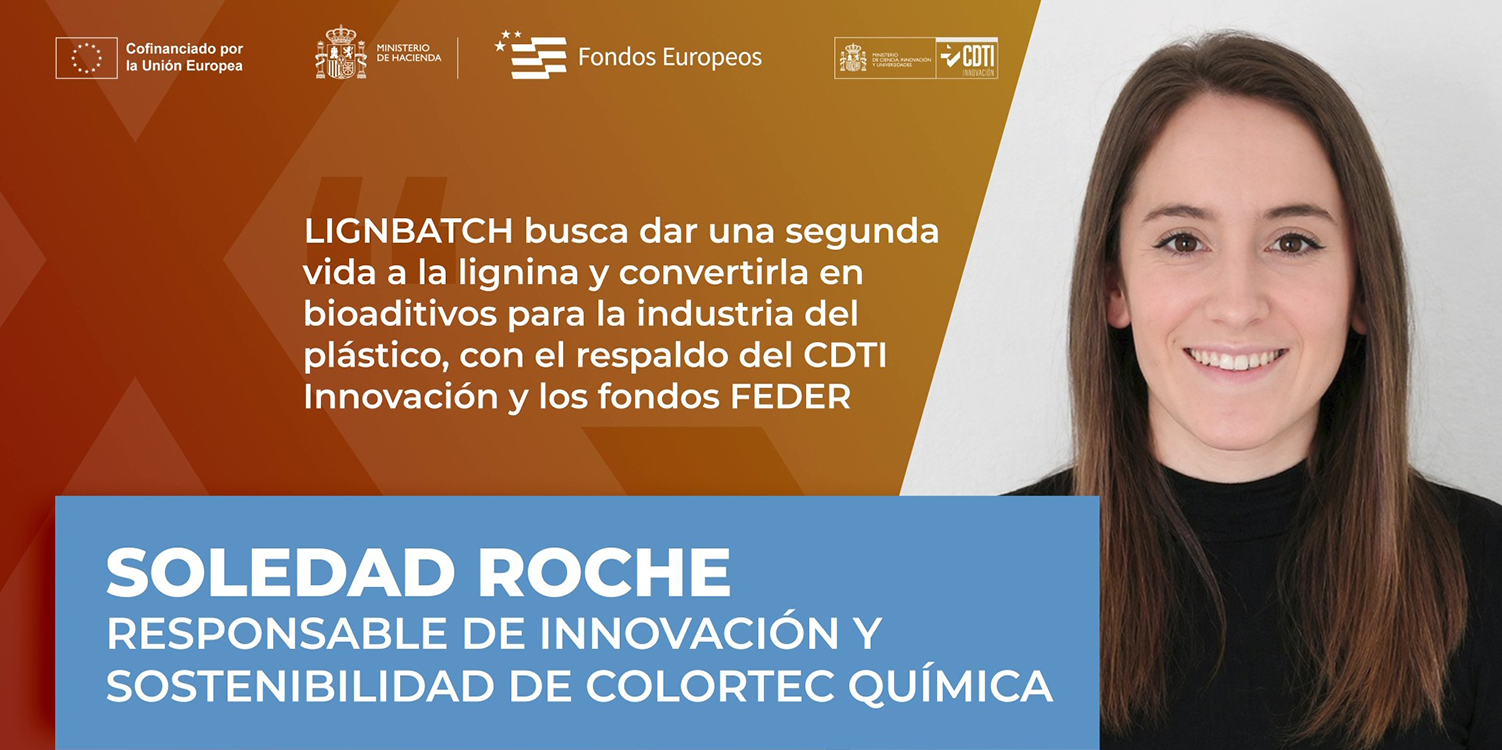
Soledad Roche, Head of Innovation and Sustainability at Colortec Chemicals: “LIGNBATCH seeks to give lignin a second life and turn it into bioadditives for the plastic industry, with the support of CDTI Innovation and FEDER funds”
Each year, between 50 and 70 million tons of lignin are generated in the world, and the vast majority end up incinerated to obtain energy, despite its potential as a source of high-value compounds. Colortec Chemicals, together with the AITEX technology center, develops the LIGNBATCH project to take advantage of these properties through advanced solvent fractionation techniques, which are then incorporated into masterbatches (MBs) for industrial application in plastics. The project is supported by the CDTI Innovation through the Cervera support line and the European ERDF funds, a commitment that connects with the Center’s priority of strengthening the Spanish innovative ecosystem through close collaboration between company and technology center, in an area in which the transfer of knowledge is decisive to compete in an increasingly demanding market in sustainability
The plastic industry is looking for materials that are increasingly adapted to the needs of each product and, at the same time, solutions that reduce its environmental impact. In this context, color and additives perform a function that goes beyond appearance, as they can provide specific properties and improve the behavior of materials during their manufacture and use.
Colortec Chemistry has been working in this field for more than three decades. The company was born in 1989 in Ibi (Alicante), at a time when the plastic industry was beginning to demand increasingly specific color solutions and additives, and since then it has evolved to specialize in the design and manufacture of customized masterbatches, concentrates that allow colorants or additives to be incorporated into plastic materials during their transformation, for application in different sectors.
This specialization has led Colortec to research new materials and formulations, but also to respond to one of the main changes facing the sector, the need to reduce dependence on fossil raw materials and move towards more circular models. Hence, new lines of work have emerged focused on renewable raw materials, recycled materials and bioadditives with less environmental impact. “Innovation has always been part of our way of working,” explains Soledad Roche, head of the Innovation and Sustainability department at Colortec Chemicals.
Convert a waste into a raw material
Lignin is one of the underused resources of the paper industry. This natural component of wood is separated during the manufacture of pulp and, despite its chemical properties, much of it is currently used to produce energy. LIGNBATCH starts precisely from this situation to explore how to turn it into a raw material of greater added value for the plastic industry.
To do this, the project investigates the fractionation of lignin to separate its different components and take advantage of the specific properties of each one. Thus, by means of solvent-based processes and molecular weight separation, fractions with differentiated characteristics are obtained that can be applied to specific functions, such as protection against ultraviolet radiation, antioxidant or antimicrobial action and flame retardant effect.
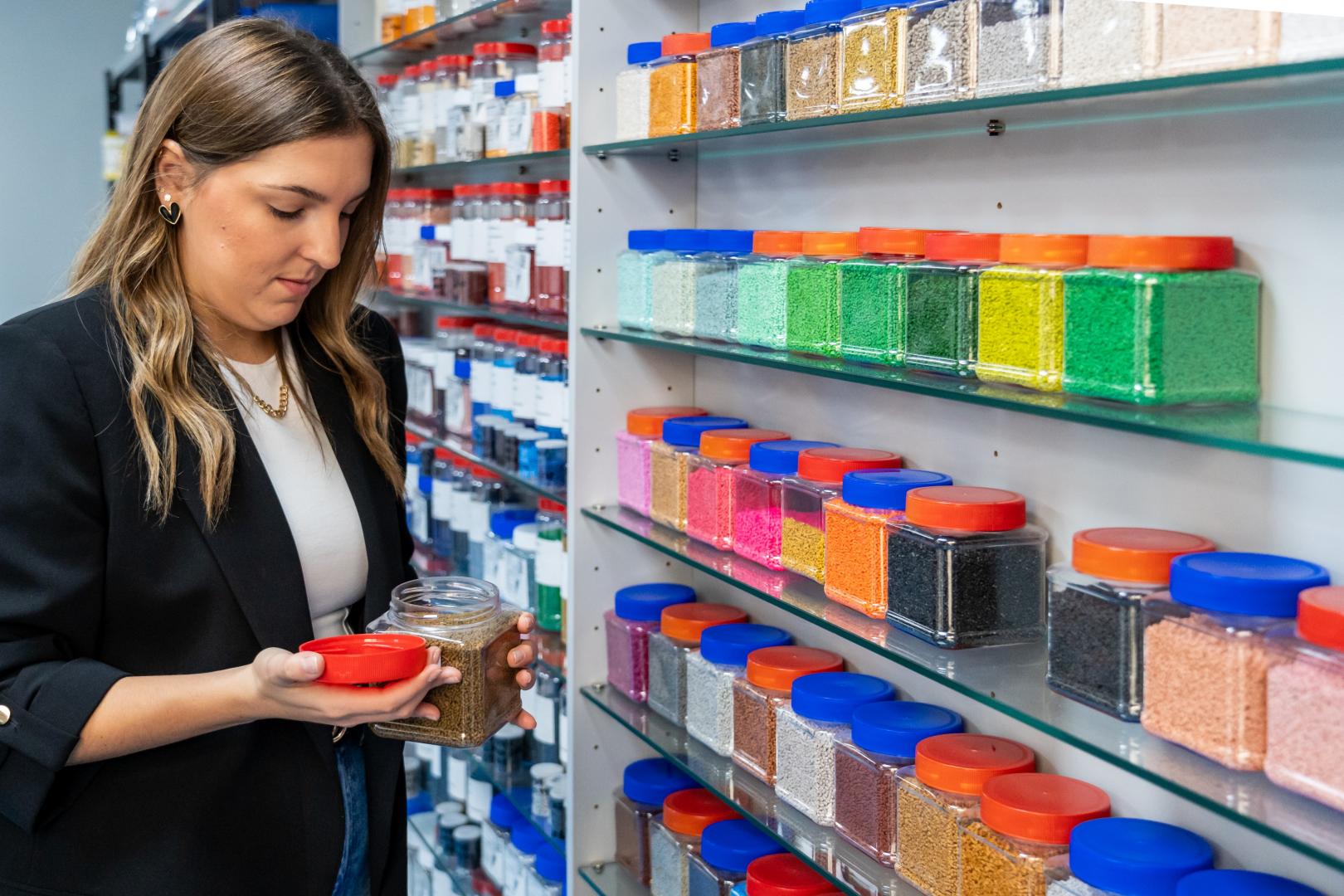 The masterbatches developed from lignin bring new functionalities to the plastic
“LIGNBATCH was born with the aim of transforming a by-product of the paper industry, lignin, into a new generation of functional additives of biological origin for the plastic industry,” says Soledad Roche. The purpose is, therefore, to go beyond the energy use of this material and explore applications that allow it to be incorporated as a functional ingredient in new products, while seeking to reduce the dependence on fossil raw materials in this sector.
Turning lignin into a functional additive
The challenge is now to transfer these properties to the plastic material itself, that is, that the different fractions can be integrated homogeneously and retain their functionality during the manufacturing stages. To achieve this, Colortec applies its experience in the development of masterbatches, concentrates that allow certain properties to be incorporated into a plastic during its transformation without the need to substantially alter existing industrial processes.
LIGNBATCH thus works in two connected stages: on the one hand, it studies how to obtain and characterize the different lignin fractions and, on the other, it analyzes how to incorporate them into plastic through extrusion processes to achieve an adequate dispersion and maintain the desired functionalities. The aim is that the new compounds can be integrated into different polymer matrices and converted into solutions with industrial application possibilities.
The project also incorporates a comprehensive exploitation approach. “Another of the main innovations of the project is the application of a zero waste approach, in which both the extracted fractions and the resulting solid waste are valued for different applications,” says Soledad Roche. In this way, LIGNBATCH seeks to take advantage not only of the lignin fractions with functional properties, but also the remaining material of the process, preventing it from ending up converted into a new residue.
Science and industrial capacity
To develop a solution of these characteristics, Colortec has worked together with AITEX, a technological center specializing in applied research and the study of materials. This collaboration allows us to cover the different stages of the project, from the study and fractionation of lignin to its transformation into a product with possibilities for industrial application.
AITEX has participated in the optimization of the fractionation and in the characterization of the different fractions obtained, while Colortec has applied these results to the development of masterbatches and the scaling of the technology. In this way, the advances in the laboratory have been able to be contrasted from the beginning with the requirements of a manufacturing process.
This connection between research and industrial development is especially important in a new technology, where the passage of laboratory tests to a larger scale can pose a greater challenge. “This cooperation has been key to safely face the technological challenges of the project and move towards a pre-industrial and industrial scaling of technology,” says Soledad Roche.
The impulse of the CDTI Innovation
Converting an underused raw material into an industrial product involves several steps, from initial processing to formulation and scaling. When that journey requires developing new technology and validating its viability before reaching the market, public support can make a difference.
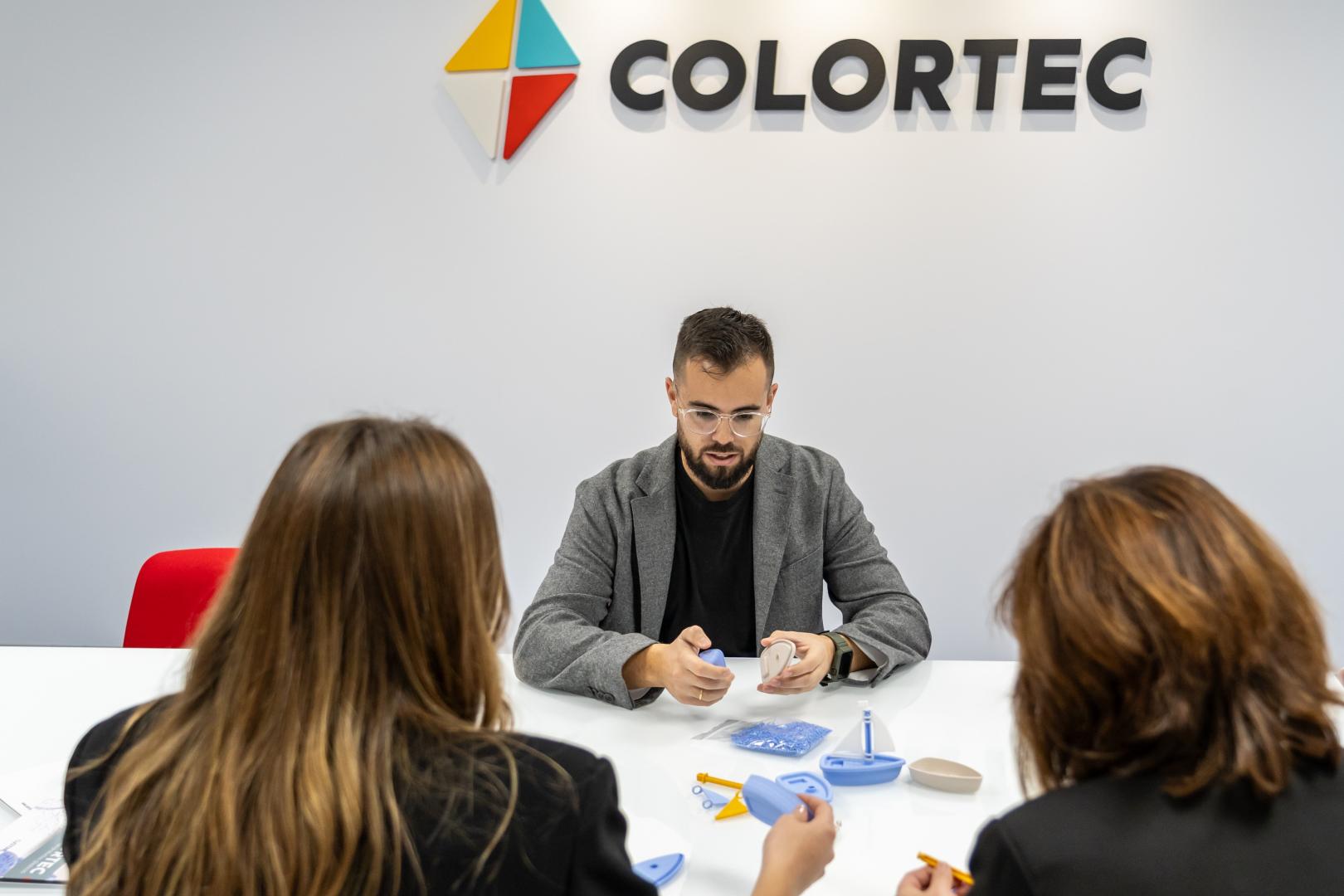 The new materials developed by Colortec can be transferred to plastic products with specific applications
Colortec has counted for LIGNBATCH with the support of the CDTI Innovation through the Cervera support line, which seeks to strengthen collaboration between companies and technology centers and advance in applied research with transfer possibilities. The initiative has been co-financed with ERDF funds through the Multiregional Operational Programme of Spain (POPE).
“The support of the CDTI Innovation, through the Cervera Network, has been fundamental to promote a research project with a high technological component and a level of risk that could hardly be addressed without this type of support instruments,” stresses the head.
The materials of the future
The evolution of the sector will be conditioned by a combination of factors such as new regulatory requirements, increased pressure to reduce the use of fossil resources and the growth of applications based on recycled and renewable materials. In this scenario, bioadditives can occupy a growing space as long as they are able to maintain the performance required by the industry.
For Colortec, this project represents a way to consolidate that knowledge and prepare for the needs that may arise in the coming years. The company plans to continue developing solutions that allow it to transfer the advances obtained in R&D to products capable of responding to the demands of the industry. “Projects like LIGNBATCH allow us to generate knowledge, develop new technologies and expand our capacity to offer our customers the solutions demanded by the market, both current and future,” he concludes.
CDTI Innovation
The Center for Technological Development and Innovation, CDTI E.P.E. It is the innovation agency of the Ministry of Science, Innovation and Universities, whose objective is the promotion of technological innovation in the business environment. The mission of the CDTI is to ensure that the Spanish business fabric generates and transforms scientific and technical knowledge into globally competitive, sustainable and inclusive growth. In 2025, within the framework of the Strategic Plan 2024-2027, the CDTI provided 2,423 million euros of support to Spanish companies and startups.
More information:
Press Office
press@cdti.es
91-581.55.00
On the Internet
Website: www.cdti.es
On Linkedin: https://www.linkedin.com/company/29815
On X: https://x.com/CDTI_innovacion
On Youtube: https://www.youtube.com/user/CDTIoficial
This content is copyright © 2026 CDTI,EPE. The use and reproduction is allowed by citing the source and digital identity of CDTI (@CDTI_innovacion).