Bruno Dominguez, CEO of COOLX Earth: “The CDTI Innovation helps us bring satellite observation and AI to the fight against deforestation”
The Malaga startup develops, with the support of CDTI Innovation through NEOTEC, a platform that allows companies to verify the origin of their raw materials and adapt to the European EUDR regulation on products free of deforestation
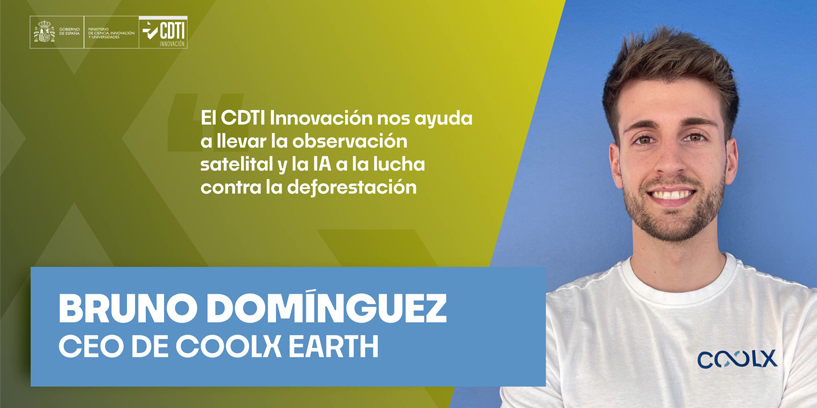
Deforestation is one of the great environmental challenges linked to global supply chains. In raw materials such as coffee, cocoa or soy, knowing the real origin of products has become an environmental, business and regulatory issue.
In this context, COOLX Earth emerged, a climate tech founded in Malaga in 2022 to respond to a lack that its founders detected in the market: the difficulty of many companies to know where their raw materials actually come from. According to Bruno Dominguez, CEO of COOLX Earth, “when we studied how companies dealt with the problem, we saw something paradoxical: none of them were able to trace the real origin of what they sold”.
Added to this gap is the entry into force of the European Regulation on deforestation-free products, known as EUDR, which has accelerated the need for georeferenced information, traceable documentation and reliable verification systems. For COOLX Earth, this new regulatory scenario makes sustainability a decisive factor for the entire value chain. “We founded COOLX when we saw that three key elements coincided: an urgent environmental problem, a regulation with real sanctions and the absence of comprehensive tools in the market,” says Domínguez.
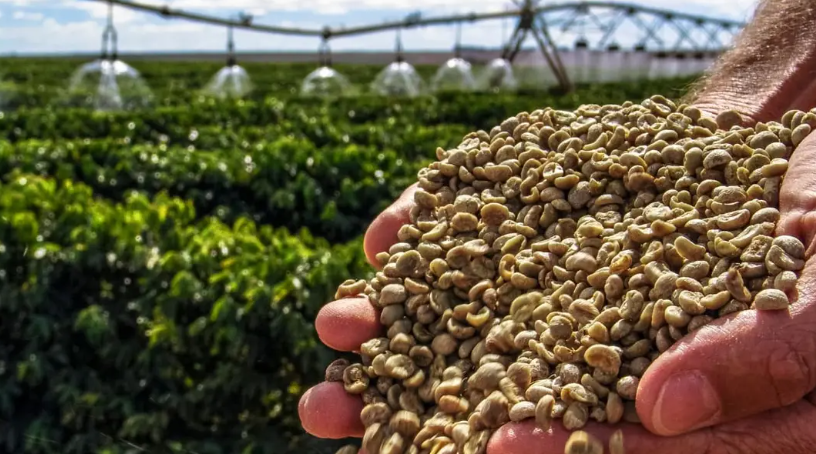
Technology to help companies verify the origin of raw materials such as coffee and demonstrate that their supply chains are free of deforestation | Photo: COOLX Earth
A project to convert complex data into verifiable decisions
To respond to this challenge and with the support of CDTI Innovation through NEOTEC, COOLX Earth is developing a technology based on satellite observation, artificial intelligence and blockchain with the aim of helping companies affected by the EUDR regulation to verify the origin of their raw materials and analyze possible deforestation risks in their supply chains.
The solution is structured in three lines of work: detecting changes in land use, accurately delimiting the farms of origin and ensuring the traceability of information along the entire chain. In this way, advanced technological capabilities such as Earth observation or data analysis are transferred to a specific market application, in which sustainability must be demonstrable with reliable information.
In a phase marked by the next mandatory regulation, the support of NEOTEC has been key to accelerate the development of the platform. As Domínguez states, “this support allows us to tackle the three technical objectives at a pace that we would otherwise have had to stretch 18-24 months longer.”
In this sense, the CDTI Innovation contributes to promote high-risk and potential technological development, aligned with its role of promoting business innovation and facilitating the transformation of scientific and technical knowledge into competitive, sustainable solutions with international growth capacity.
Technology to make sustainability verifiable
In addition to its technological component, the project naturally connects with several Sustainable Development Goals. This alignment is embodied in a technology aimed at verifying the origin and environmental impact of supply chains through reliable data. The proposal thus integrates business competitiveness, sustainability and measurable impact.
The challenge, however, is not only technological. It also depends on the characteristics of the crops themselves. In the case of coffee and cocoa, many farms are small, are located in tropical areas with high cloudiness and are developed under agroforestry systems that can be visually similar to a forest.
Therefore, as Domínguez explains, “coffee and cocoa are the two crops where the EUDR problem reaches its maximum technical and commercial complexity”.
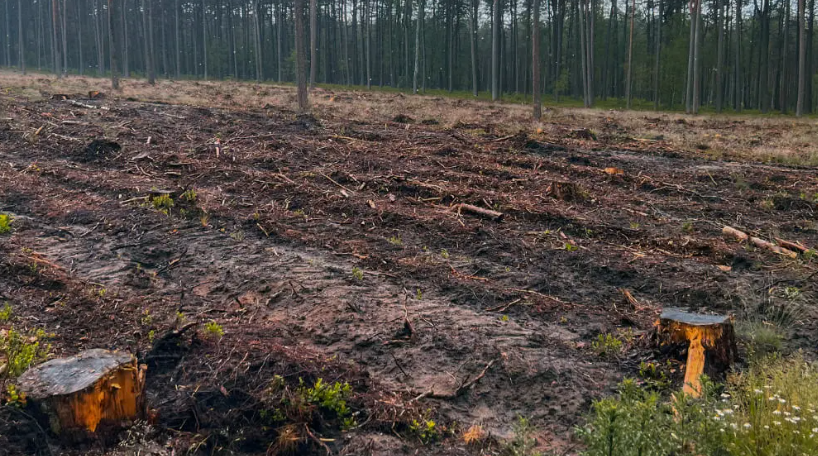
The COOLX Earth platform combines satellite observation and AI to identify changes in land use and analyze potential deforestation risks | COOLX Earth Photography
To address this complexity, the company combines different sources of information obtained from space, with the aim of building a more accurate view of the terrain and identifying changes that could go unnoticed by conventional methods. The difference, according to the CEO, is in the ability to observe very concrete changes in complex environments: “There is a huge difference between detecting large-scale logging in the Amazon and detecting the conversion of 1.5 hectares of forest to coffee on a cloudy slope of Antioquia.”
This analytical capacity allows us to study large areas and multiple farms in much shorter times than traditional methods, a particularly relevant leap for supply chains with thousands of producers. As Domínguez summarizes, “manually a field team would have taken years.”
Know the exact origin of the raw materials
For this verification to be possible, one of the most relevant developments of the project consists of automatically delimiting the estates of origin. The EUDR requires not only to know an approximate area of production, but also to accurately identify each farm. In fragmented agricultural chains, with thousands of small producers and little cadastral digitalization, this requirement can become a barrier to entry into the European market.
COOLX Earth seeks to reduce this barrier by means of a technology capable of automatically generating the perimeter of a farm from a single point provided by the producer or by a field agent. The starting point is particularly complex, since, as Domínguez points out, “most coffee, cocoa, soy and palm farms in producing countries do not have a digital cadastre.”
This solution is particularly relevant so that the regulatory transition does not leave out small producers. If verification depends on costly manual processes, only large corporations can easily assume regulatory compliance. In the words of the CEO, “without automatic generation of polygons, the EUDR remains in a regulation that only large corporations can comply with”.
Along with the detection of deforestation and the delimitation of farms, the project incorporates traceability tools that ensure the reliability of information throughout the supply chain. In a context where sustainability must be demonstrable, having verifiable data becomes a strategic element for companies. Domínguez summarizes it with a specific example: “Thanks to this initiative, a European company goes from not knowing anything about the origin of its coffee to having, in a single software, polygon of each farm, historical satellite analysis since 2020, automated socio-legal evaluation and Due Diligence Declaration ready to present”.
Climate innovation with an international vocation
The support received has also strengthened the positioning of COOLX Earth in an environment where trust and technological validation are especially relevant. For a startup that works at the intersection between regulation, sustainability and advanced technologies, that validation has a direct impact on its ability to grow. “The CDTI Innovation works as a seal of quality: it opens doors with corporate clients, strategic partners and private investors”, emphasizes the CEO.
On this basis, the company has already established agreements and collaborations with entities such as AENOR, the European Space Agency, the European Coffee Federation and EUSPA, which reinforces the international projection of a technology developed from Spain to respond to a global need.
Although the first use case focuses on EUDR and raw materials such as coffee and cocoa, the technology has the potential to be extended to other sectors and applications linked to food traceability, sustainability due diligence or precision farming.
For the next few years, COOLX Earth aims to consolidate itself in Spain and Latin America and then move towards other European markets. For Domínguez, Spain can play a relevant role in this field if it takes advantage of its capabilities in Earth observation, artificial intelligence and technological entrepreneurship. In this way, it considers that institutional support can be decisive: “The role of institutions like the CDTI is exactly this: leveling the playing field so that startups like COOLX can reach European level from a Spanish base,” concludes the CEO.
CDTI Innovation
The Center for Technological Development and Innovation, CDTI E.P.E. It is the innovation agency of the Ministry of Science, Innovation and Universities, whose objective is the promotion of technological innovation in the business environment. The mission of the CDTI is to ensure that the Spanish business fabric generates and transforms scientific and technical knowledge into globally competitive, sustainable and inclusive growth. In 2025, within the framework of the Strategic Plan 2024-2027, the CDTI provided 2,423 million euros of support to Spanish companies and startups.
More information:
Press Office
press@cdti.es
91-581.55.00
On the Internet
Website: www.cdti.es
On Linkedin: https://www.linkedin.com/company/29815
On X: https://twitter.com/CDTI_innovacion
On Youtube: https://www.youtube.com/user/CDTIoficial
This content is copyright © 2026 CDTI,EPE. The use and reproduction is allowed by citing the source and digital identity of CDTI (@CDTI_innovacion).