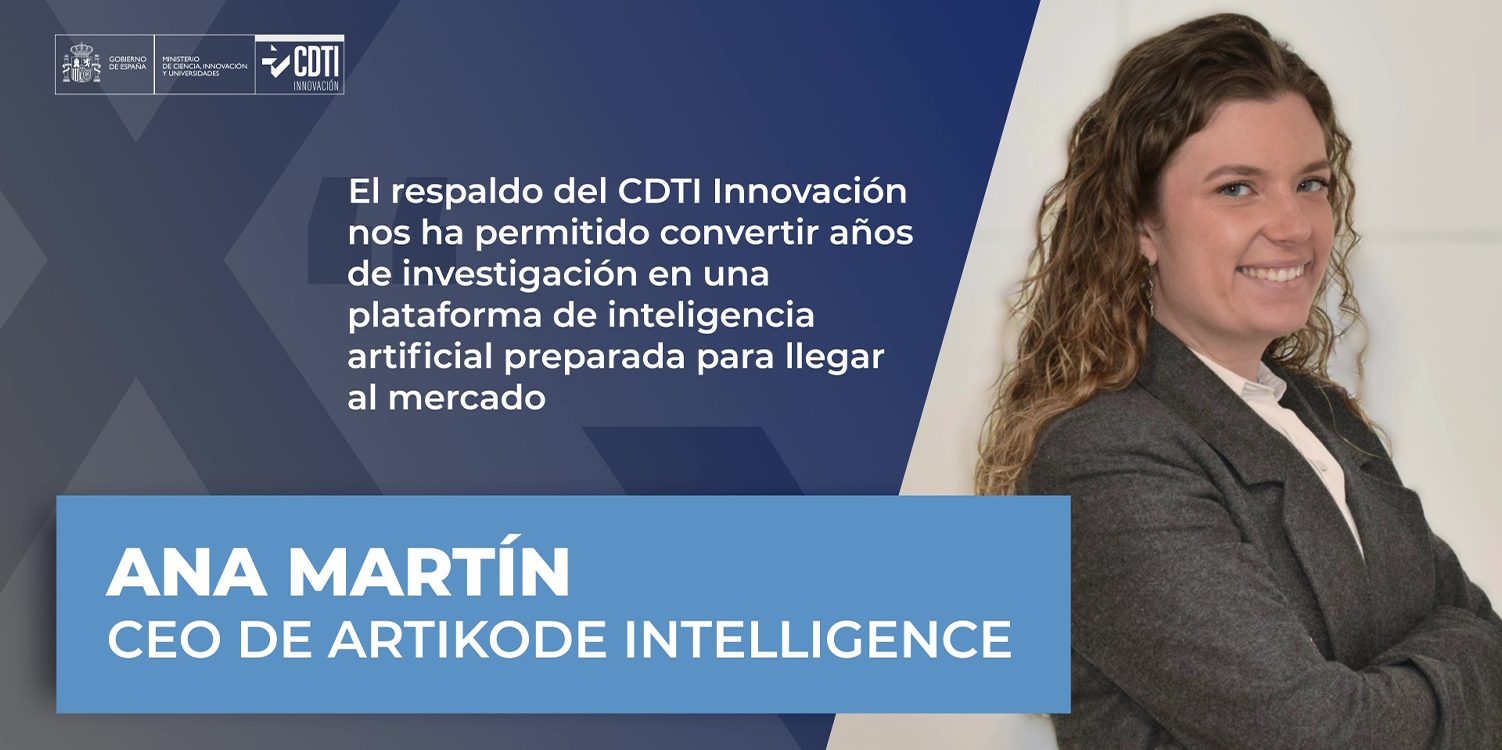
Ana Martín, CEO of Artikode Intelligence: "The support of CDTI Innovation has allowed us to turn years of research into an artificial intelligence platform ready to reach the market"
Artikode Intelligence promotes Pixvolution, a project that brings artificial intelligence to the analysis of large images to facilitate the work of professionals and researchers in areas such as health or sustainability. Thanks to the support of CDTI Innovation’s NEOTEC Women Entrepreneurs program, the company is developing a new generation of its PixNormous platform, with the aim of bringing AI closer to sectors where visual analysis is key to decision making.
Artikode Intelligence was born in 2023 as a spin-off of the CVBLab group of the Universitat Politècnica de València with the purpose of transferring to the market the knowledge generated during more than two decades of research in computer vision and artificial intelligence. During that time, a multidisciplinary team worked on the development of technologies for the treatment and analysis of images, participating in numerous national and international projects.
This extensive experience in the academic field allowed them to detect a problem that was repeated in hospitals, research centers, agri-food companies or public administrations. These entities worked with increasingly large and complex images, obtained through microscopes, drones, satellites or medical equipment, but they lacked tools capable of analyzing them in an agile way and turning all that information into useful knowledge for decision making.
This is where Artikode Intelligence was born, conceived as the link between research and the real needs of the market. “The objective was for the knowledge and technology developed over the years to be put at the service of society and not to remain in a research laboratory, but to reach companies and professionals and transform into solutions with a real impact,” explains Ana Martín, CEO of the company.
The challenge of understanding giant images
With this challenge in mind, the Valencian startup developed PixNormous, a tool that aims to respond to the challenge of processing images of very high resolution whose size makes it difficult to treat them through conventional tools.
In the health field, for example, a pathologist can work with very high-resolution histological images containing millions of pixels and an enormous amount of microscopic information. Something similar happens in areas such as sustainability, where drones and satellites generate large volumes of images to analyze crops, forest masses or infrastructure. In many of these cases, an important part of the analysis still depends on the manual review of specialists.
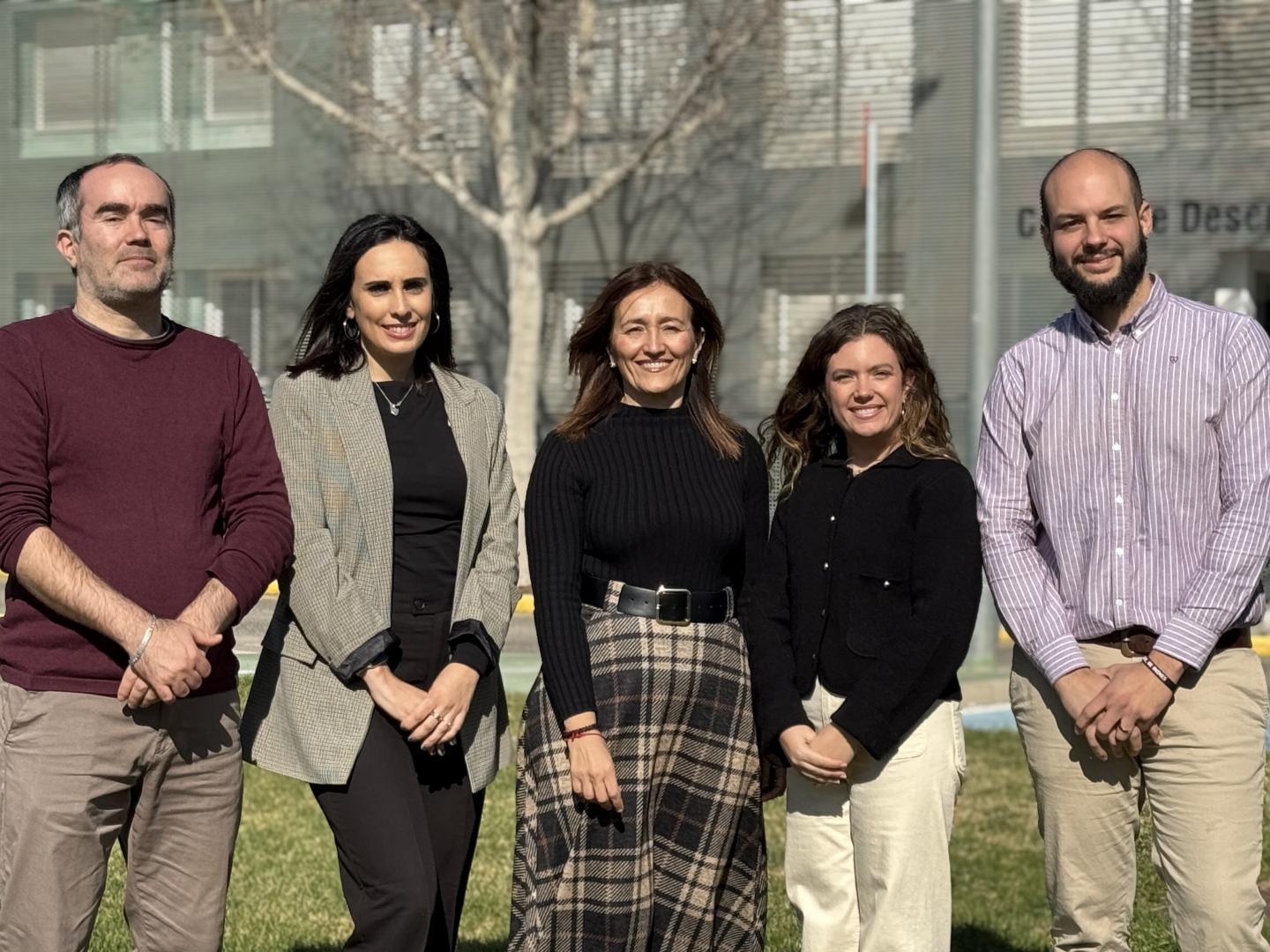 Members of the Artikode team
PixNormous integrates all phases of the process into a single platform, allowing you to visualize large images, organize them, make annotations, share the work between different specialists, obtain metrics and incorporate AI tools that automate part of the analysis. "It allows you to work with the full image and, at the same time, examine very small details without losing quality," adds Ana Martín.
A new generation to incorporate AI
Based on that technological foundation, Pixvolution is now being developed, a project funded by the CDTI Innovation that drives a new generation of PixNormous.
The new version incorporates a completely renewed interface and a library of artificial intelligence models that will allow specialized algorithms to be applied to automatically detect, classify or delimit the elements present in the images.
Another of the main innovations will be the possibility for users themselves to train models adapted to their needs using their images and annotations, without having advanced knowledge in artificial intelligence or specialized computer infrastructure. "The main benefit is to reduce the technical and economic barriers that still hinder the adoption of artificial intelligence."
The intention is that professionals who know their field in depth can use these tools without becoming specialists in programming or data science. Researchers, healthcare staff or environmental experts will be able to incorporate AI models into their workflows and adapt them to each application. "Artificial intelligence acts as a support tool that speeds up analysis and provides objective information, but it is the specialist who defines the problem, validates the results and makes the decisions."
Less repetitive tasks, more analysis
One of the most direct applications of the platform is in the automation of time-consuming tasks when performed manually. The delimitation of areas of interest, the classification of elements or the obtaining of certain metrics can be supported by artificial intelligence models.
The goal is to free up some of the time of professionals so that they can concentrate on the tasks of greater added value. In research, this can translate into more time to contrast hypotheses and analyze results, while in other sectors it can facilitate the massive processing of data that would be difficult to address manually. “PixNormous allows us to automate some of these tasks and analyze large volumes of information in a faster, homogeneous and reproducible way,” says the CEO.
This tool also favors collaborative work between very different profiles, integrating researchers, clinical staff, domain specialists and technological experts in the same environment. This facilitates the development of multidisciplinary projects in which artificial intelligence acts as a support element and not as a substitute for expert knowledge.
The impulse of the CDTI Innovation
The leap from academic research to a solution prepared to compete in the market requires continued investments in technological development and validation. In this process, the support of the NEOTEC Women Entrepreneurs program of the CDTI Innovation has allowed Artikode Intelligence to strengthen the team and accelerate the development of PixNormous to turn it into a solid product that can compete commercially.
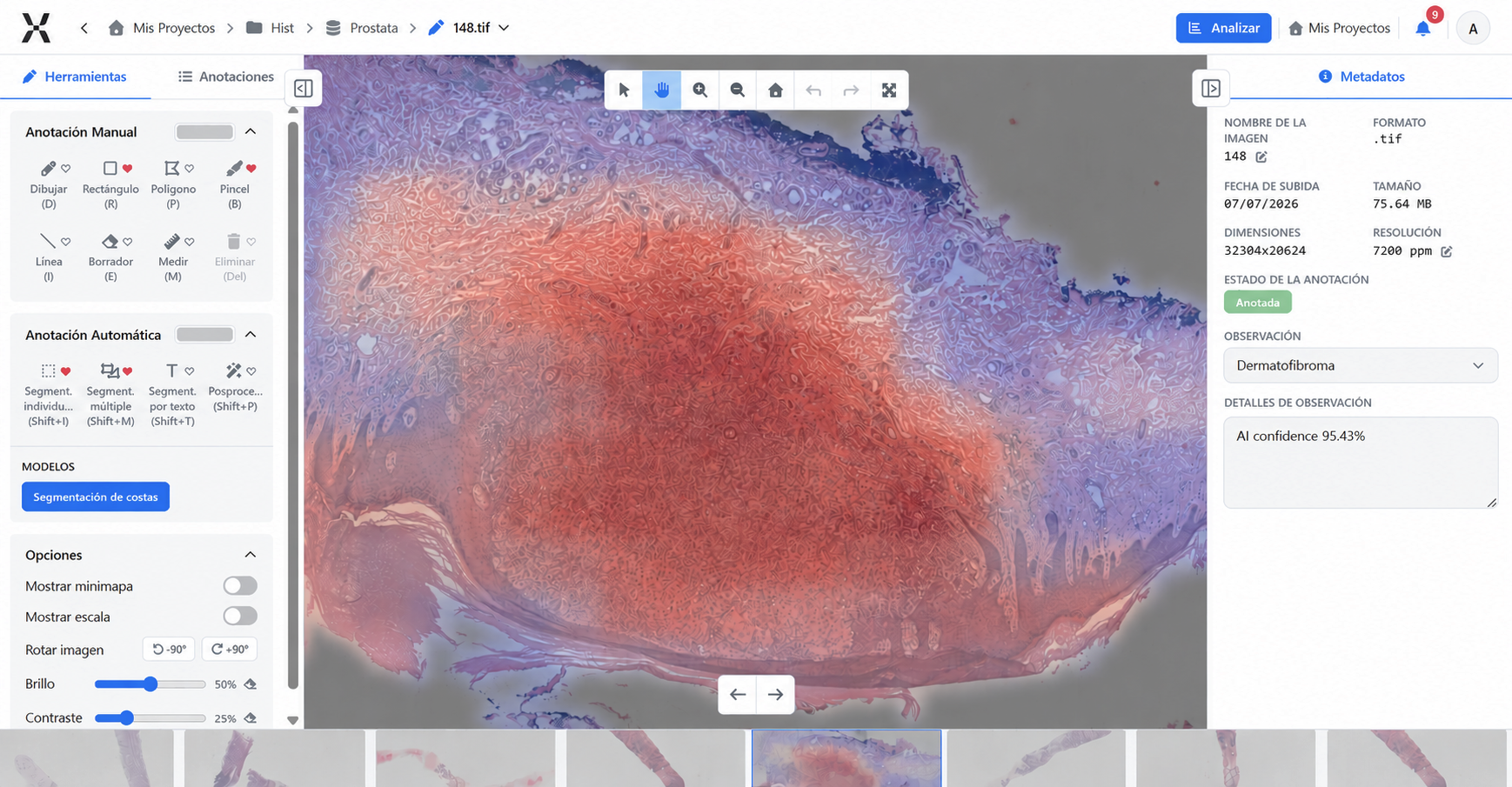 The platform makes it easy for healthcare professionals to analyze large images
“This is especially important in an area like AI, where technology and market needs are evolving at a rapid pace and continuous investment is needed to keep up, build new capabilities and deliver a strong and competitive solution,” adds Ana Martin.
Beyond financing, the CEO underlines that the support of CDTI Innovation helps to validate the strength of the project and to generate confidence before future customers and collaborators. It also highlights the role of the NEOTEC Women Entrepreneurs program as an instrument to promote female leadership. "For me, this support also means a responsibility and additional motivation to continue building a solid company, generate opportunities for other professionals and contribute to more and more women leading technological and business projects," he adds.
Towards an AI closer to the user
The next challenge is to make AI tools easier and easier to incorporate into everyday work. In image analysis, this involves combining models capable of processing large amounts of information with interfaces that allow them to be used without high technical specialization.
"The challenge will not only be to develop increasingly powerful models, but to turn them into simple, robust and accessible tools for professionals who do not necessarily have advanced knowledge in artificial intelligence," says Ana Martín.
The evolution involves developing specialized models, improving the quality of the data and achieving reliable, traceable and understandable results. "Our goal with PixNormous is to contribute to this evolution and make artificial intelligence applied to images change from being a technology reserved for specialized teams to becoming a habitual tool at the service of researchers, professionals and organizations," he concludes.
CDTI Innovation
The Center for Technological Development and Innovation, CDTI E.P.E. It is the innovation agency of the Ministry of Science, Innovation and Universities, whose objective is the promotion of technological innovation in the business environment. The mission of the CDTI is to ensure that the Spanish business fabric generates and transforms scientific and technical knowledge into globally competitive, sustainable and inclusive growth. In 2025, within the framework of the Strategic Plan 2024-2027, the CDTI provided 2,423 million euros of support to Spanish companies and startups.
More information:
Press Office
press@cdti.es
91-581.55.00
On the Internet
Website: www.cdti.es
On Linkedin: https://www.linkedin.com/company/29815
On X: https://x.com/CDTI_innovacion
On Youtube: https://www.youtube.com/user/CDTIoficial
This content is copyright © 2026 CDTI,EPE. The use and reproduction is allowed by citing the source and digital identity of CDTI (@CDTI_innovacion).