Pedro Díaz, Head of R&D&I in Zukán: “Having the support of CDTI Innovation and FEDER funds allows us to develop a solution that protects the survival of bees in extreme climates”
From Murcia to the United Arab Emirates, Zukán promotes advanced nutrition and beehive monitoring solutions to address the effects of climate change on beekeeping. Through the CLIMABEE project, supported by the CDTI Innovation and co-financed with European FEDER funds, the company develops dehydrated food and intelligent technologies that strengthen bee health, improve productivity and open up new opportunities for a strategic sector on a global scale
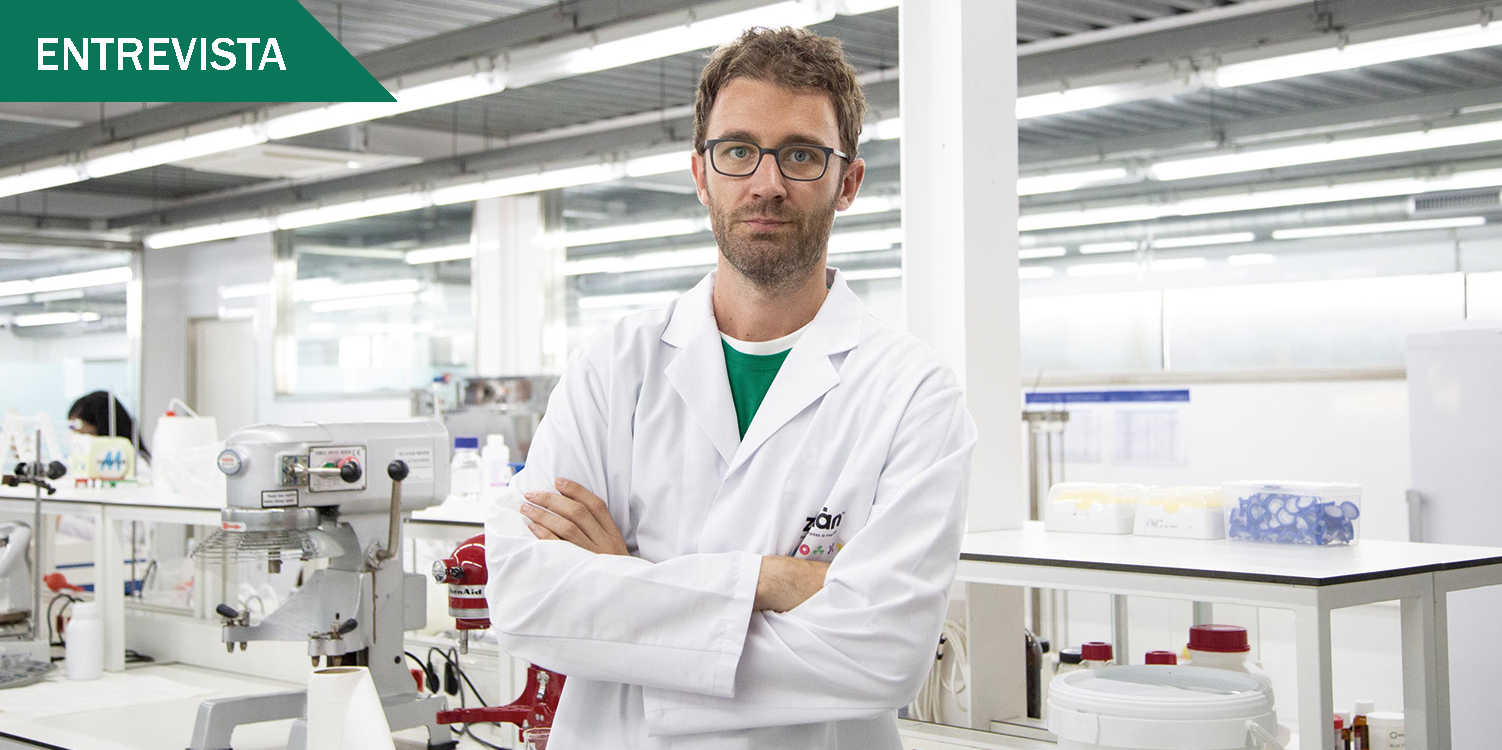
For more than three decades, Zukán has been transforming its business model into a company strongly oriented to applied innovation. Born in 1994 in Molina de Segura (Murcia), the company began its activity focused on the marketing of sugar for industrial use. Over the years, this production base evolved towards an increasing specialization in liquid sweetener solutions of natural origin and developed to suit the customer. A key turning point came in 2010, when the R+D+i Department acquired its own identity, marking a qualitative leap in the company’s technological capacity.
“Ese momento supuso profesionalizar de verdad la innovación dentro de Zukán”, explica Pedro Díaz, manager de I+D+i de la empresa. Currently, the department is made up of eight people with highly qualified profiles in areas such as Food Technology, Chemistry, Biology, Chemical Engineering and Biotechnology, four of them with doctorate. In total, the company has a staff of 220 workers and allocates approximately 1% of its turnover to research, development and innovation activities.
From sweeteners to bee nutrition
Within this knowledge-based diversification strategy, in 2014 Zukán took a decisive step with the creation of its beekeeping line, which over time has been consolidated as one of the key ranges of the company. “We began to apply all our knowledge in formulation, processes and quality control to a sector that had enormous challenges ahead,” says Díaz. Today, in addition to liquid sweetening solutions, Zukán develops prebiotic fibers such as fructooligosaccharides (FOS) and produces specialized feeds for the feeding of bees, with a clear international vocation.
This innovative approach is reinforced by a strong commitment to digitization and Industry 4.0. In recent years, the company has automated its manufacturing lines using SCADA systems, implemented MES and GMAO solutions for production control and advanced the use of sensoric and artificial intelligence for decision making. All this with a clear objective: efficiency, sustainability and quality assurance. “We have incorporated technologies that reduce water consumption, something especially relevant in the Region of Murcia, and systems that prevent cross-contamination, in addition to replacing combustion based processes with others that do not require fossil energies,” he stresses.
A project born from an extreme climate challenge
In this context, the CLIMABEE project is framed, focused on the development of advanced nutrition for bees and the monitoring of hives, an international initiative that addresses one of the great challenges of the beekeeping sector: the survival of bees in environments with extreme weather conditions. The origin of the project is directly linked to the situation of beekeeping in the United Arab Emirates, where high temperatures and the scarcity of flowering severely limit natural access to food.
“The production of honey in the Emirates has a very clear particularity: extreme temperatures mean that there are few floral species and very short flowering periods,” explains Díaz. Added to this is a high mortality of hives, which forces beekeepers to renew swarms even twice a year, with a consequent increase in costs. Faced with this model, in Europe the usual practice involves balanced nutrition throughout the year, which increases survival and improves profitability.
“That’s why we saw it as essential to develop a dehydrated food, with a long shelf life in extreme conditions of transport and storage, but at the same time offering a balanced nutritional intake and a high concentration of protein,” he says. The ultimate goal is clear: making honey production viable and profitable in countries with extreme climates, without compromising the health of bees.
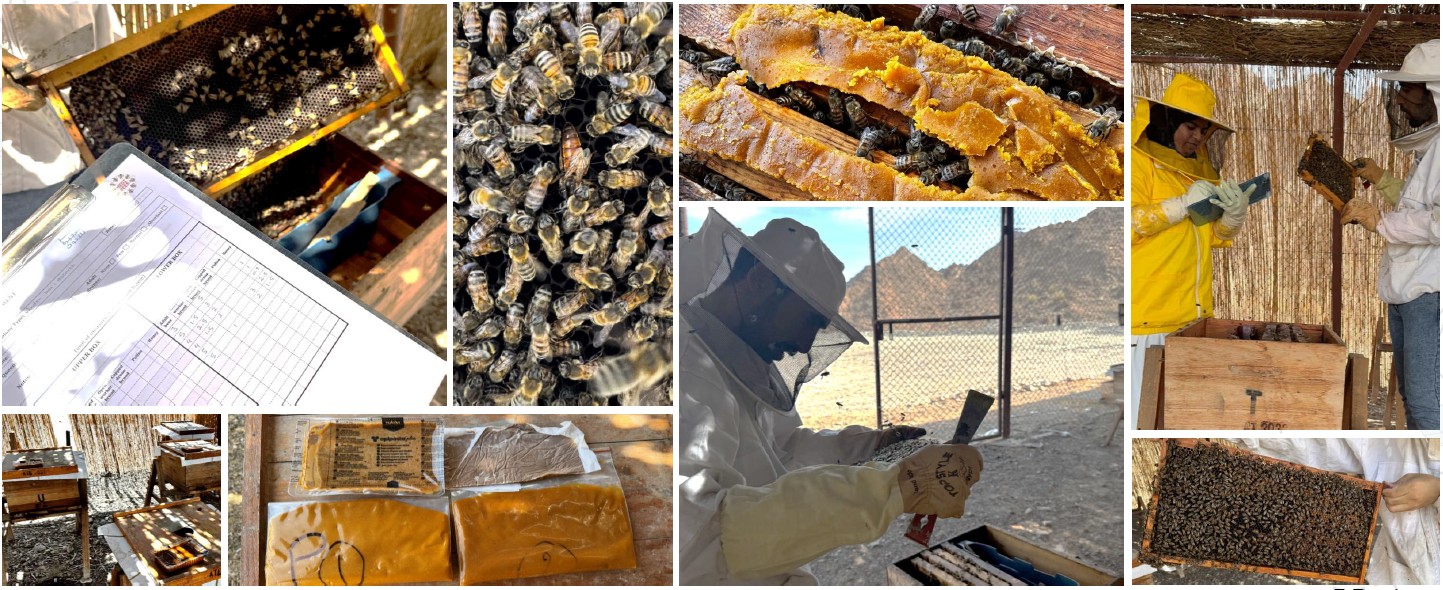
Images related to the Climabee project of the company Zukán
International collaboration and knowledge transfer
The project is developed in collaboration with Fujairah Research Centre (FRC), an Emirati technological partner specializing in sensoric and monitoring. The alliance arises, according to Díaz, thanks to the visibility provided by international innovation programs. “The collaboration was born as a result of the Eureka call, in which Zukán was already participating in a project with Turkey and Italy related to the development of a new liquid food with high protein content,” he recalls.
In the current project, each partner provides complementary capabilities. Zukán leads the development of the food, applying its experience in apiculture nutrition and advanced formulation, while FRC is in charge of the technological part linked to the monitoring of hives. “Our knowledge allows us to design the ideal food taking into account not only nutrition, but all the factors that influence the health of the hive,” explains Díaz. For its part, FRC technology allows monitoring of key parameters to understand the behavior of bees.
This joint work is also based on the public financing of innovation. The project is supported by CDTI Innovation grants co-financed with European FEDER funds, a support that, according to Díaz, is key to bringing this type of development to the market. “In Zukán we have been participating in CDTI projects for more than ten years and this type of support represents, on the one hand, financial support to launch new innovation initiatives and, on the other, the visibility that allows to generate knowledge and new collaborations,” he highlights.
Para el responsable de I+D+i, el impacto de esta financiación va más allá de la propia empresa. “All this results in new products, services and collaborations, boosting the company’s R+D+I and strengthening the Spanish innovative ecosystem,” he concludes.
Advanced nutrition and intelligent monitoring
The new dehydrated food has been designed with very specific criteria. It should have a nutritional composition similar to pollen, with special attention to the quality and quantity of protein; significantly improve the survival of hives in periods of scarcity; contain as little water as possible to facilitate transport and storage; and allow for quick and easy reconstitution in the field.
Added to this innovation in nutrition is the use of advanced technologies such as sensors, the Internet of Things and artificial intelligence for the monitoring of hives. “Monitoring parameters such as humidity, temperature or even the buzz of bees allows us to understand and predict the behavior of the hive,” says Díaz. This information anticipates needs and facilitates decision-making to minimize risks of disease, malnutrition or collapse, while optimizing the honey production and profitability of the sector.
Meeting the challenges in real conditions
One of the main challenges of the project has been to adapt the solution to the real conditions of use in the United Arab Emirates. In the tests carried out on beehives in Murcia, the reconstituted food could be placed directly on the frames without the need for additional containers. However, the extreme temperatures of the Gulf complicated this operation.
“The challenge was to get the food to stay fresh and with a proper texture for at least two weeks,” says Díaz. The solution came from the hand of the Emirati partner, who introduced the reconstituted food into a plastic bag to avoid its dehydration and hardening, thus guaranteeing its consumption by the bees in extreme conditions.
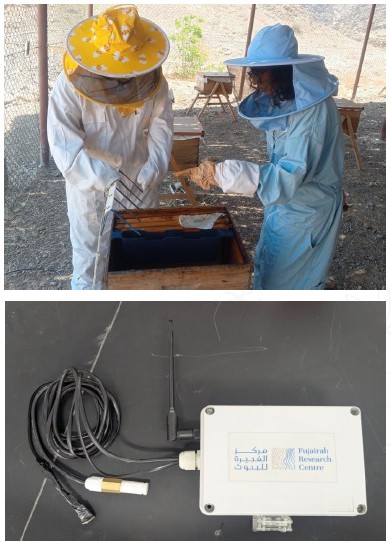
The company Zukán collaborates with the Fujairah Research Centre
Environmental impact and sustainability of the model
Beyond productivity, the project has a clear environmental and ecological impact. According to Díaz, well-designed artificial nutrition reduces the pressure on natural ecosystems by decreasing intensive pollen collection and competition with wild species. It also makes it possible to reduce the mass transport of hives in search of blooms, with a consequent reduction in CO₂ emissions and the risk of spreading diseases.
“Stronger and healthier hives have a better pollinating ability, which benefits both crops and wild plants,” he says. In addition, the development opens the door to circular economy models, since these foods can be made from agro-industrial by-products, generating added value and reducing waste.
A solution with a global vocation
Although the project has been tested in the United Arab Emirates, its potential for implementation is global. “The solution is perfectly extrapolable to other territories with extreme climates or with difficulties to maintain the productivity of the hives,” says Díaz. The goal is to reduce bee mortality and increase honey production where natural resources are limited.
In the medium and long term, this development lays the foundation for a new range of products within Zukán. “In five years we will see this project as the starting point for a complete line of dehydrated products, easily reconstituted, able to meet the nutritional needs of different species of bees in any region of the world,” he says.
CDTI Innovation
The Center for Technological Development and Innovation, CDTI E.P.E. It is the innovation agency of the Ministry of Science, Innovation and Universities, whose objective is the promotion of technological innovation in the business environment. The mission of the CDTI is to ensure that the Spanish business fabric generates and transforms scientific and technical knowledge into globally competitive, sustainable and inclusive growth. In 2024, within the framework of a new strategic plan, the CDTI provided more than 2.3 billion euros of support to Spanish companies and startups.
More information:
Press Office
press@cdti.es
91-581.55.00
On the Internet
Website: www.cdti.es
On Linkedin: https://www.linkedin.com/company/29815
On X: https://twitter.com/CDTI_innovacion
On Youtube: https://www.youtube.com/user/CDTIoficial
This content is copyright © 2026 CDTI,EPE. The use and reproduction is allowed by citing the source and digital identity of CDTI (@CDTI_innovacion).