Pablo Artal, founder and CEO of Voptica: “The SME Seal of Excellence of CDTI Innovation and FEDER funds have boosted our intraocular lenses, their clinical validation and their international expansion”
The company Voptica advances in the development of new generation optical solutions to improve the visual quality of patients with complex pathologies, relying on cutting-edge research and technological transfer. With the promotion of the CDTI Innovation Seal of Excellence and the cofinancing of the European ERDF funds, its ClearVIS project seeks to respond to clinical needs not yet covered in the field of ophthalmology
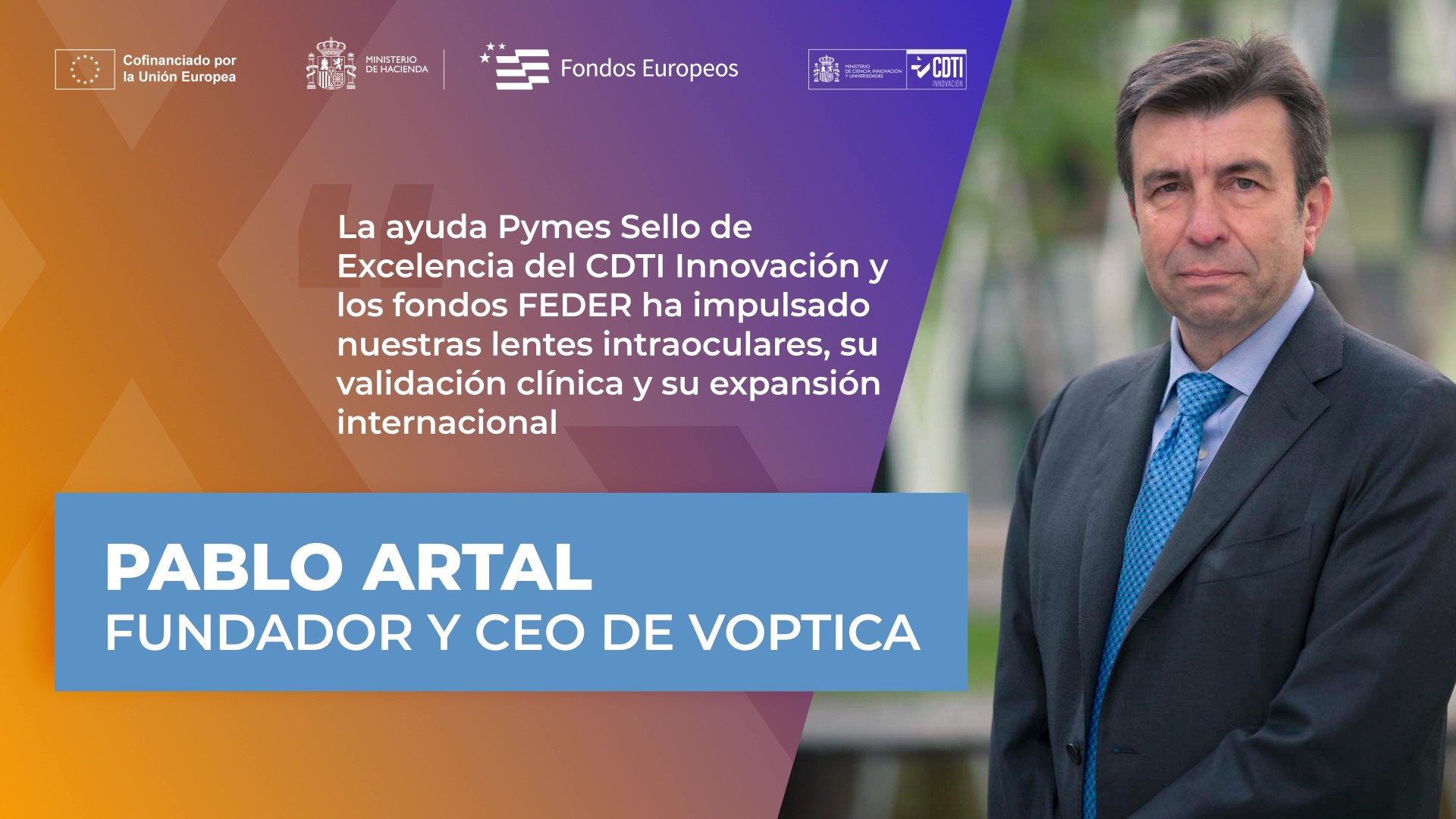
In the field of ophthalmology, where technological advances have a direct impact on the quality of life of millions of people, the ability to transfer scientific research to the clinical environment makes a difference. In this context, the company Voptica develops advanced optical solutions, with a proposal based on cutting-edge research and a clear vocation for technology transfer.
Founded in 2010 as spin-off of the University of Murcia, Voptica was born from the work developed in the Optics Laboratory (LOUM), a group focused on the study of the optics of the human eye at an international level. “The company is created with the aim of transferring to the clinical and industrial environment all the knowledge accumulated during years of research, especially in relation to the optical quality of the eye and the limitations of conventional solutions,” explains its founder and CEO, Pablo Artal.
Since then, the company has evolved into a model in which research remains at the core of its activity. With a team of 14 professionals —12 of them dedicated to R&D— and a strong international orientation, Voptica combines scientific excellence, clinical knowledge and technological development to design solutions that improve the real visual quality of patients.
From research to the clinic
One of the main milestones of the company has been the development of technologies that allow, for the first time, to preview how a patient will see before undergoing an intervention. “We were pioneers in bringing to the clinic the concept of visual simulator based on adaptive optics, which allows treatments to be customized and clinical decision making to be improved,” says Artal.
Added to this line is the development of a new generation of intraocular lenses, the so-called ArtIOLs, which represent a significant evolution compared to traditional solutions. These lenses, designed under innovative optical principles, seek to offer a quality of vision closer to the actual patient experience.
Voptica’s international vocation is clear. Currently, most of its sales are concentrated outside Spain, with a growing presence in Europe and emerging markets in Asia-Pacific. “In the case of lenses, more than 75% of our sales come from abroad, and this trend continues to grow,” says the CEO.
Responding to unmet needs
In this context of continuous innovation, the ClearVIS project, supported by the CDTI Innovation and the European FEDER funds, represents one of the most ambitious developments of the company. Its objective is to respond to a still insufficiently covered medical need: to improve visual quality in patients with cataracts that also present retinal pathologies, such as age-related macular degeneration (AMD).
“We decided to push ClearVIS forward because conventional solutions don’t always deliver optimal performance in these patients, especially in peripheral vision, which is key to many visual functions,” explains Artal.
Voptica’s proposal is based on extending the optical advantages of its ArtIOLs lenses towards a new design specifically designed for this clinical profile. “We seek to maximize the overall visual quality, not only on the axis, but also outside it, where many current lenses have limitations,” he adds.
Improving vision and autonomy
The potential impact of this technology goes beyond purely visual improvement. In patients with pathologies such as AMD, where central vision progressively deteriorates, the ability to take advantage of peripheral vision becomes essential.
“Our technology is designed precisely to optimize that peripheral vision, providing a sharper and more useful image outside the visual axis,” explains Artal. This can result in concrete improvements in daily life: orientation, mobility or recognition of objects in the environment.
Although it is not a cure, it does offer a significant functional benefit. “We can give patients some extra time, improving the use of available vision and delaying the practical impact of the disease,” he says.
In general terms, this translates into greater autonomy, safety and well-being, key factors for the quality of life of these patients.
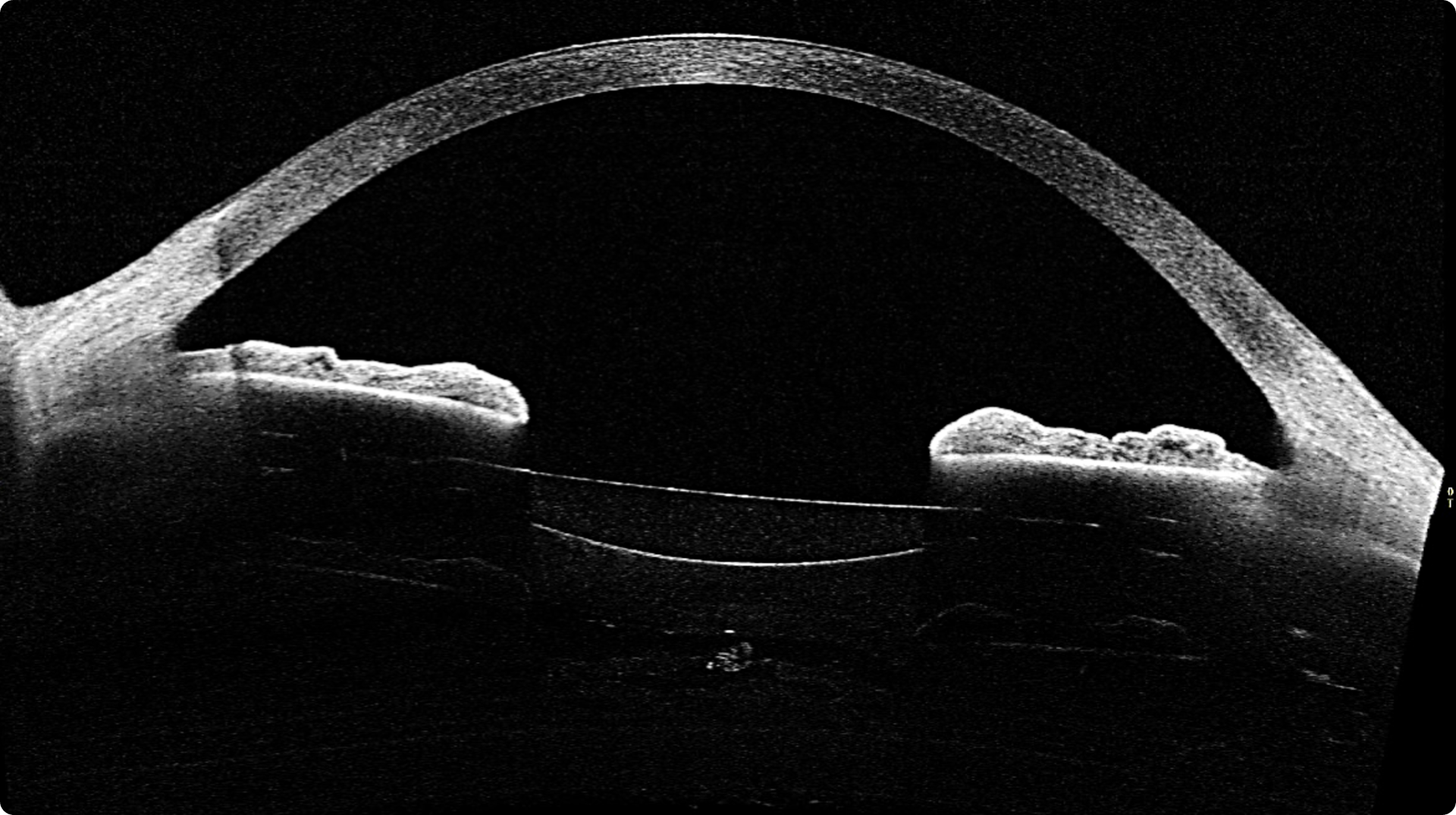
Image of implanted ArtIOL lens
A new way of understanding intraocular lenses
The difference between ArtIOLs lenses and traditional solutions lies in their conception. Compared to designs optimized only for the central vision, Voptica proposes a more global approach.
“Our lenses are designed to provide image quality in both central and peripheral vision. It is a unique design, the result of years of research,” explains Artal.
The technological key lies in its inverted meniscus geometry, which allows a more natural interaction with the optics of the eye and improves image quality in real conditions. “Instead of splitting light into multiple spotlights, we generate continuous functional depth of focus, relying on controlled aberrations that are vision-friendly.”
This approach not only improves the visual experience, but also reduces unwanted effects such as halos or glare, which are common in other solutions.
Validate the different
Translating this concept into clinical practice has not been without challenges. “The main challenge has been to make an innovative optical design work robustly in real eyes, where there is great variability,” says Artal.
Factors such as the uncentering of the lens, the pupillary dynamics or the aberrations specific to each patient require a thorough work of modeling, simulation and experimental validation.
Added to this is the complexity of bringing a completely new technology to the market as a small company. “Overcoming regulatory, industrial and clinical barriers with limited resources adds an extra level of difficulty,” he says.
In this process, institutional support has been key. “The support of the CDTI, obtained after the EIC Seal of Excellence and co-financed with FEDER funds, has been decisive for us. It has allowed us to accelerate development, complete our range of lenses and advance their clinical validation with a view to their international launch,” he says.
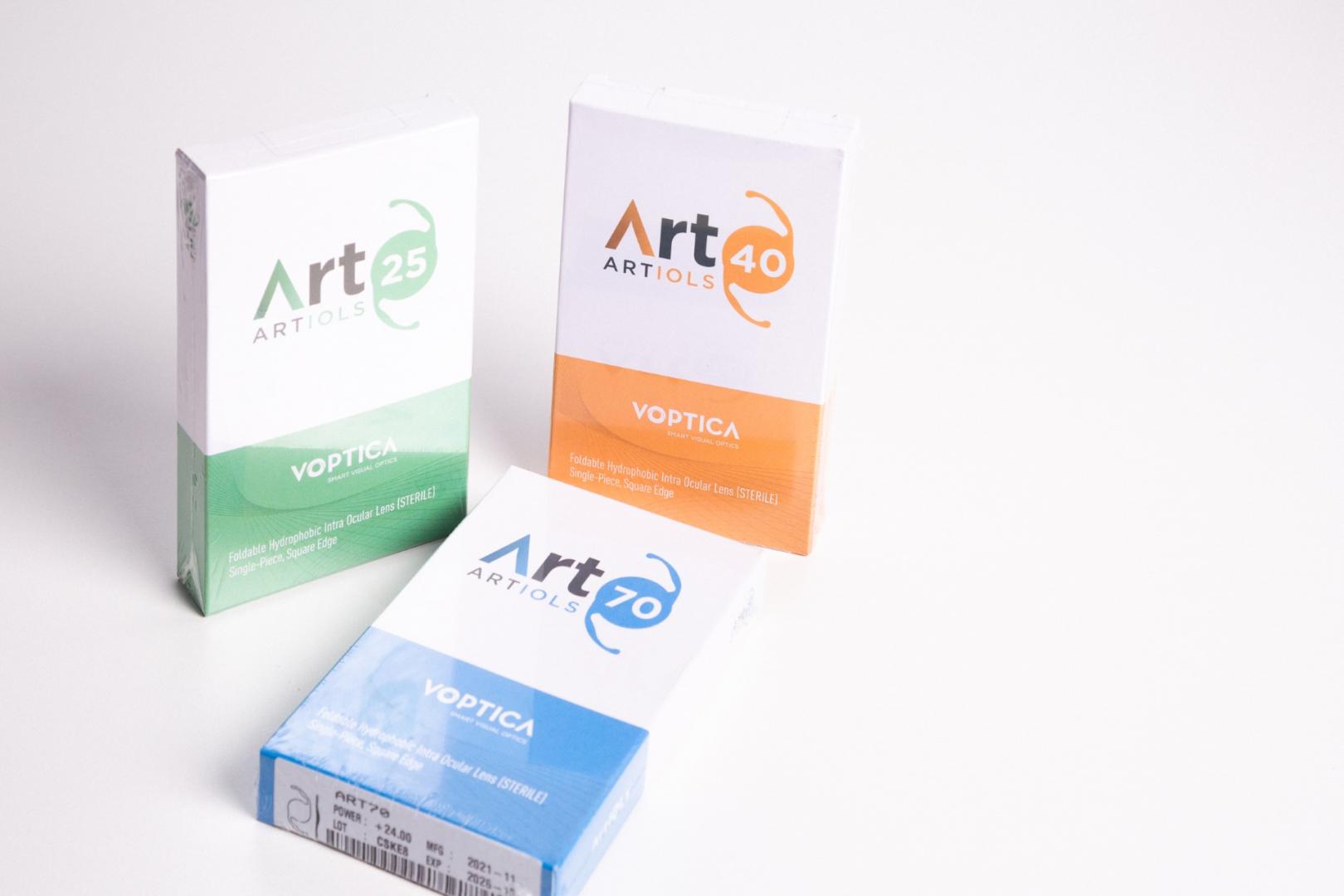
ArtIOLs Lens Boxes
Barriers and adoption in the healthcare system
Beyond technological development, one of the great challenges is the adoption of these innovations in the healthcare system. “There is a certain clinical and regulatory inertia. The incorporation of new technologies requires solid evidence, time and changes in the usual practice,” explains Artal.
Economic factors, such as evaluation and reimbursement processes, also play a role, which can slow down the arrival of new solutions to the patient.
To overcome these barriers, Voptica is committed to a strategy based on evidence and collaboration. “It is essential to generate robust clinical data, work with reference ophthalmologists and demonstrate that these innovations bring real value.”
In this sense, the support received by the CDTI Innovation and the ERDF funds has had a multiplier effect. “Beyond the financial impulse, this type of aid brings credibility and trust, facilitating the attraction of partners and investors. Without this support, progress would have been much slower and with greater uncertainty.”
Innovation with global impact
The case of Voptica illustrates the potential of public funding to drive innovation. “This type of European funding has a very significant economic and social impact. It strengthens the innovative ecosystem, promotes the transfer of knowledge and allows advanced technologies to reach society sooner,” says Artal.
In their case, this impact translates directly into solutions that improve the quality of life of patients, but also into the ability to compete in a highly demanding global market.
With more than 70% of its R&D budget and a growing patent portfolio, the company is in a key phase of international consolidation and expansion.
Plans for the future
For the next few years, Voptica hopes to consolidate its position as a reference in advanced optical technologies. The evolution of its solutions will go through a greater customization and adaptation to different clinical profiles.
“We expect an evolution towards lenses that are increasingly adjusted to the real needs of patients, especially in complex cases such as retinal pathologies,” says Artal.
In parallel, the company will continue to develop new diagnostic and simulation tools, reinforcing its comprehensive approach to vision improvement.
On a global scale, the goal is clear: to turn your technology into a reference standard. “We believe that our approach, based on a deep understanding of eye optics and oriented to real visual functionality, can make a difference to more traditional solutions.”
Along these lines, projects such as ClearVIS not only open up new market opportunities, but also strengthen the role of Spanish biomedical innovation in the international arena. Because, as Artal concludes, “it is possible to transform research of excellence into advanced clinical technology with direct impact on patients”.
CDTI Innovation
The Center for Technological Development and Innovation, CDTI E.P.E. It is the innovation agency of the Ministry of Science, Innovation and Universities, whose objective is the promotion of technological innovation in the business environment. The mission of the CDTI is to ensure that the Spanish business fabric generates and transforms scientific and technical knowledge into globally competitive, sustainable and inclusive growth. In 2025, within the framework of the Strategic Plan 2024-2027, the CDTI provided more than 2 billion euros of support to Spanish companies and startups.
More information:
Press Office
press@cdti.es
91-581.55.00
On the Internet
Website: www.cdti.es
On Linkedin: https://www.linkedin.com/company/29815
On X: https://twitter.com/CDTI_innovacion
On Youtube: https://www.youtube.com/user/CDTIoficial
This content is copyright © 2026 CDTI,EPE. The use and reproduction is allowed by citing the source and digital identity of CDTI (@CDTI_innovacion).