Manuel González de la Rosa, founder of INSOFT: “The funding of the CDTI Innovation and the FEDER funds has allowed us to promote a low-cost solution for the early diagnosis of glaucoma”
Transforming a two-dimensional image of the fundus of the eye into key three-dimensional information to anticipate glaucoma is the challenge that INSOFT addresses in its latest R&D project. With the support of grants co-financed by the CDTI Innovation and European funds FEDER, this Spanish SME of health technology advances in the development of tools based on artificial intelligence that allow to improve the early diagnosis and monitoring of one of the main causes of avoidable blindness in the world, combining clinical knowledge, technological innovation and international vocation.
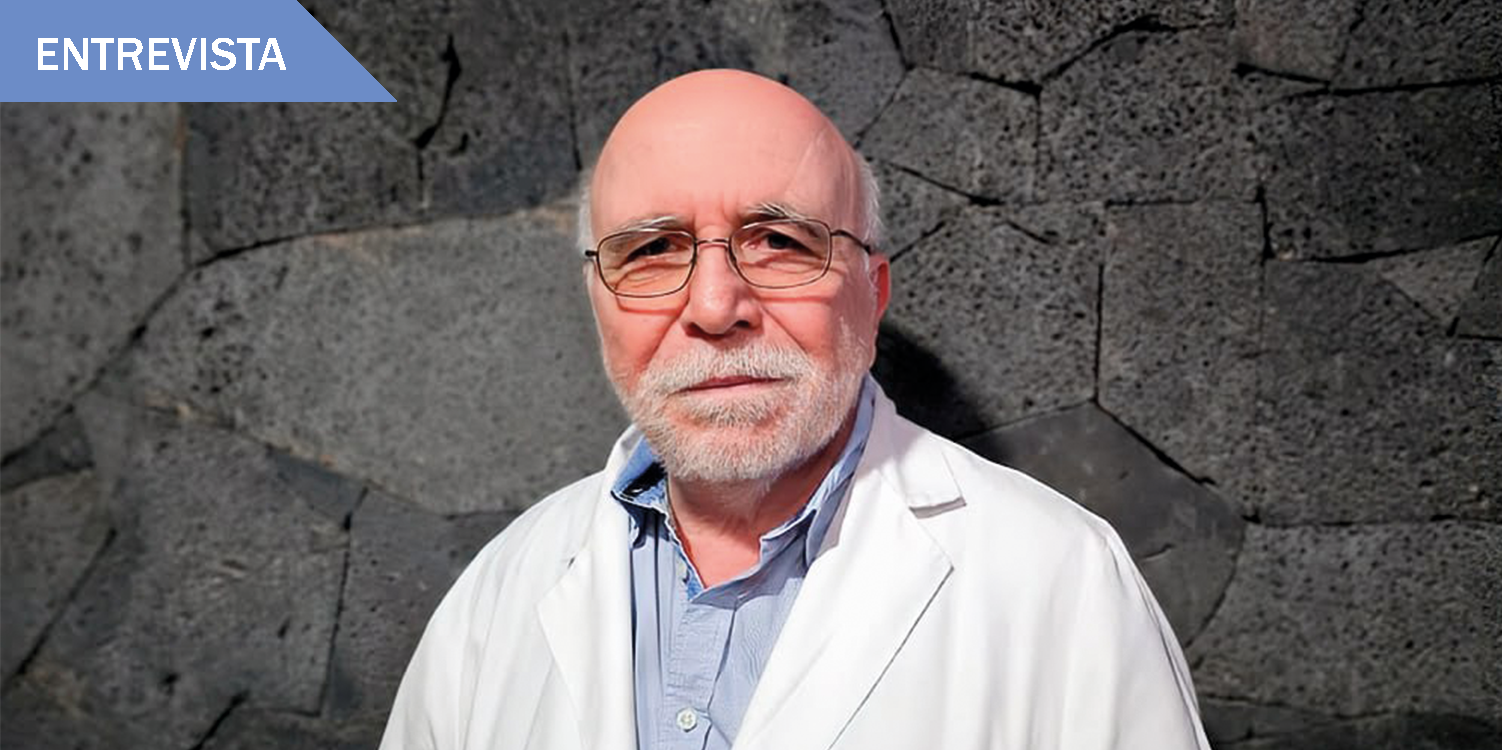
Since its creation in 1990, Instrumentalization and Ophthalmology has maintained a unique trajectory within the Spanish healthcare technology ecosystem. The company was born with a very specific objective: to transfer to the industrial field the intense research activity that Professor Manuel González de la Rosa, professor of Ophthalmology, had been developing for years in the field of ocular exploration. “INSOFT was created to transport to the industry developments that, at that time, did not have a clear commercial orientation,” explains its founder, who had worked on instruments such as automatic perimeters or ocular spectrophotometers when they were still strictly academic tools.
That origin decisively marked the identity of the company. From the beginning, the purpose was to transform advanced scientific knowledge into ophthalmological diagnostic products useful in real clinical practice, with a special focus on the visual field, the optic nerve and, later, on glaucoma. Today, more than three decades later, INSOFT remains a highly specialized technology-based SME, composed of five people —four of them dedicated to R&D— and with a family shareholder structure.
Throughout its history, the company has been behind some of the most relevant developments in ophthalmic perimetry on an international scale. “For many years our work consisted of designing strategies and perimetry hardware that today are part of the clinical standard,” says González de la Rosa.
Artificial intelligence applied to glaucoma
This technological baggage leads, in recent years, to the development of its most emblematic product: Laguna ONhE. It is an application capable of estimating the distribution of hemoglobin in the optic nerve from color retinographs, combining colorimetric techniques with deep learning . The system, which is offered as a B2B SaaS service and used for the screening and monitoring of glaucoma via the Internet, has patents in the United States, Europe and Japan, CE marking and clinical implantation. “It is the only commercial product in the world that analyzes glaucoma from the perfusion of the optic nerve,” emphasizes its founder.
Currently, although Europe is one of the main markets where the technology operates, both in optics and in hospitals and diabetic retinopathy networks, INSOFT does not market directly either in the national or international market. Its model is based on agreements with strategic partners, especially the Danish company Retina Lyze, which integrates Laguna ONhE into its telemedicine platforms and distributes it in Europe, including Spain. From the point of view of turnover, 100% of sales come from exports, with a significant presence in countries such as Denmark, Switzerland, Germany and Spain, and an active expansion towards the United Kingdom, Brazil and Canada, as well as emerging markets such as China and South Africa.
A qualitative leap in the diagnosis
In this context of international consolidation is framed the project “Obtaining three-dimensional information in 2D images of optic nerve and association with perimetry”, an initiative that represents a qualitative leap in the technological proposal of the company. The initiative is based on a very specific clinical need. “The optic nerve is the route by which visual information reaches the brain and in glaucoma the nerve axons are progressively damaged, reducing both the volume of tissue and the amount of blood that feeds it,” explains González de la Rosa. Until now, instruments capable of studying the shape and vascularization of the optic nerve were costly and subjectively interpreted, limiting their widespread use.
The objective of the project has been precisely to overcome these barriers, providing “a simple, automatic, objective and economical method to obtain morphological and vascular information of the optic nerve, without the need of highly qualified personnel”. Until the end of this initiative, Laguna ONhE offered two-dimensional information on the distribution of blood in the optic nerve from color photographic images. The results of the project now allow us to add three-dimensional estimates of shape and volume of nervous tissue, obtained from those same 2D images.
From the clinical point of view, the advance is especially relevant for optometrists and ophthalmologists. “The early diagnosis of glaucoma needs functional, morphological and vascular information,” recalls the founder of INSOFT. The project enriches the perfusion information with morphological estimates and, in addition, associates these structural characteristics to the functional analysis of the visual field. Specifically, the campymetric defects are integrated with the perfusion and morphology data to generate a unique index that encompasses the three fundamental pillars of the study of glaucoma.
To this integral approach is added another key element: the detection of the progression of the disease over time. “We have developed an index that allows us to identify significant progression even within statistical normality ranges,” explains González de la Rosa. The ability to detect subtle changes is essential to anticipate the irreversible damage caused by glaucoma when the diagnosis is delayed.
At the technological level, the project is based on scientific hypotheses arising from the previous work of the company. One of them proposed that the volume of the optic nerve tissue should be related to the amount of blood that nourishes it. This hypothesis has been verified by comparing the morphology obtained by Optical Coherence Tomography (OCT), a sophisticated and expensive technology, with the hemoglobin density estimates obtained from conventional photographic images. “This correlation has allowed us to reconstruct three-dimensional information of the optic nerve from two-dimensional data,” he summarizes.
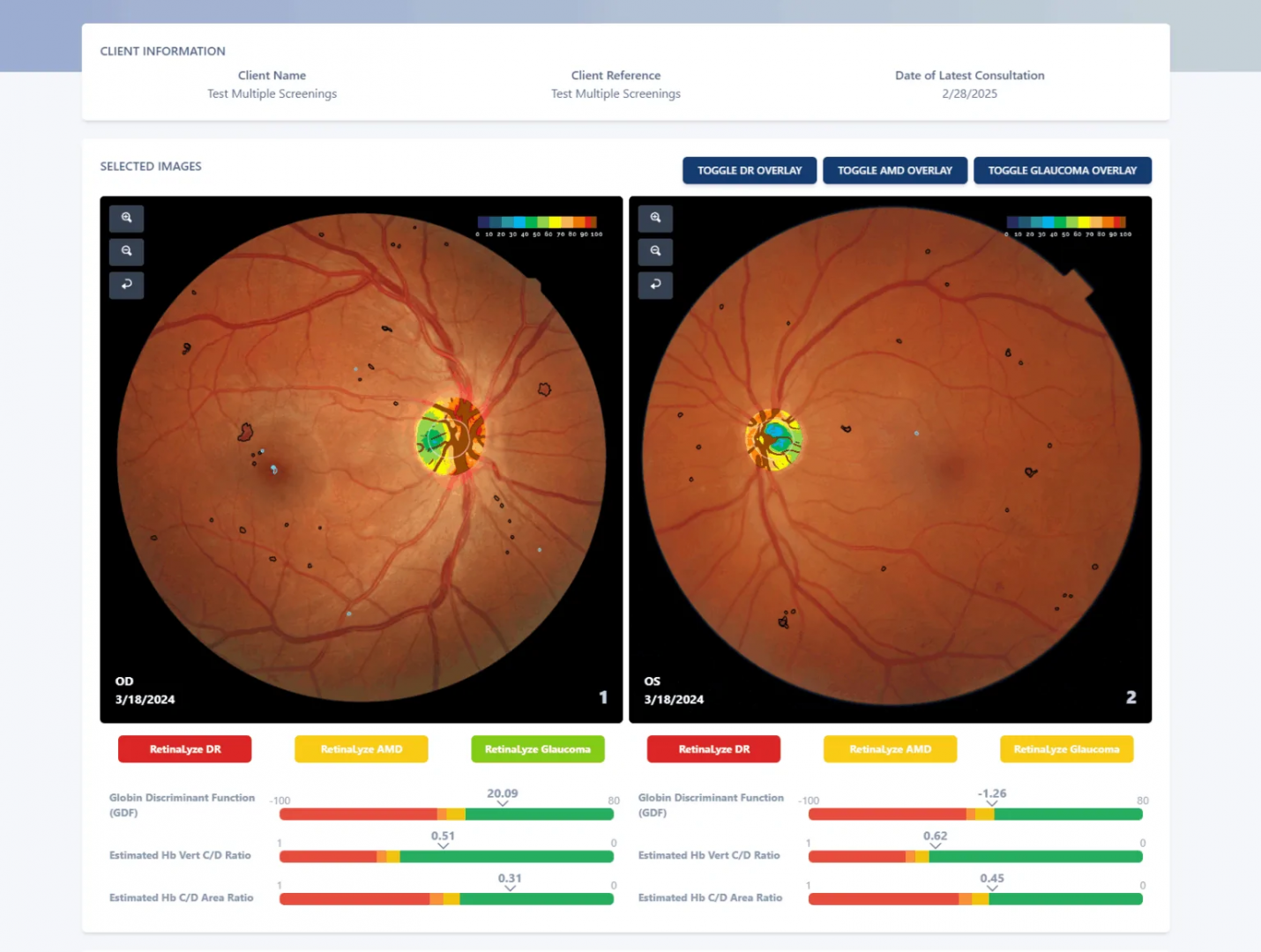
Image of the Technology Model Retina Lyze
Learning and other possible applications
The project also capitalizes on the learning derived from the marketing and actual use of Laguna ONhE. In the past, INSOFT had entered the market through large international companies, relinquishing much of the knowledge associated with its developments. “The current methods of analysis on the Internet have allowed us to reach agreements while maintaining most of the critical knowledge,” says González de la Rosa. In the current model, the images are sent to the INSOFT servers, where the analysis is carried out and the results are returned to the user, which allows to protect the intellectual property even in the new functionalities incorporated thanks to this project.
The possibilities of application go beyond glaucoma. Some independent research groups have already used the tool to study neurodegenerative diseases that affect axons of the optic nerve, such as Parkinson's or Alzheimer's, and it is expected to be useful in other optic neuritis, such as those associated with multiple sclerosis. “Prestige of the procedure in a disease of such high incidence as glaucoma will make it easier for other researchers to be interested in its application in these processes,” he says.
Another of the differential features of the solution is its accessibility. The software does not require complex instrumentation or advanced knowledge: it is enough to obtain a good photographic image of the optic nerve, something possible even with manual cameras powered by batteries in environments with limited resources. “You only need an Internet connection and the automatic interpretation is done in seconds,” says González de la Rosa.
Public support for health innovation
The development of this project has been possible thanks to the support of public aid co-financed by the CDTI Innovation and European ERDF funds, a support that, according to the founder of INSOFT, has had a decisive impact. “Competitive public funding allows us to tackle high-risk technological developments that we could not take on with our own funds alone,” he says. These grants have made it possible to strengthen the team, increase the dedication of the machine learning specialist, improve clinical supervision, update equipment with high-performance workstations and finance hospital collaborations and regulatory processes such as the new CE mark, all without decapitalizing on commercial activity.
Beyond the direct impact on the company, González de la Rosa highlights the systemic effect of this type of financing: “It has made it possible to transform an academic technology into a real health product that improves glaucoma screening and monitoring at low cost, optimizing resources in health systems and avoiding unnecessary referrals. “Programs like these make it easier for Spanish technological SMEs to maintain advanced intellectual property, generate qualified employment, internationalize and provide solutions with a high impact on public health,” he summarizes.
For the immediate future, the advances of the project will be incorporated into the commercial version of Laguna ONhE in January 2026. INSOFT is confident that these improvements will accelerate entry into new markets currently under evaluation, such as Canada, Turkey or the United Kingdom, and increase the interest of new research groups. “This use in independent studies will contribute to its prestige and diffusion,” concludes González de la Rosa, convinced that the combination of technological innovation, clinical validation and public support can make a difference in the prevention of one of the main causes of avoidable blindness in the world.
CDTI Innovation
The Center for Technological Development and Innovation, CDTI E.P.E. It is the innovation agency of the Ministry of Science, Innovation and Universities, whose objective is the promotion of technological innovation in the business environment. The mission of the CDTI is to ensure that the Spanish business fabric generates and transforms scientific and technical knowledge into globally competitive, sustainable and inclusive growth. In 2024, within the framework of a new strategic plan, the CDTI provided more than 2.3 billion euros of support to Spanish companies and startups.
More information:
Press Office
press@cdti.es
91-581.55.00
On the Internet
Website: www.cdti.es
On Linkedin: https://www.linkedin.com/company/29815
On X: https://twitter.com/CDTI_innovacion
On Youtube: https://www.youtube.com/user/CDTIoficial
This content is copyright © 2025 CDTI,EPE. The use and reproduction is allowed by citing the source and digital identity of CDTI (@CDTI_innovacion).