Julio César Aparicio, director of technology: “ EVERY Assistance from the CDTI Innovation and the FEDER have enabled us to accelerate the pace of market laboratory in our draft gasification supercritical ”
Supported by CDTI Innovation, and co-financed with european funds ERDF, the company albaceteña CADE engineering Solutions develops a pioneer of gasification supercritical capable of transforming organic waste in humid biomethane and hydrogen, contributing to renewable energy transition and the circular economy
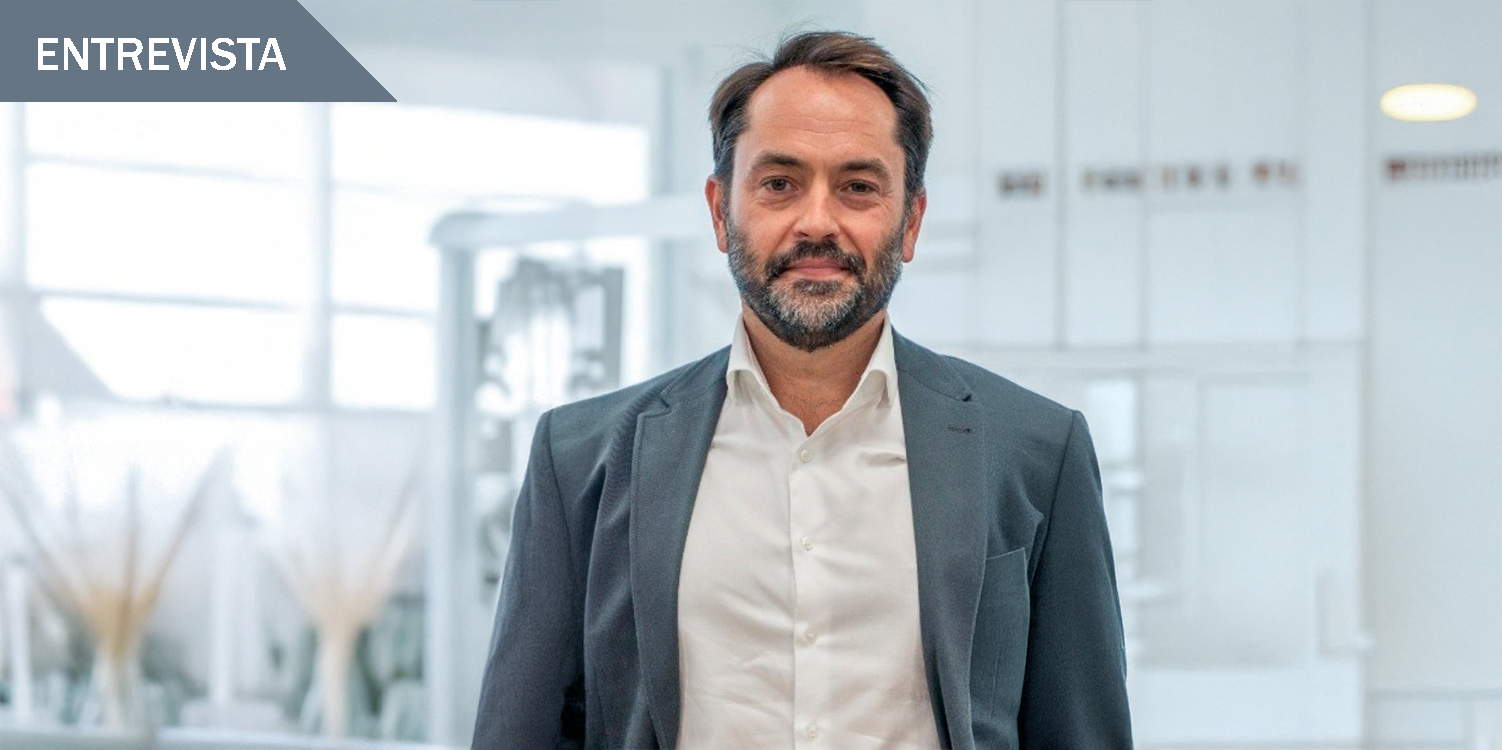
Founded in 2003 by two young engineers with a clear vocation, CADE technological engineering solutions has been consolidated as a leading representative in the field of engineering and industrial technology applied to energy, decarbonisation and industry 4.0. Based in Albacete and presence in Madrid, the company has nearly a hundred specialized professionals and a history that more than 2,500 projects implemented for more than 300 customers in sectors such as the generation, petrochemical, industrial and manufacturing sectors.
“ since our beginnings we bet for a model of global business, innovative and high-value-added services, which combines engineering, technology and sustainability, ” explains Julio César Aparicio, director, CADE technology. This strategy has enabled the company to establish a strong international presence from 2010, with exports represent between 15 and 30% of turnover and projects in europe, United states and the MENA region.
Clients include large corporations such as BP, CEPSA-MOEVE, REPSOL, NAVANTIA or TECHNIQUES collected, reflecting confidence in their technical capacity and its commitment to innovation.
The company has diversified its lines of activity towards advanced engineering, consulting, technical expertise, equipment and industrial systems and digital processing industry through its line Agile-Smart-Factories (ASF). In all these areas, r + D + i took a central role: CADE commits around 10 per cent of their annual turnover for research and development, and manages its innovation projects under the ISO 56001, using both as a self-financing national programmes and europeans.
In this context, Innovation and CDTI european funds ERDF has been a decisive impetus to the company develops disruptive solutions aimed at energy transition. One of its most emblematic projects in this line is gasification supercritical (SCWG) for the production of biomethane and hydrogen renewable.
The potential of gasification oxidation (scwo)
The project SCWG (Supercritical Water Gasification) focuses on the development of a technology can also convert wet organic waste gas in renewable sources of great value, such as hydrogen and methane.
“ the gasification supercritical water used in the waste as reactive and means of reaction in conditions of high temperature and pressure. In this way, decomposes the organic matter in a clean gas and renewable energy with great efficiency, ” explains Aparicio.
Unlike other conventional thermal processes, gasification supercritical operates with times of very short residence on the order of seconds, minutes away, which makes it possible to achieve a high conversion to carbon gas compact modular systems, and energy-efficient.
One of its main advantages is the ability to deal with complex organizational flows and persistent difficult, including microplásticos, pharmaceutical waste or pathogens, making further the recovery of water and inorganic compounds valuable, as the match, with possible application as fertilizer. “ SCWG offers an efficient and environmentally sustainable for the recovery of organic waste wet, directly contributing to the circular economy and energy transition ”, underlines the director of Technology.
Expand the horizons of exploitable waste
The project addresses a wide range of potential raw materials: sewage treatment plants and digestatos, agro-industrial waste, solid waste, waste cosmetics, macroalgae or even plastics. The selection of these materials depends on its composition and chemistry of criteria of operation, especially those with a high content in organic matter.
“ a biomass homogeneous composition and particle size helps to ensure the stability of the system and to maximize the return of the process, ” explains Aparicio.
Among the most relevant new developments of the project is found improvements in energy efficiency, especially through the heat recovery of flows of low and high temperature, and optimization of the conversion of gas emissions. In addition, it has succeeded in recovering inorganic compounds, water and courage, to strengthen the positive environmental impact and sustainability of the process.
“ we are showing that this technology will not only lead to renewable energy, but also significantly reduces waste and associated emissions, closing the loop of resources ”, stresses the responsibility of technology.
Technical challenges and innovative solutions
The project development SCWG raised various technical challenges arising from the heterogeneity of the waste and extreme conditions of operation of the process. One of the major challenges is the constant flow of these solid residues to the reactor at high pressure and temperature.
“ to overcome this difficulty is a characterization of each sample, assessing their bombeabilidad, density, viscosity and sales ”, detailed Aparicio. This allowed to identify the best conditions to prevent blockages and ensure the stability of the system.
Another major challenge was the low organic matter contents in certain liquid residues, thus limiting the production of gas. To address both challenges, CADE developed specific solutions for the gasification of liquid waste concentrated and solid waste, an approach that contrasted with other developers.
Applied science and strategic partnerships
The project SCWG has benefited from close collaboration with the institute of renewable energy (IER), university of Castilla-La Mancha, which contributes its expertise in chemical analysis of raw materials and products of gasification, as well as the study of mechanisms of corrosion of materials used in the process.
“ This research collaboration has enabled us to make progress in understanding of the materials, optimize the selection of biomasses and improve the performance of the system under extreme conditions, ” says Aparicio.
The synergy between academic research and engineering is applied, according to the chief technologist, one of the keys to success. “ Without the support of university research and public aid to r + D + i, draft this level of complexity would not be possible ”, argues.
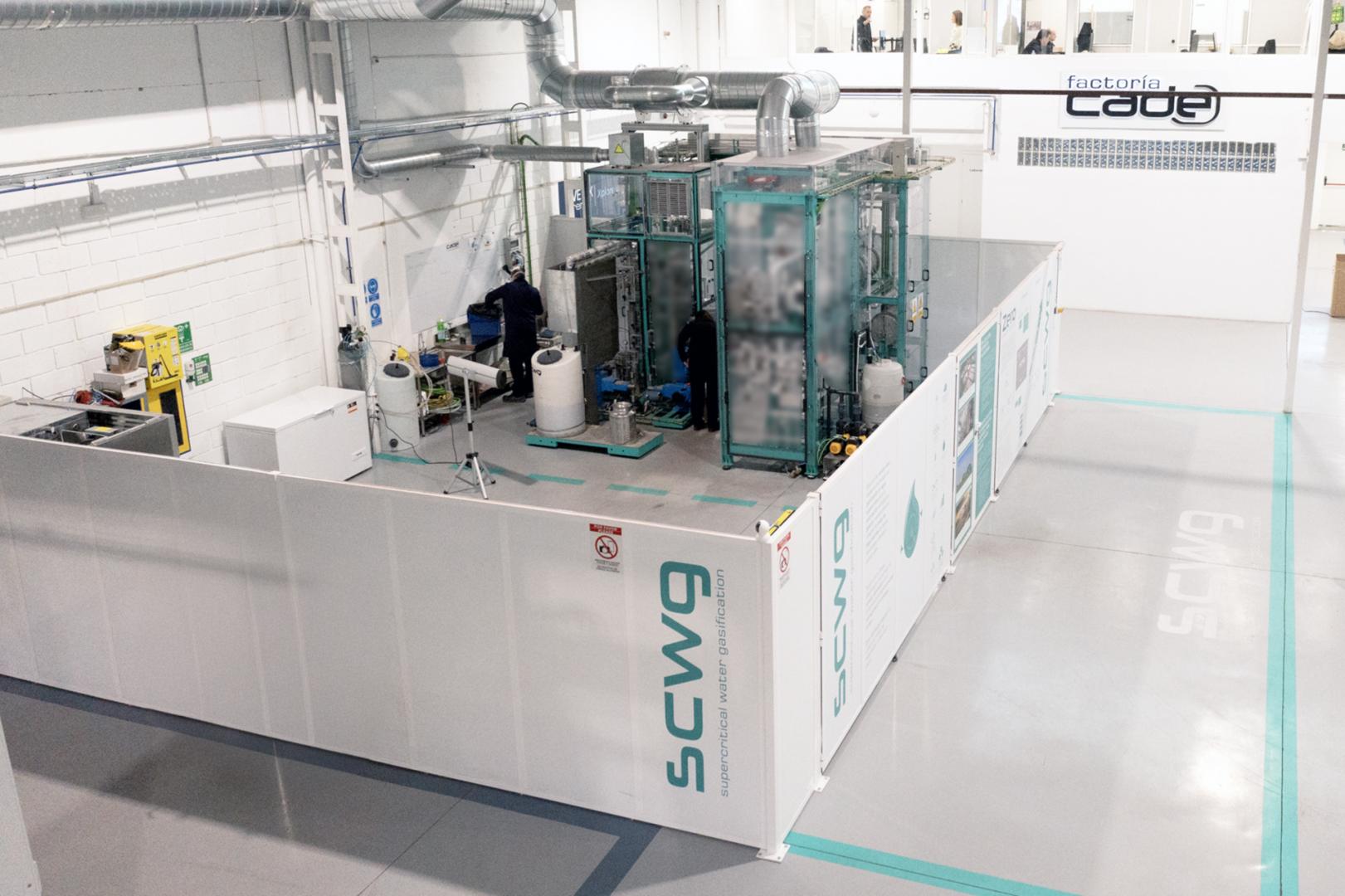
CADE facilities related to the draft gasification oxidation (scwo)
Environmental and energy transition
Gasification technology developed by CADE oxidation is fully aligned with the objectives of Integrated National Plan on energy and climate (PNIEC), the european package Fit for 55 and REPowerEU strategy, aimed at reducing emissions and the replacement of fossil fuels.
“ the production of renewable and hydrogen biomethane from waste prevents the release of methane and reduces emissions demanding. Also converts are difficult to manage waste in energy resources and materials of value, ” explains Aparicio.
This approach enables EVERY contribute to a number of objectives of Sustainable Development (ODS), including ODS 7 (affordable energy, clean energy), ODS 9 (industry, innovation and infrastructure) and ODS 12 (production and consumption responsible).
The role of the public support in innovation
For the company, for the support received through supporting Innovation of CDTI, cofinanced from erdf funds has been key to conduct the investigation and validate the industrial potential of the project.
“ these aids are essential for further research and development of technologies. Enable us to speed up the passage of laboratory to market and technological strengthen our position, ” says Aparicio.
In addition, the impact of this aid goes beyond the technical level: promote skilled employment, retention of talent and the competitiveness of spanish technology companies. “ Be funded publicly recognize the technical quality and viability of projects is a fundamental guarantee, especially when dealing with emerging technologies with great potential for environmental and social impact ”, underlines the director of Technology.
Future prospects
CADE expected to reach a gasification supercritical degree of maturity in the next five years. “ Our vision is positioned to spain as a reference in this technology, capable of meeting the challenges of waste management and renewable energy production, ” says Aparicio.
The first sectors to take the technology will be linked to biogas plants and water purification, although the company plans to expand its application to agro-food industries and chemical weapons.
In the medium term, CADE also works in the synthesis of renewable fuels from gas generated in the process. “ the Demanding, CO and H present in the demanding syngas may be used to produce synthetic eMetanol or methane, contributing to the decarbonisation of transport and industry, ” explains.
According to Aparicio, france could become the first european country to implement the technology SCWG industrial gases contributing to its renewable national network, while in Spain are taking the first steps for their implementation.
“ we are convinced that the gasification supercritical will mark a turning point in the recovery of waste and clean energy production, ” concludes.
CDTI Innovation
The centre for technological development and innovation, CDTI E.P.E. is a public company under the ministry of Science, innovation and universities, whose goal is the promotion of technological innovation in business. The CDTI mission is to ensure that the business fabric english generates and transform knowledge into growth científico-técnico globally competitive, sustainable and inclusive. By 2024, within the framework of a new strategic plan, the CDTI provided more than $2.3 billion euros of support for business startups and spain.
More information:
Office of the press
prensa@cdti.es
91-581.55.00
On The Internet
Website:www.cdti.es
In Linkedin:https :// www.linkedin.com/company/29815
X:https :// twitter.com/CDTI _ innovation
On Youtube:https :// www.youtube.com/user/CDTIoficial
This content is copyright © 2025 CDTI, Soes. Permitted for use and reproduction by quoting the source and digital identity of CDTI (@CDTI _ innovation).