Luis Pérez Freire, CEO of Gradiant: "We want companies to come prepared for the quantum revolution thanks to the support of CDTI Innovation and MRR funds"
Through the QUORUM project, the Fundación Centro Tecnoloxico de Telecomunicaciones de Galicia - Gradiant co-leads a strategic alliance aimed at bringing quantum technologies closer to the business fabric. With the financial backing of the CDTI Innovation and the European funds of the Recovery and Resilience Mechanism (MRR), this initiative connects scientific infrastructures, research centers and companies to facilitate experimentation with quantum algorithms and accelerate their application in the industry.
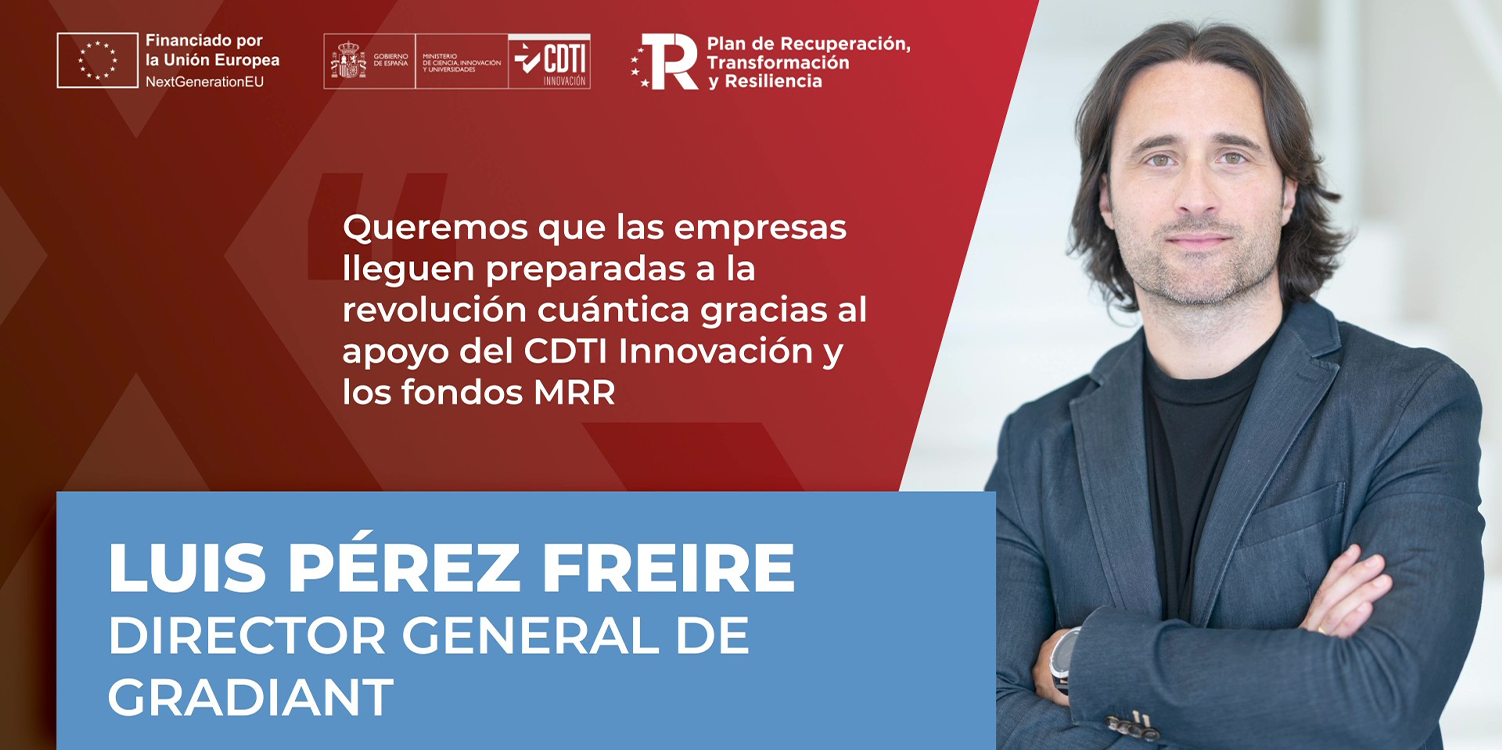
Quantum computing is shaping up as one of the technologies that will mark the next industrial revolution. In this scenario, anticipating its evolution has become a strategic challenge for the business fabric. "Our work is based on scientific knowledge, but it is always aimed at solving specific problems of companies and society, generating a measurable impact that makes a difference," explains Luis Pérez Freire, CEO of Gradiant.
This way of understanding innovation has also marked the evolution of the Galician entity during the last two decades, in which it has developed its own capacities around three main axes: connectivity, intelligence and security. The origin of Gradiant dates back to 2003, when three professors from the University of Vigo promoted an initiative to reduce the distance between university knowledge and the market. After studying European reference models such as Fraunhofer or TNO, in 2007 the Foundation was formally established with a very clear mission: “to contribute to the innovative dynamism, growth and competitive improvement of companies through technological development and ICT innovation”.
Today, the center has evolved into an integral model of transfer. A clear turning point in its history was the birth and subsequent sale of its spin-off Alice Biometrics, whose successful business operation demonstrated the strength of its methodology. “We confirmed that we could complete the entire journey: identify a need, develop our own technology, validate it, create a company and make it grow,” says the director. This success has culminated in the launch of TRL 13, an investment fund specialized in deep tech focused on incubating and accelerating new companies in the sector.
Weaving the Industrial Quantum Computing Network
The QUORUM project was born to bring technologies closer to the industry and to weave solid networks between research laboratories, scientific infrastructures, companies and public administrations. The aim is to create the necessary conditions so that the business fabric can experiment with these technologies, understand their potential and prepare to incorporate them progressively.
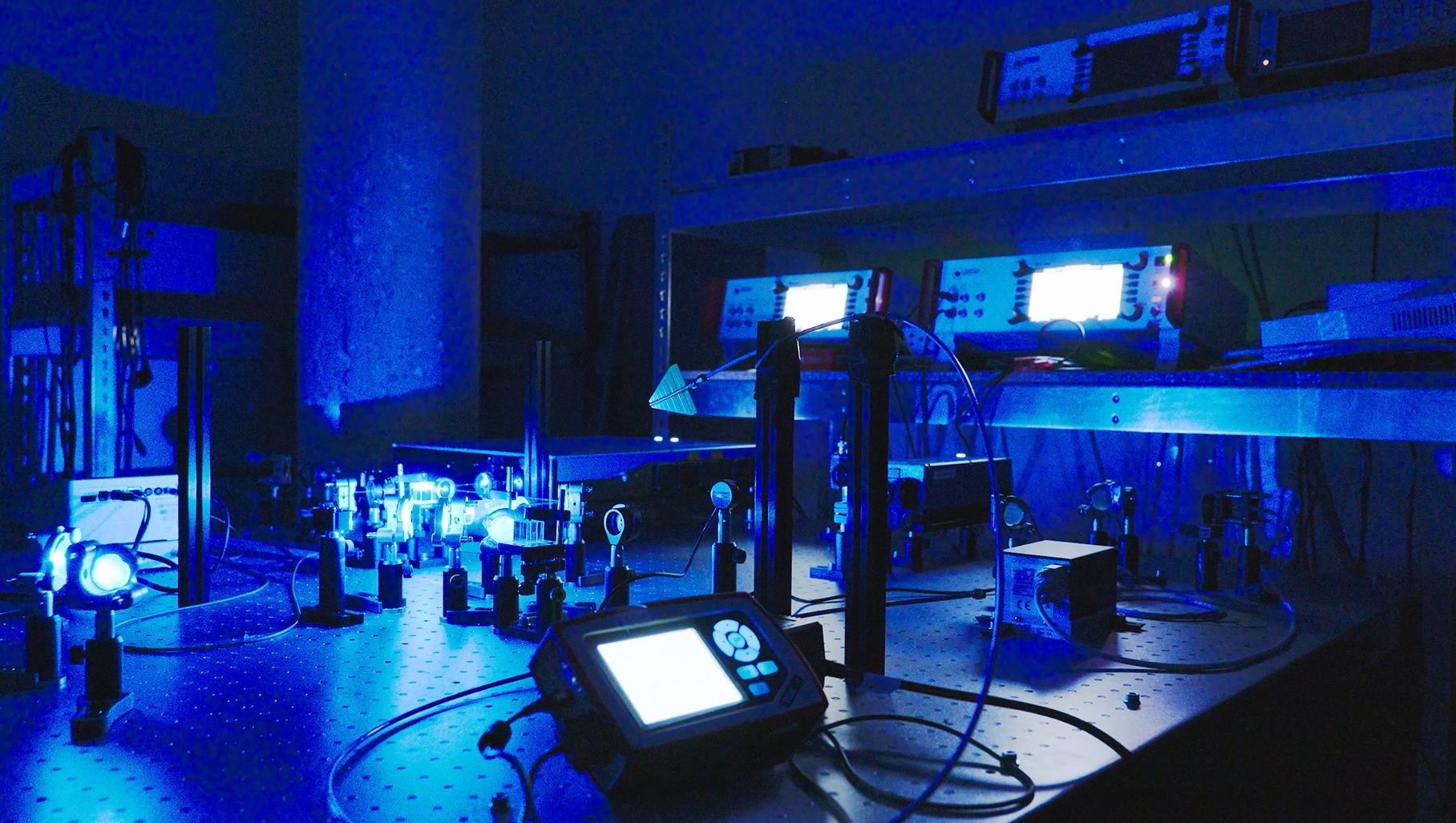 Gradiant’s laboratories develop and validate photonic and quantum technologies aimed at their application in the industry
“Quantum technologies are too complex and multidisciplinary for a single organization to cover the entire value chain; profiles of physics, telecommunications, mathematics or engineering are needed, but also advanced infrastructure and direct contact with the industry,” explains Pérez Freire.
Therefore, the project is articulated as an ecosystem of innovation promoted by the CDTI, which brings together the knowledge and complementary capacities of seven strategic partners where each one contributes a different piece. The CESGA has experience in supercomputing and quantum infrastructure; Fsas Technologies provides international capabilities in architecture, software and simulation; Gradiant, Fidesol and Itecam lead applied research and transfer to companies; QCentroid facilitates experimentation and comparison between technologies; and GAIN contributes to structuring public policies and the innovation environment. “This combination allows knowledge sharing, avoiding duplication, reducing risk and validating solutions on real industrial needs,” he says.
From Lab to Enterprise: Hybrid Computing
Although the advances are significant, the director of the Galician entity considers that quantum computing still has a way to go: “It is still in a maturation phase. In Spain we already have real equipment and we run quantum algorithms, but today’s machines have a limited number of qubits and are sensitive to noise.” Therefore, he clarifies that in the short term the most realistic approach is not to replace conventional computers, but to bet on hybrid computing: combining classic resources, supercomputing and quantum inspiration capabilities to solve complex problems of optimization and simulation.
The great contribution of QUORUM is to act as an intermediate bridge that reduces the uncertainty of companies. Through this project, users can access state-of-the-art infrastructures, compare technologies and test algorithms without making large initial investments in their production processes. In addition, the project also covers sensate and quantum communications, areas that are in a much more advanced stage of maturity. “QUORUM reduces the gap between scientific capacity and its actual application, preventing companies from having to blindly bet on a technology,” he says.
In terms of practical applications, the initiative validates technology on real industrial use cases. Its fields of application include the optimization of logistics processes, energy management, cybersecurity and the health sector. “In the future, quantum technologies will help to more accurately simulate the behavior of molecules for the development of new drugs, quickly selecting the most promising compounds,” says Pérez Freire.
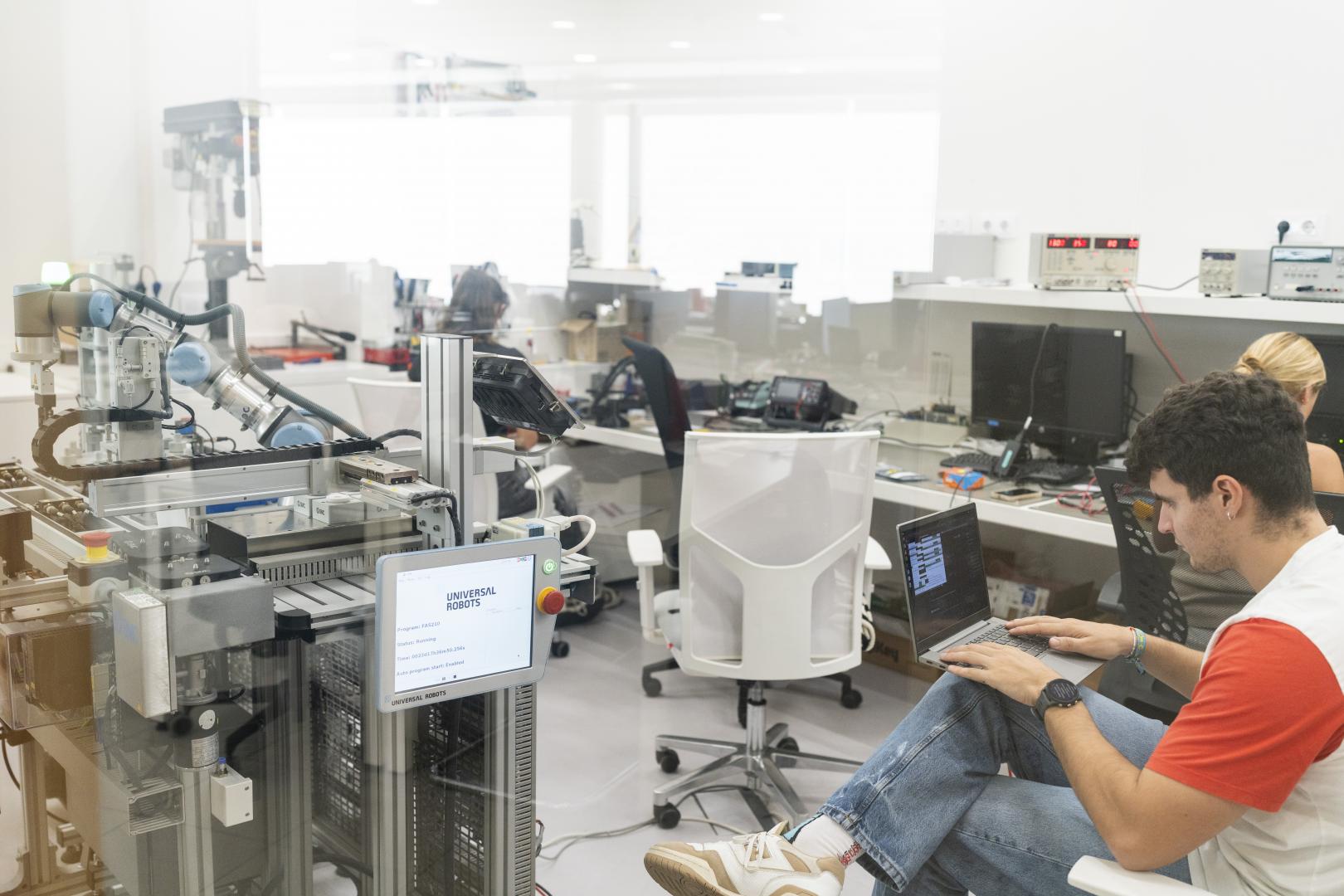 Gradiant’s teams develop technological solutions with industrial application
The project also aligns with the 2030 Agenda by promoting more efficient and secure innovation, contributing to SDG 9 (Industry, Innovation and Infrastructure) and SDG 16 (Peace, Justice and Strong Institutions). Its biggest impact, however, is concentrated on SDG 8, boosting knowledge transfer, skilled employment and business competitiveness.
The impetus of CDTI Innovation and European MRR funds
To develop a project of this level, QUORUM has counted on the financing of the European MRR funds through the CDTI Innovation. For the director of the center, public support has been decisive: “The CDTI acts as a catalyst to transform dispersed scientific capabilities into a coordinated model, with an industrial vocation and continuity beyond the initial duration of the project,” says the director.
Thanks to this support, companies that could hardly access this type of infrastructure on their own, specialized knowledge or research talent can begin to evaluate the potential of quantum computing before making large investments. For the center, this milestone consolidates a history of years in the sector: “It is a recognition of a strategic commitment that we started a long time ago and the possibility of multiplying its impact through collaboration.”
Technological sovereignty and challenges for the future
The international quantum race still does not have a clear winner, which opens up a historic opportunity for Europe and Spain to lead the sector. “Quantum sovereignty is not just a scientific issue, but an economic, industrial and geopolitical issue,” explains Gradiant’s CEO. Having our own technology is key to not being dependent on other countries, protecting critical infrastructures and making our companies more competitive.
Beyond quantum computing, Gradiant remains committed to accelerating the transfer of deep tech technologies to the market. In that strategy he works in areas such as responsible artificial intelligence, 5G and 6G communications or advanced sensoric. In parallel, it develops more energy-efficient solutions and strengthens cybersecurity to address both generative-AI-driven attacks and future threats associated with quantum computing.
However, the real challenge today is not only technical, but commercial. The centre wants innovation not to remain in the laboratory, but to become real solutions for the industrial fabric. “We have to improve our ability to turn R&D into products, licenses and new companies that generate qualified employment from Galicia with international reach,” highlights Luis Pérez Freire.
To achieve this, Gradiant focuses on one of the biggest challenges in the sector: attracting and maintaining the best professionals. As highly sought-after experts around the world, the center’s future lies in creating an environment that transforms cutting-edge science into economic progress, as its CEO concludes: “To compete we must offer high-impact projects, attractive professional careers and a direct connection between research and industry,” he concludes.
CDTI Innovation
The Center for Technological Development and Innovation, CDTI E.P.E. It is the innovation agency of the Ministry of Science, Innovation and Universities, whose objective is the promotion of technological innovation in the business environment. The mission of the CDTI is to ensure that the Spanish business fabric generates and transforms scientific and technical knowledge into globally competitive, sustainable and inclusive growth. In 2025, within the framework of the Strategic Plan 2024-2027, the CDTI provided 2,423 million euros of support to Spanish companies and startups.
More information:
Press Office
press@cdti.es
91-581.55.00
On the Internet
Website: www.cdti.es
On Linkedin: https://www.linkedin.com/company/29815
On X: https://x.com/CDTI_innovacion
On Youtube: https://www.youtube.com/user/CDTIoficial
This content is copyright © 2026 CDTI,EPE. The use and reproduction is allowed by citing the source and digital identity of CDTI (@CDTI_innovacion).