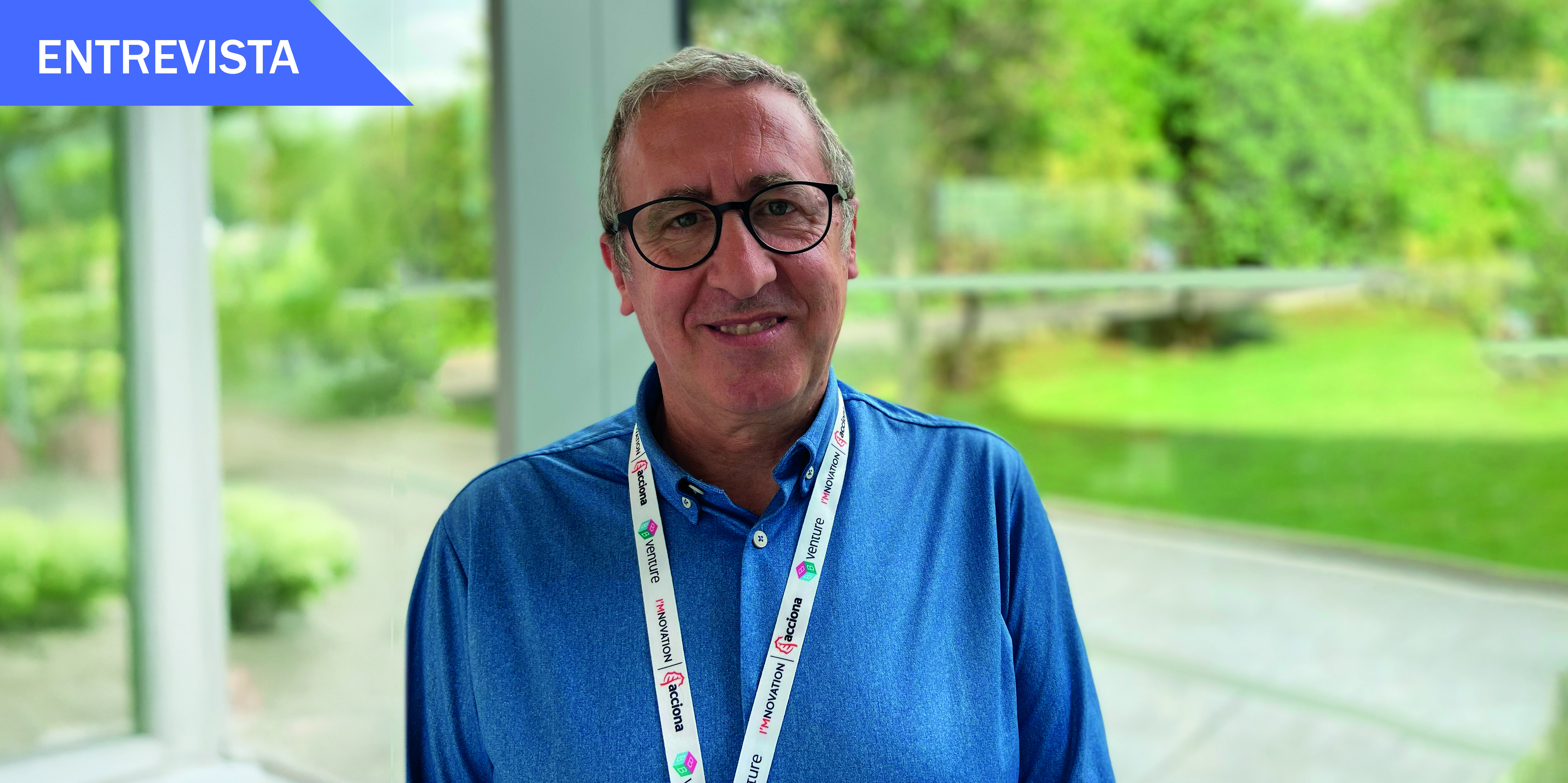
Álvaro Soler, CEO of PowerTree: "Thanks to the CDTI Innovation and the European MRR funds we have been able to consolidate ourselves as relevant actors in the agrovoltaic sector"
PowerTree, a startup specialized in agrovoltaic solutions, develops APV-Cable, a disruptive solution for extensive crops driven by CDTI Innovation and European funds MRR
In a context marked by two urgencies that advance in parallel, such as the growing impact of climate change on agriculture and the need to accelerate the transition to a cleaner and more resilient energy model, PowerTree is born. As Álvaro Soler, CEO of the company, explains, the company emerges to "Protect agriculture against climate change and improve its profitability, while actively contributing to the energy transition through the deployment of large-scale renewable energies". Faced with a scenario in which both challenges are usually addressed separately, the company proposes an integrative approach that places the crop and the farmer at the center of technological design.
In its first years of history, the company has faced significant challenges. On the one hand, the need to question technical, regulatory and cultural inertias deeply rooted in the energy and agricultural sector; on the other, the challenge of industrializing a complex technological proposal, designed to operate in real field conditions. According to Soler: "Both factors have been instrumental in transforming an innovative vision into a viable and replicable solution."
 Team of Powerful Tree, a startup specialized in agrovoltaic solutions
Beyond traditional agriculture: a new value proposition
The philosophy of Powerful Tree moves away from conservative approaches that seek to simply minimize the impact of new infrastructure on cultivation. For Soler, the approach must be much more ambitious: "It is not enough not to damage the crop; its conditions must be actively improved." The company defends a proactive model in which agrovoltaic technology acts as a tool to actively improve production conditions.
The value proposition of PowerTree is based on three great pillars: the first is the so-called "Plant Welfare", a concept of its own that focuses on the creation of more stable microclimates to reduce the stress of plants and improve the quality of the crop; the second is the integration of energy and water as levers of efficiency, with solutions that allow to reduce water consumption by up to 60% and facilitate models of self-consumption or network spillage; the third is an engineering conceived from the total cost of the system, taking into account not only the initial investment, but also the operation, maintenance and real usability for the farmer.
The result is a model of productive, regenerative and intelligent agriculture, which combines crop improvement and energy production in the same infrastructure.
Innovation as a working method
At PowerTree, innovation is not conceived as an isolated area within the organization, but as a transversal principle that guides the day to day of the company. "Innovation is not a department, it is our daily way of working," says Soler.
This approach is especially reflected in the way the company integrates agriculture and renewable energies. Far from adapting the crops to a pre-existing photovoltaic infrastructure, each project is designed from scratch as an agricultural and energy system simultaneously. This involves in-depth work on structural and mechanical design, agronomic and microclimatic modeling, and energy optimization.
Field validation plays a key role in this process. “At Powerful Tree, we apply iterative measurement, learning and improvement cycles supported by advanced sensoric and real crop data, allowing the system to be continuously adjusted to agronomic and operational needs,” says the CEO.

Agrovoltaic solution of Powerful Tree integrated in an extensive cultivation
APV-Cable: an agrovoltaic solution designed for extensive crops
The APV-Cable project represents one of the most ambitious developments of PowerTree and the core of its technological commitment. Conceived as a disruptive agrovoltaic solution for cereal and rotational crops, the system responds to one of the main limitations of traditional agrovoltaics: its incompatibility with large-scale agricultural mechanization.
APV-Cable is based on a cable-suspended structure that minimizes rigid elements on the ground and releases useful surface for working with machinery. The goal, Soler explains, is clear: "We want to ensure that the farmer can continue to work normally on his rotations, using tools and performing maneuvers in a way that is completely compatible with the installation."
As the CEO summarizes, it is "A new generation of agrovoltaics, compatible with extensive crops, energy efficient and designed to operate in real field conditions". The system’s innovation is based on a lightweight and modular structural architecture, high agricultural compatibility, a clear focus on cost reduction and intelligent protection against adverse weather conditions.
One of the differential elements of the project is the algorithm that dynamically regulates the tension of the cables depending on the direction and speed of the wind, allowing to protect the structure and the panels even against runs of up to 100 km/h.
Engineering to reduce costs and facilitate the operation
Cost reduction and operational optimization are central objectives of the APV-Cable project, especially in a sector where economic viability is key to its large-scale adoption. During the development of the system, PowerTree has had to address complex technical challenges related to structural behavior, cable assembly and tensioning, and long-term operation and maintenance.
The answer has been an eminently practical engineering approach, based on successive iterations, rigorous selection of components adapted to the rural environment and validations in real field conditions. In the words of Soler: “We’re not talking about the solution just working; the goal is that it can operate reliably, efficiently and cost-effectively throughout its lifespan.”
The concept of Plant Welfare as the axis of design
One of the most distinctive elements of PowerTree's approach is the concept of "Plant Welfare", which brings to the agricultural sphere a logic similar to that of animal welfare. As Soler explains, "It is not enough for the plant to survive, you have to create optimal conditions for it to develop to its maximum potential."
This concept goes beyond the simple provision of shadow. It is based on an intelligent management of the microclimate, adjusted to the physiological needs of the crop, which allows to reduce thermal and light stress, better preserve soil moisture and reduce evapotranspiration. The result is greater productive stability and, in many cases, an improvement in the quality of the fruit.
Plant welfare is monitored and adjusted through sensors and algorithms that allow the installation to be adapted dynamically, reinforcing the idea that the plant is the central element of the agrovoltaic system.
Scaling the agrovoltaic to transform the agricultural sector
The potential of APV-Cable goes beyond one-off projects. Powertree works with the ambition of adapting this technology to up to 70% of the crops present in Spain, which would mean a structural change in the way of conceiving the agricultural and energy infrastructures in the territory.
The scaling plan is based on the standardization of modules and processes, the adaptation to different agricultural typologies, the establishment of strategic alliances with promoters and farmers, and the demonstration of agronomic and economic impact through real data. The objective is to strengthen the climate resilience of the agricultural sector and generate direct and recurring value in the territory, beyond the simple rental of land.
Innovation with public support
The development of APV-Cable has been supported by Neotec from the CDTI Innovation, co-financed by the European funds of the Recovery and Resilience Mechanism (MRR). For Soler, this support "has been a turning point that has transformed an ambitious technological vision into a structured development with an industrial vocation."
In addition, he adds: "This initiative has allowed us to take R&D risks in greater depth, attract highly qualified talent and accelerate technical validations in the field. In addition, it has helped structure the project with milestones, metrics and traceability, laying the foundations for its future evolution."
Looking to the future: from the countryside to the city
In the coming years, PowerTree foresees a clear maturation of the agrovoltaic sector, which will leave behind its experimental character to move towards consolidated models. According to Soler, "The sector will move from a phase of pilot and exploratory projects to a phase of industrial deployment and regulatory consolidation." In this context, the company aspires to play a role of reference, providing engineering and knowledge to make agrivoltaism truly agricultural, economically sound and territorially coherent.
In the short term, the priority is to consolidate its presence in Spain, although the nature of the challenges it addresses —extreme heat, drought, loss of productivity— makes its approach easily exportable. At the same time, the company is expanding its vision with the development of UrbiVoltaics, a line aimed at integrating photovoltaic solutions in urban and peri-urban environments.
This new field transfers part of the knowledge acquired in APV-Cable to the design of suspended structures capable of modulating the shade and generating active cooling effects, with direct applications in the mitigation of heat islands in cities. An evolution consistent with the company’s vision: climbing purposefully, creating solutions that are born from the countryside and also contribute to transforming the city.

Adapting the agrovoltaic technology of Mighty Tree to urban environments
CDTI Innovation
The Center for Technological Development and Innovation, CDTI E.P.E. It is the innovation agency of the Ministry of Science, Innovation and Universities, whose objective is the promotion of technological innovation in the business environment. The mission of the CDTI is to ensure that the Spanish business fabric generates and transforms scientific and technical knowledge into globally competitive, sustainable and inclusive growth. In 2024, within the framework of a new strategic plan, the CDTI provided more than 2.3 billion euros of support to Spanish companies and startups.
More information:
Press Office
press@cdti.es
91-581.55.00
On the Internet
Website: www.cdti.es
On Linkedin: https://www.linkedin.com/company/29815
On X: https://twitter.com/CDTI_innovacion
On Youtube: https://www.youtube.com/user/CDTIoficial
This content is copyright © 2026 CDTI,EPE. The use and reproduction is allowed by citing the source and digital identity of CDTI (@CDTI_innovacion).