José Antonio Santorromán, CEO of AGROBÍO: “CONTROL-INN was able to overcome one of the main bottlenecks of biological control thanks to the support of CDTI Innovation and FEDER funds”
Reducing the use of chemicals in agriculture without compromising pest effectiveness is one of the great challenges of fruit and vegetable production. AGROBÍO, an Almerian company specializing in biological control, biopollination and innovation applied to the field, has developed new strategies within the framework of CONTROL-INN to improve the establishment of beneficial organisms and strengthen their effectiveness in real conditions. The project, funded by the CDTI Innovation and the European ERDF funds, has allowed progress towards more preventive pest management, with special application in crops such as cucumber, and has laid the foundations for further development.
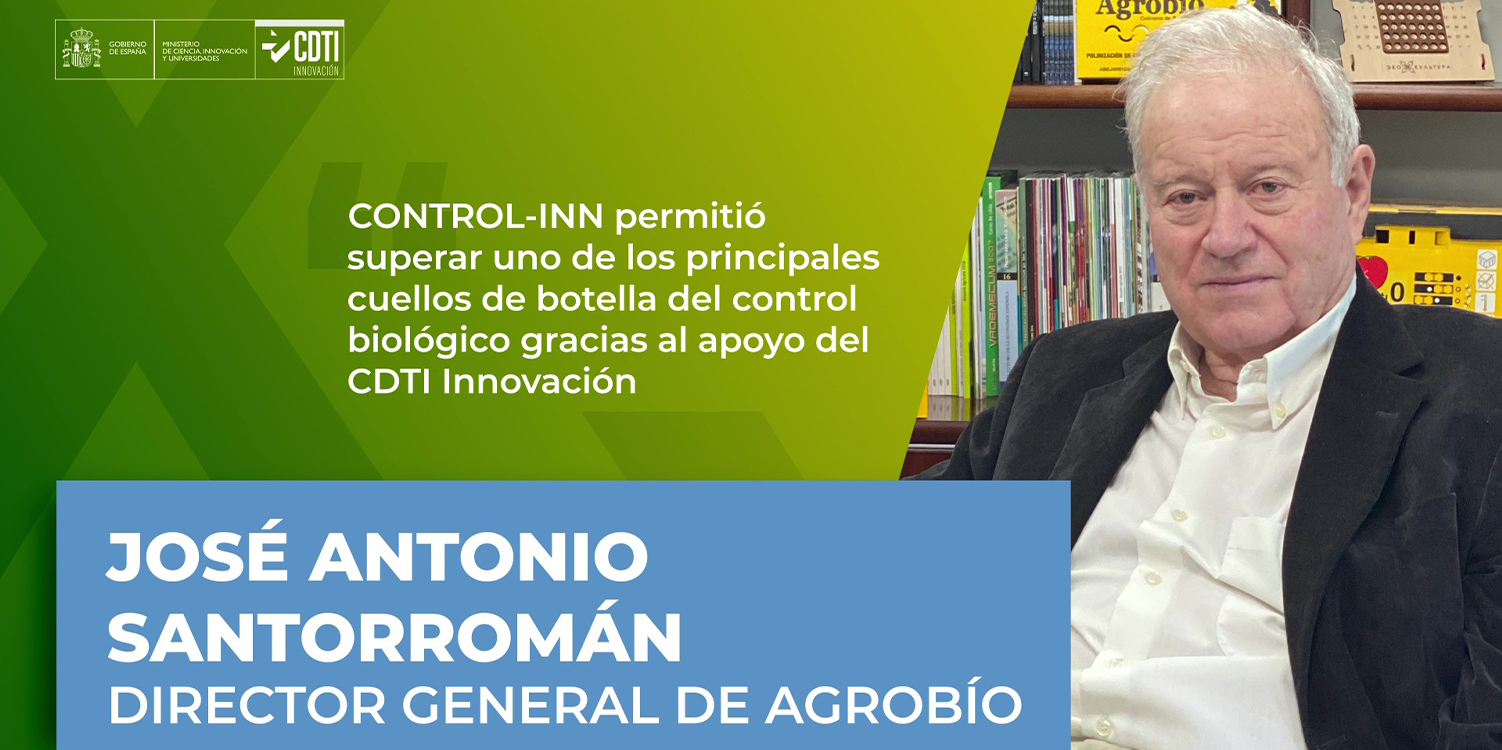
When AGROBÍO began its activity in Almería in 1995, the use of bumblebees for the pollination of horticultural crops was still a pioneering bet. Three decades later, this specialization has been extended to biological control and the development of strategies to reduce the dependency on chemicals without losing effectiveness against pests. The evolution of intensive agriculture, the emergence of new threats and the reduction of available active materials have been posing new challenges to producers.
In that journey, the Almeria company has combined research, production and knowledge of the field to develop solutions that can work beyond the laboratory. The company is working today on the improvement of natural enemies, new breeding systems and management strategies that allow us to anticipate the appearance of pests. “At AGROBÍO we understand that research makes sense when it is translated into practical solutions for the field,” says its director, José Antonio Santorromán.
This way of understanding innovation is also behind CONTROL-INN, a project already completed, developed with the aim of strengthening pest prevention strategies from the earliest stages of cultivation and transferring the advances obtained to the market.
Control a threat before it appears
Biological control is based on the use of beneficial living organisms, such as predatory insects and mites, to keep populations of harmful species under control. The problem arises when these organisms reach the plants before there is enough food to keep them active.
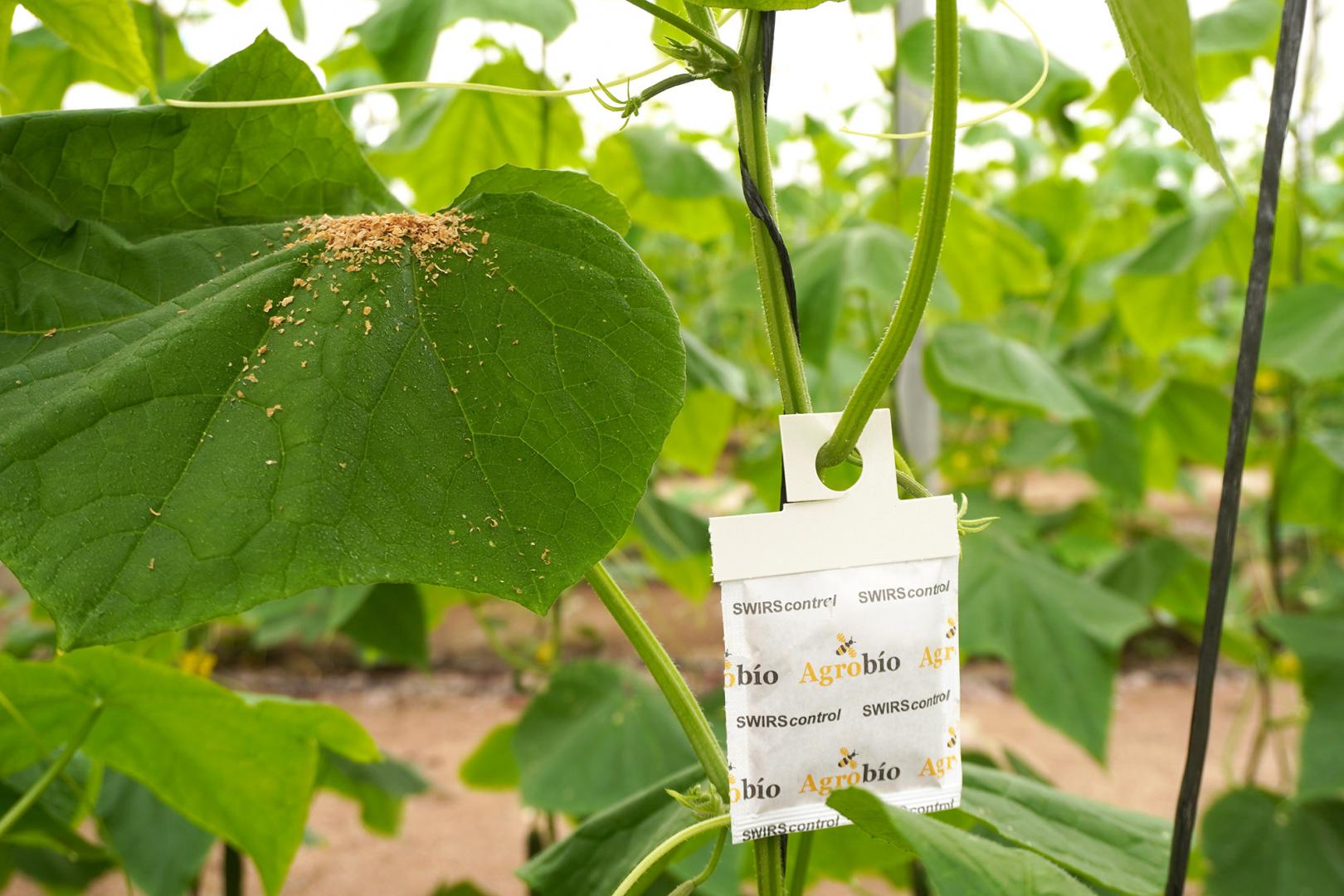 Agrobío applies preventive strategies of biological control in cucumber crops
To address this challenge, CONTROL-INN focused on developing strategies to establish populations of auxiliary fauna from the early stages of cultivation, when the presence of harmful organisms was still low. The research thus focused on moving from a reactive response to a preventive strategy capable of preparing the environment in advance.
To achieve this, it was necessary to study the interactions between beneficial organisms, possible prey species and environmental conditions. It was also necessary to convert the experimental results into a solution that could be produced on an industrial scale, preserved, distributed and applied in a simple way.
The challenge also had a safety dimension, since working with living organisms requires controlling possible contaminations and avoiding the introduction of unwanted species, maintaining adequate quality conditions. “In biological control there are no universal solutions, it is necessary to understand in depth the interactions between crop, pest, auxiliary fauna and environment to ensure consistent results,” says José Antonio Santorromán.
Preparing the crop before the pest
One of the main contributions of CONTROL-INN was the development of supplementary diets aimed at providing food to beneficial organisms when the harmful species they feed on are not enough. Applied on the plants themselves, these diets seek to promote the settlement of insects and auxiliary mites before a significant pest pressure appears, so that they are ready to act when necessary.
The project made it possible to validate this strategy under commercial conditions and to make special progress in its application to cucumber cultivation. In this way, the research was tested in real scenarios, which allowed us to verify how these preventive solutions responded in different production systems. “It was about achieving the establishment of an early army of natural enemies in real conditions,” explains the CEO of AGROBÍO.
From the laboratory to the field
The collaboration of Granada La Palma, Hortamira and Vicasol allowed to contrast the results obtained in research with real productive situations and adjust the proposals to environments with different conditions. In addition, these use cases allowed the project to be brought closer to farmers and technicians who must subsequently incorporate these strategies into their activity.
“The participation of leading cooperatives was fundamental because they provided, in their role of use cases, the practical knowledge allowing us to evaluate the solutions developed in commercial conditions and on different farming systems,” emphasizes the director, who considers that this connection between research and production has been key to assess the usefulness of the solutions with a view to facilitating their future adoption by the sector.
A platform to continue innovating
Beyond the concrete solution, CONTROL-INN also generated a knowledge base that has opened new lines of research in areas such as nutrition and the establishment of beneficial organisms to combat harmful species and how to extend these strategies to the field.
“CONTROL-INN can be considered the project that allowed AGROBÍO to overcome one of the main bottlenecks of biological control: the availability of food and the persistence of the auxiliary organisms before the appearance of significant levels of pest,” explains José Antonio Santorromán.
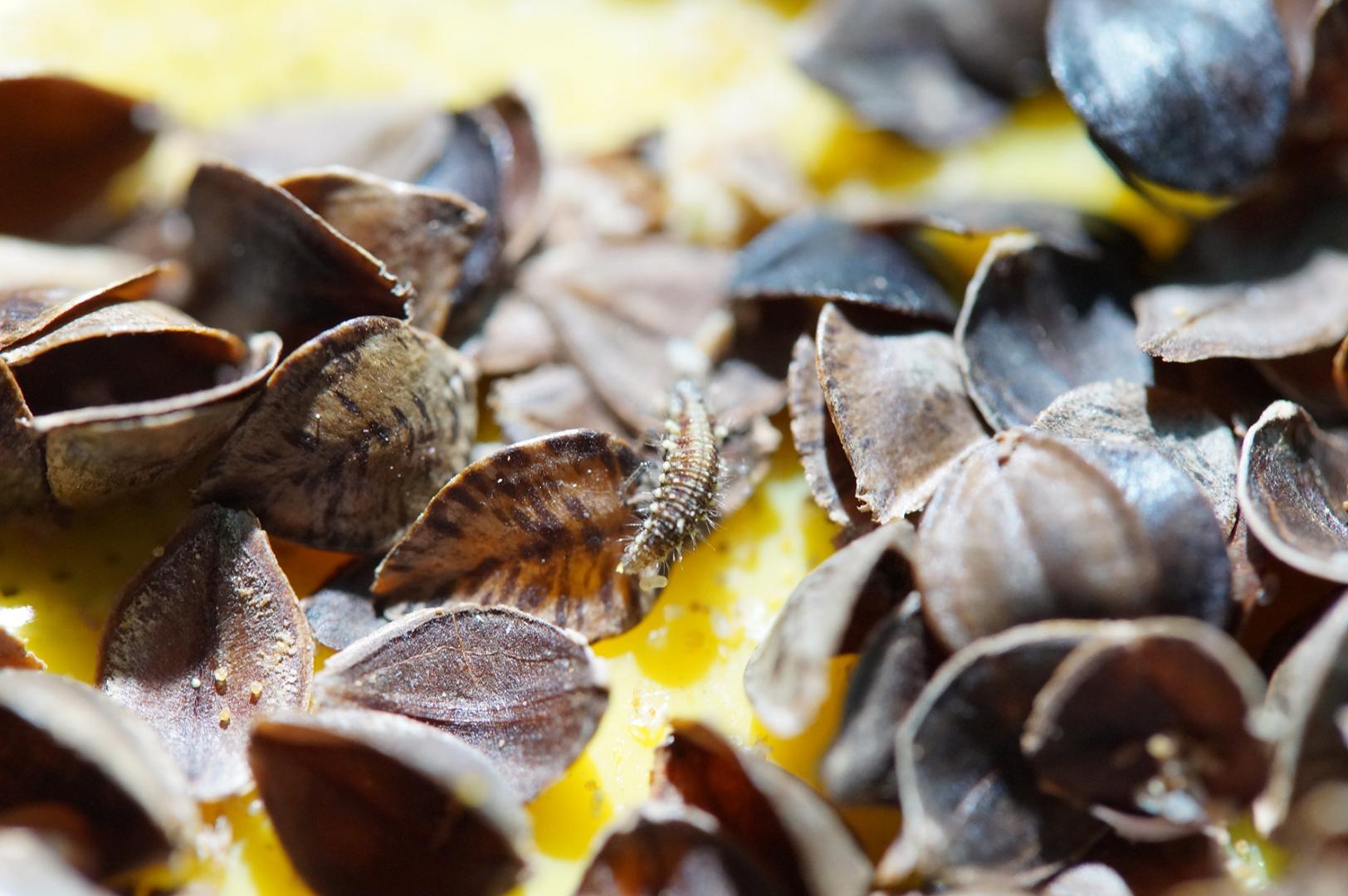 Production of new insects used by the company to fight flea
Thanks to the acquired learning, the Almeria company has been able to transfer that knowledge to new developments such as OPTIFEED, INNOSYMBIO and APHIDPROTECT. “Many of the lines of work that we continue to develop today have their origin in the knowledge and experiences obtained during the project,” says Santorromán. This commitment to innovation is also reflected in the 11 patents obtained by Agrobío over these years.
The impulse of the CDTI Innovation
For its CEO, research requires investments that cannot always be undertaken with their own resources alone.In this sense, the financial support of the CDTI Innovation, with the cofinancing of the European ERDF funds through the call CRIN (Operational Programme for Intelligent Growth 2014-2020) has had an incentive effect for AGROBÍO: “It has allowed us to plan innovative activity, accelerate knowledge generation and take on long-term technological challenges.”
This support has also helped to strengthen collaboration with research centers, public and private, and companies. “Having the support of the CDTI in this collaborative environment favors technology transfer and helps research results reach the market earlier, generating value for companies and the agricultural sector as a whole,” he adds.
A more prepared agriculture in the face of climate change
In the coming years, the emergence of new pests, climate change and the reduction of available active materials will require solutions capable of adapting to increasingly variable conditions. For AGROBÍO, the challenge is to continue deepening the knowledge of beneficial organisms, develop new tools and maintain collaboration with researchers and producers in order to transfer these advances to the field.
The ability to anticipate pests, reduce the use of chemicals and adapt biological control to a changing climate scenario will be increasingly important to maintain agricultural productivity and the role of the Almeria company in this path will be key. “Undoubtedly AGROBÍO is currently an example of knowledge transfer to the productive sector and its developments contribute to the European objectives of plant protection reduction, climate resilience and food security,” he concludes.
CDTI Innovation
The Center for Technological Development and Innovation, CDTI E.P.E. It is the innovation agency of the Ministry of Science, Innovation and Universities, whose objective is the promotion of technological innovation in the business environment. The mission of the CDTI is to ensure that the Spanish business fabric generates and transforms scientific and technical knowledge into globally competitive, sustainable and inclusive growth. In 2025, within the framework of the Strategic Plan 2024-2027, the CDTI provided 2,423 million euros of support to Spanish companies and startups.
More information:
Press Office
press@cdti.es
91-581.55.00
On the Internet
Website: www.cdti.es
On Linkedin: https://www.linkedin.com/company/29815
On X: https://x.com/CDTI_innovacion
On Youtube: https://www.youtube.com/user/CDTIoficial
This content is copyright © 2026 CDTI,EPE. The use and reproduction is allowed by citing the source and digital identity of CDTI (@CDTI_innovacion).