Czech frameworks Rubio, co-founder of Panel: “ The momentum of the CDTI and the FEDER is to be critical to lead the twins interoperable digital to strategic sectors ”
The twins had been consolidated as one of the technologies calls to transform entire sectors such as health and mobility. However, its potential is constrained by a lack of interoperability, fragmentation of data and the absence of common standards. The project, supported by I2DT CDTI and european funds ERDF, the Panel Computer Systems company seeks to break those barriers and be at the forefront of this technological revolution
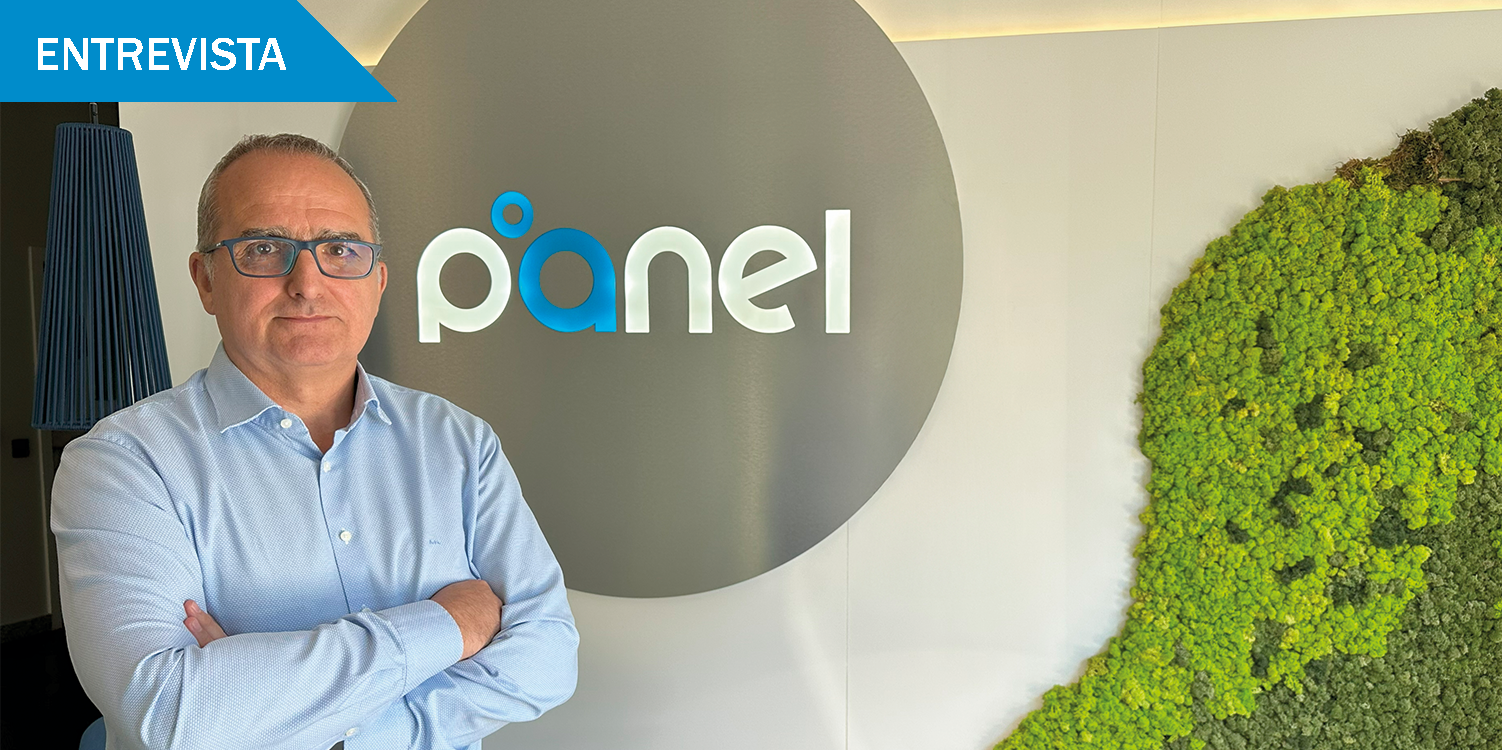
"digital twins are already present in industry and technology, but are closed and isolated solutions. With I2DT (Intelligent and Interoperable Digital Twins) we want to go further and provide a unified framework that would create digital twins interoperable intelligent, and insurance, ” explains Czech Frameworks Rubio, director of Operations of the Data Area & Analytics and co-founder of The Panel.
Founded by its current partners with a clear vocation of innovation and product development, The Panel has built its identity on three pillars: quality, close to the client and care of talent. Today, the company has 333 employees, of which 145 are working in r + D + i, and it has become a fixture in digital transformation services.
Your offer combines software engineering and quality assurance with what they call the New Generation Services: artificial intelligence and IA generativa, cloud and infrastructure, cybersecurity (DevSecOps) and automation. In addition, develops products Panel digital Kalena themselves, as a management software corporate spaces with presence in latin america; BeDataScience, a platform cloud to integrate IA in business; and Wizard for automation, flows of technical and business.
The company by 2024 invoiced over 19 million euros, 97.5 per cent in spain and 2.5 per cent in international markets, especially in Chile, Colombia and mexico. “ Our objective is to become a reference in the incorporation of artificial intelligence in organizations, with its own solutions and spreads. And that we invest more than 5 per cent of our turnover in r + D ”, stresses.
Interoperability: the great challenge of the digital twins
The origin of I2DT is in a clear lack of the market. Although the twins can simulate digital processes and anticipate behaviours, the majority are conceived as closed systems, designed for a single purpose. “ This limits its scalability and reduces their value in complex contexts, such as factories intelligent cities or ecosystem, where the interaction of multiple systems is essential ”, points.
The project seeks to overcome those limitations with a unified framework that combines architectures open standards, benchmarks and advanced techniques of artificial intelligence. One of the greatest challenges is the semantic interoperability: to ensure that different digital twins, from different domains and platforms, can communicate and work together. To that end, I2DT is developing APIs, connectors and solutions that allow IA federated collaborative learning without centralise, reducing security risks and preserving the privacy.
The support of the CDTI and the FEDER Panel has been permitted to make a qualitative leap in this area. “ This funding has given us the necessary impetus to create a collaborative ecosystem with companies, universities and start-ups, and to put us at the forefront of the international standardization, ” says.
Security and confidence in the centre
Another key pillar of the project is to cyber security. “ We want the twins were not only digital operable and scalable, but also reliable and safe, ” explains. To that end, I2DT integrates authentication protocols, traceability, risk mitigation and regulatory compliance, as well as models of union artificial intelligence that prevent the exposure of sensitive data.
The combination of security, privacy and ethical discharge is key to ensuring the adoption of these technologies in sensitive sectors such as health or mobility. “ Only with confidence that we can move the entire value of the digital twins the business fabric and society ”, add.
Synergies with the university
Collaboration with the university Carlos III de Madrid (UC3M) is another of the strengths of the project. The academic institution carries out an analysis of the state of art, define key performance indicators and design validation scenarios. Moreover, contributes to the development of the architecture of reference as applying standard methodologies and RM-ODP TOGAF.
“ working with the UC3M allows us to combine the most advanced academic research with practical experience of a company as a Panel. It is a synergy that enriches the project and ensures that we are aligned with international best practices, ” says.

Image of a digital industry generated with AI
International cooperation
I2DT falls within the cluster ITEA, a european innovation ecosystem that connects companies and research on collaborative projects. “ Join ITEA gives us access to financing and international standards, strengthens our visibility and allows us to cooperate with international leaders, ” explains the co-founder of The Panel.
Interaction with partners of the consortium has been particularly enriching. “ when companies of different countries and sectors working together, there is a creative shock behind most innovative solutions and robust. This is not just add capacities, but to create an entrepreneurial ecosystem that accelerates the innovation on a scale elusive individually ”, add.
The support of the CDTI and ERDF funds has been key to strengthen the position of The Panel in this international environment. “ Through the support we can be present in a multinational consortium, with capacity to propose standards and validate solutions in industrial Areas, urban and energy ”, highlights.
Impact on strategic sectors
The twins interoperable digital will certainly play a key role in the digital processing of key sectors. In health, will anticipate risks, optimize resources clinical hospital and accelerate research through simulations. In urban areas, facilitate the integral management of infrastructure and services, supporting decisions based on data and increasing the resilience of cities. And mobility, an Area where technological transition can optimize fleets and public transport, to integrate different modes of transport and reinforce security thanks to the predictive maintenance.
“ the twins are intelligent meta-controladores digital that connect the physical world with virtual models, generating tangible benefits for the economy, society and sustainability, ” says.
A promising future
For the coming years, The Panel expects I2DT evolves from research towards the practical application in mature sectors establishing itself as a standard twin european digital interoperable. “ Standardization of architectures and secure platforms will allow industry to adopt these technologies on a massive scale. This will open the door to new business models based on data and intelligent services ”, it points.
The impact of such projects is beyond the technological level. As Czech stresses, “ european funding and support of the CDTI not only allow us to deal with initiatives that would otherwise be unworkable, but also mobilize private investment, generate jobs and strengthen the competitiveness of spanish innovative ecosystem ”.
The momentum of collaborative innovation, the institutional support and vision, Panel looks to I2DT mark a turning point in the industrial digitization and the creation of enabling more efficient, sustainable and connected.
CDTI Innovation
The centre for technological development and innovation, CDTI E.P.E. is a public company under the ministry of Science, innovation and universities, whose goal is the promotion of technological innovation in business. The CDTI mission is to ensure that the business fabric english generates and transform knowledge into growth científico-técnico globally competitive, sustainable and inclusive. By 2024, within the framework of a new strategic plan, the CDTI provided more than $2.3 billion euros of support for business startups and spain.
More information:
Office of the press
prensa@cdti.es
91-581.55.00
On The Internet
Website:www.cdti.es
In Linkedin:https :// www.linkedin.com/company/29815
X:https :// twitter.com/CDTI _ innovation
On Youtube:https :// www.youtube.com/user/CDTIoficial
This content is copyright © 2025 CDTI, Soes. Permitted for use and reproduction by quoting the source and digital identity of CDTI (@CDTI _ innovation).