Antonio Vergara, CEO of VERSE Europe: “The support of CDTI Innovation and FEDER funds is essential to develop our safety technology for nuclear fusion”
In the global race towards fusion energy, Verse Europe is advancing the development of SAFU, an advanced safety system designed to become a benchmark for future nuclear fusion plants. Promoted with the support of the CDTI Innovation and the cofinancing of the European ERDF funds, the project reinforces the commitment of this highly specialized engineering company to the development of its own technology, with an international vocation and potential for application in other strategic sectors
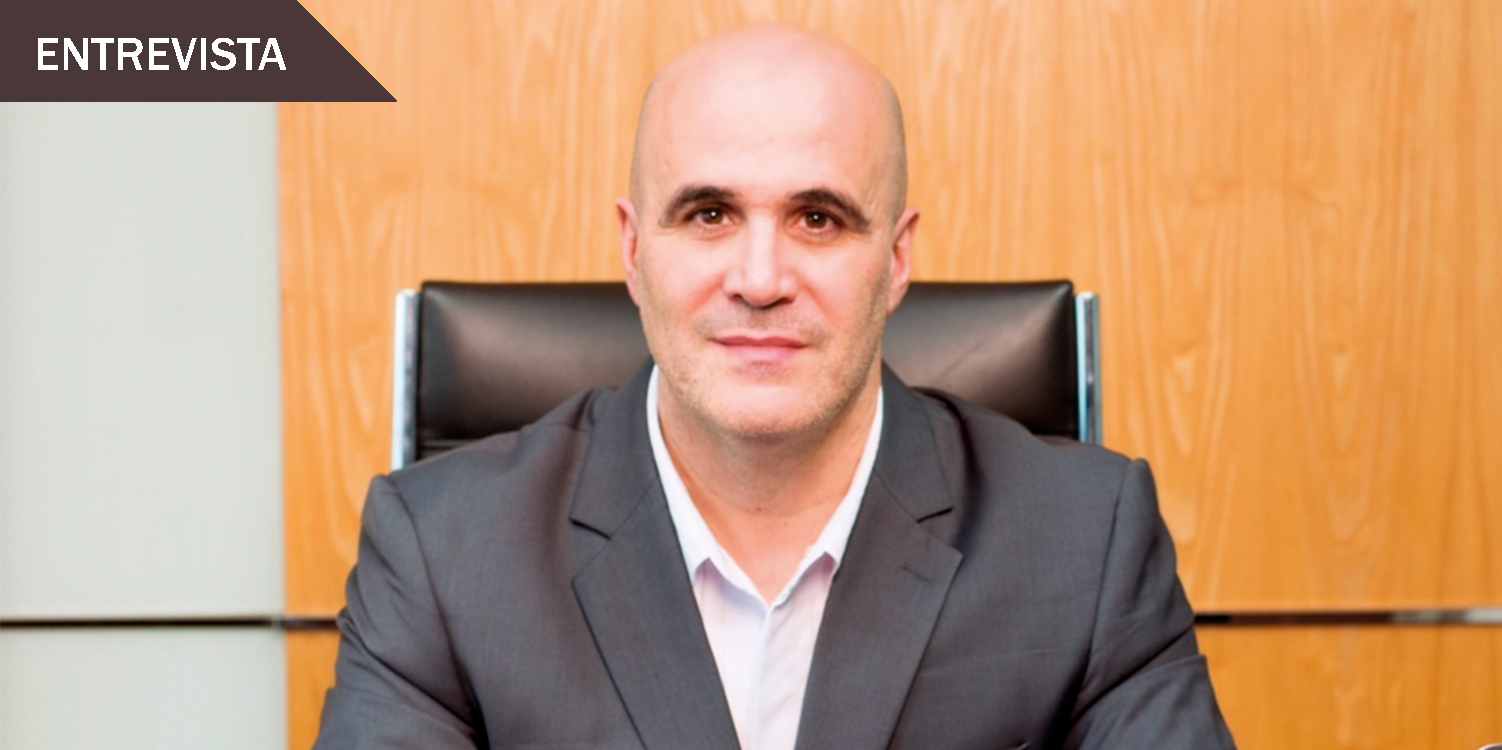
Seeing Europe is a young company, but with a clear international vocation and a very specialized positioning within the field of large scientific facilities. Founded in 2021 in Switzerland and based in Spain since 2022, the company was born with the aim of serving as a bridge between Asian - especially Korean - engineering and technology companies and large international scientific projects. However, its rapid evolution has led it to take another step: moving from technological consultancy to developing its own engineering and R&D solutions for particle accelerators and nuclear fusion reactors.
“We started by offering support to Asian technology companies to facilitate their entry into the international markets of large scientific infrastructures, but as the company grew we began to work directly with laboratories and research centers around the world, already developing our own solutions”, explains Antonio Vergara, CEO and co-founder of Verse Europe, together with Liliya Rybak, both shareholders at 50%.
Currently, the company has a team of 24 professionals —12 of them dedicated specifically to R&D activities— and a clear export orientation: 80% of its turnover comes from international markets such as France, South Korea, Japan, Italy, the Netherlands or Switzerland. Its main clients include leading organizations such as ITER International Organisation, Fusion for Energy, Quantum Science and Technology, Mobiis Co., Ltd, Leonardo or ATG Europe. “Spain represents around 20% of our sales, but our natural market is clearly global,” says Vergara.
The company is immersed in a phase of both geographical and technological expansion. “Our goal is to continue growing to reach a workforce of around 100 engineers, consolidate our presence in Asia and develop our own products not only for large scientific facilities, but also for other sectors such as space, defense or even fintech,” says the CEO. It is no accident that around 30% of the company’s turnover is reinvested in research and development, a strategic bet that begins to materialize in projects such as SAFU.
Towards a safety standard for nuclear fusion
The Advanced Safety Systems for Nuclear Fusion Plants (SAFU) project marks a turning point for Verse. This is his first major R&D project aimed at developing his own technology with a commercial vocation. “Until now we had worked mainly in engineering services and technology consulting. SAFU is the first time we have made the leap to developing our own product that can become a standard for the industry,” says Vergara.
The need addressed by SAFU is clear. Currently, the safety and protection systems of nuclear fusion plants and particle accelerators are designed specifically for each installation. “Each project develops its own system, which generates very ad hoc and unreusable solutions. SAFU aims to create a standard that can be applied to future commercial nuclear fusion plants,” explains the CEO of VERSE.
From a technological point of view, the project relies on data acquisition and rapid control systems based on FPGA, maximizing the use of open hardware and open software solutions. “We want to develop high-reliability safety systems that are, at the same time, flexible, scalable and adaptable to different reactor configurations,” says Vergara. This approach not only facilitates standardisation but also opens the door to its application in other scientific and industrial fields.
The human team is one of the pillars of the project. SAFU relies on a multidisciplinary group composed of experts in the protection of superconducting equipment and nuclear fusion reactors, electronic engineers, hardware and software specialists, as well as profiles with extensive experience in the development of prototypes for critical safety systems. “The most senior engineers have focused on defining the overall strategy of the project and gathering the existing knowledge in similar initiatives around the world, while the most junior profiles are very focused on the design and manufacture of the first prototypes,” explains Vergara.
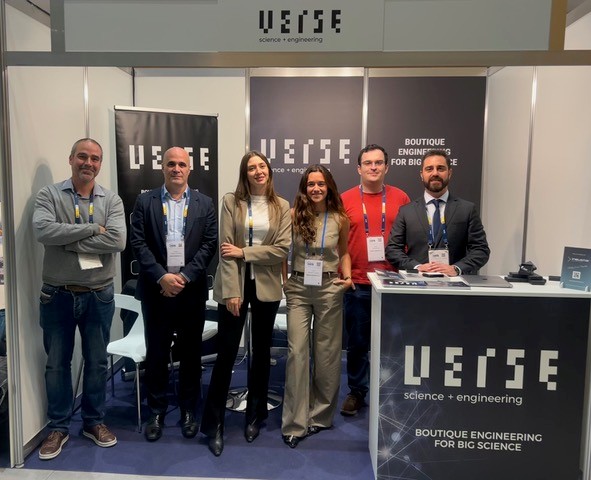
Verse Europe Team on the BSIFS Forum
Madrid-Seoul collaboration
The project is also developed in collaboration with the Korean company Mobiis, a technological partner with which Verse has maintained a consolidated working relationship for years. “Mobiis has been developing electronic systems for particle accelerators and tokamaks for more than two decades. Although we are thousands of miles away, our teams are used to working together,” says the CEO. At SAFU, VERSE takes on the overall coordination, design and development of prototypes, while Mobiis is responsible for mathematical models and simulations for reliability calculations, as well as providing support for its laboratories in Seoul, with greater technical capabilities.
Although SAFU is the company’s first formal R&D project, Verse has an important background. “Our senior engineers have worked for years in scientific facilities such as CERN’s LHC or the ITER project, and all that experience is being key to defining the strategy of the project,” says Vergara. This accumulated knowledge allows us to anticipate technical and regulatory challenges in a sector that is particularly demanding in terms of security.
One of the major challenges of the project is the planning of the return on investment, since fusion energy is not expected to be commercially available for 10 or 15 years. However, Vergara is optimistic. “Although it will take a few years to have fusion electricity in our homes, there are already numerous experimental and pre-commercial projects underway around the world. We hope that SAFU solutions can be adopted in the industry even before 2030 and perhaps as early as 2027 in pilot projects.”
In addition, the potential for application goes beyond nuclear fusion. “We believe that many of the solutions we are developing can easily be transferred to other scientific and industrial fields where safety and reliability are critical,” he adds.
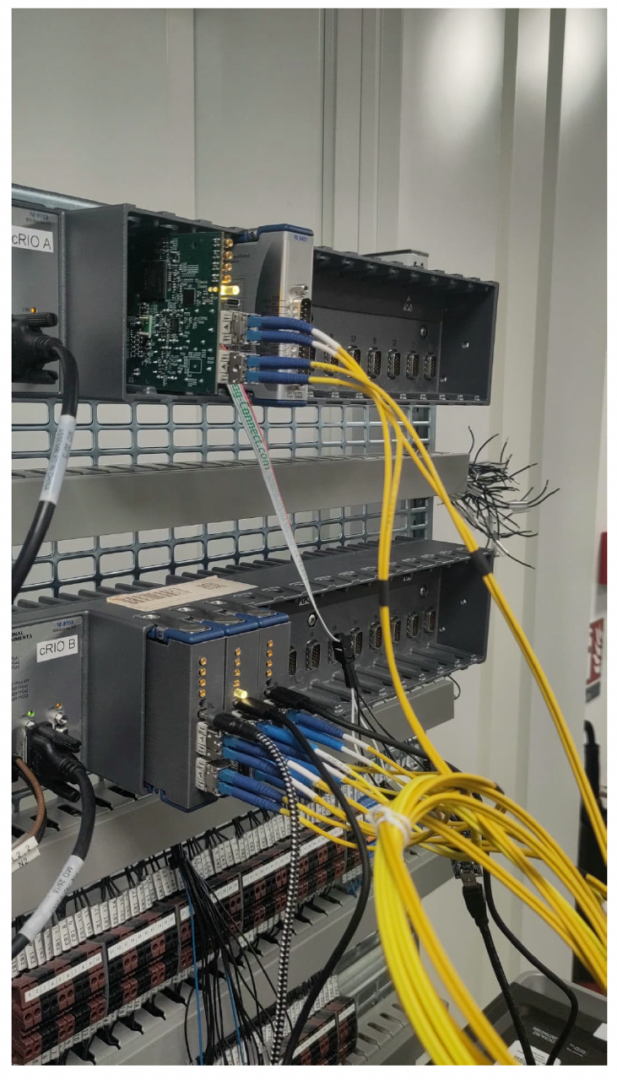
First prototype developed by Verse Europa
Impact on the innovative ecosystem
The support of the CDTI Innovation and the European ERDF funds has been decisive in making this project possible. “This aid has been essential so that a young company like ours can launch itself for the first time to develop its own technology with marketing potential,” says Vergara. In his opinion, this type of financing makes it possible to tackle high-technology risk projects that could hardly be financed by traditional means.
Vergara also highlights the internal impact of this aid. “Most of the funding has gone to hiring engineers and researchers, which has allowed us to consolidate our own R&D team. In young companies such as Verse, having liquidity to dedicate exclusively to research and development is key so that growth is not only measured in turnover or number of customers, but also in technological capabilities and generated knowledge,” he stresses.
From a broader perspective, the CEO considers that such initiatives have a direct impact on the Spanish innovative ecosystem. “Aid co-financed with European funds pushes small businesses and startups to develop ideas with enormous technological and social potential. In the long term, that translates into a more competitive industry, more knowledge and solutions that benefit society as a whole.”
Looking ahead to the next five years, Verse is ambitious about SAFU’s impact on the international market. “We are optimistic and believe that the solutions developed within the framework of SAFU can become the standard of the fusion industry in everything related to the safety and protection of current and future reactors,” concludes Vergara. An aspiration aligned with the international, technological and high-impact vocation that defines the company from its origin.
CDTI Innovation
The Center for Technological Development and Innovation, CDTI E.P.E. It is the innovation agency of the Ministry of Science, Innovation and Universities, whose objective is the promotion of technological innovation in the business environment. The mission of the CDTI is to ensure that the Spanish business fabric generates and transforms scientific and technical knowledge into globally competitive, sustainable and inclusive growth. In 2024, within the framework of a new strategic plan, the CDTI provided more than 2.3 billion euros of support to Spanish companies and startups.
More information:
Press Office
press@cdti.es
91-581.55.00
On the Internet
Website: www.cdti.es
On Linkedin: https://www.linkedin.com/company/29815
On X: https://twitter.com/CDTI_innovacion
On Youtube: https://www.youtube.com/user/CDTIoficial
This content is copyright © 2025 CDTI,EPE. The use and reproduction is allowed by citing the source and digital identity of CDTI (@CDTI_innovacion).